
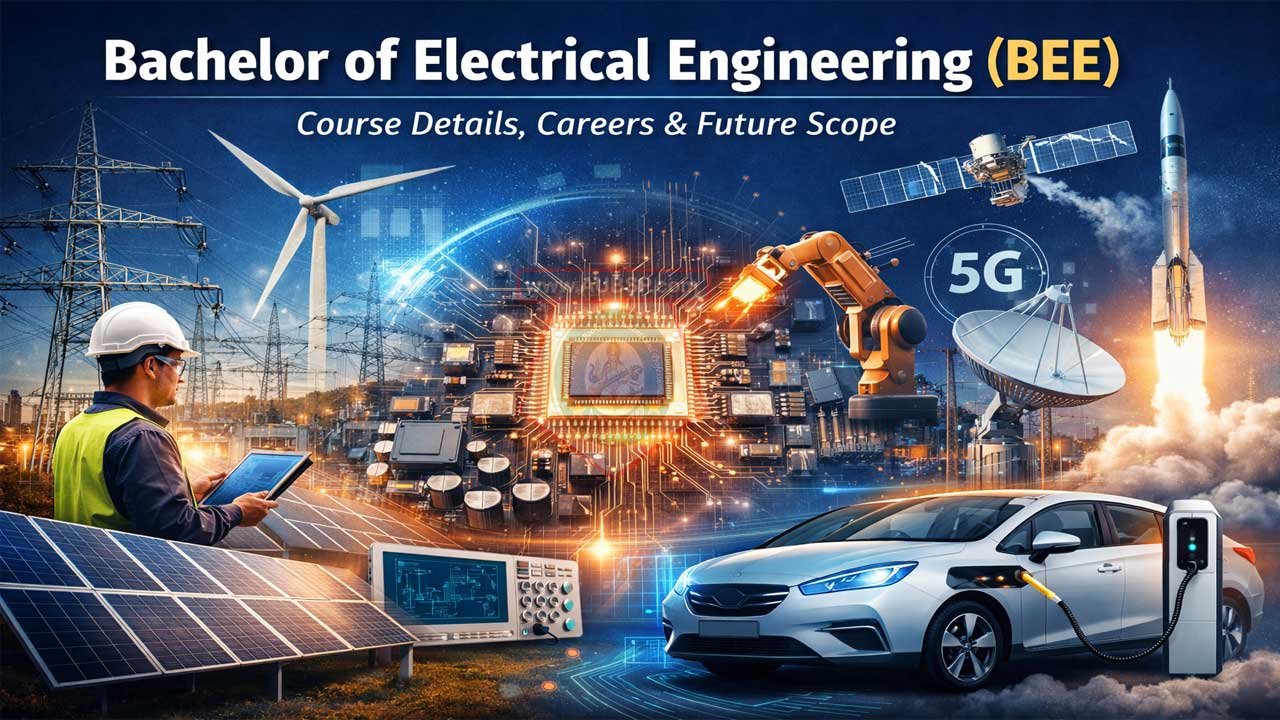
A Bachelor of Electrical Engineering (BEE)—also known as BSEE, BEng, or BTech in Electrical/Electronics—is a globally in-demand undergraduate degree (typically 3–4 years) that trains students to design, develop, and manage electrical and electronic systems used in power, electronics, communications, automation, and emerging technologies.
The program builds strong foundations in mathematics, physics, circuit theory, electronics, power systems, control, and signal processing, along with hands-on labs and projects, and often offers specializations such as power and energy, microelectronics, communications, and automation. Eligibility generally requires high-school completion with strong math and physics, sometimes entrance exams, and English proficiency for international study.
Graduates gain technical and problem-solving skills and can pursue careers across industries like energy, telecom, manufacturing, IT, automotive, and aerospace, with good salary potential, global mobility (especially for degrees recognized under frameworks like the Washington Accord), and strong future prospects driven by trends such as renewable energy, electric vehicles, smart grids, and Industry 4.0.
| Category | Information |
|---|---|
| Degree Name | Bachelor of Electrical Engineering (BEE) / BSEE / BEng / BTech EE |
| Duration | Typically 3–4 years (some integrated 5-year options) |
| Eligibility | High school (12th) with Mathematics & Physics; often Chemistry; entrance exams may be required |
| Core Subjects | Mathematics, Circuit Theory, Electronics, Power Systems, Control Systems, Communications, Signal Processing |
| Specializations | Power & Energy, Electronics, Automation & Control, Communications, Embedded Systems, RF & Microelectronics |
| Skills Gained | Circuit design, programming, simulation tools, problem-solving, teamwork, technical communication |
| Top Study Destinations | USA, UK, Canada, Germany, Australia, Singapore, India |
| Career Roles | Electrical Engineer, Power Engineer, Electronics Engineer, Automation Engineer, Telecom Engineer |
| Industries | Energy, Electronics, Telecom, IT, Manufacturing, Automotive, Aerospace |
| Future Scope | High demand due to renewable energy, EVs, smart grids, IoT, and automation |
Bachelor of Electrical Engineering (BEE): Course Details, Eligibility, Syllabus, Jobs & Global Opportunities
A Bachelor of Electrical Engineering (BEE) is one of the most in-demand engineering degrees worldwide. It prepares students to design, develop, and maintain the electrical and electronic systems that power modern life—from power grids and renewable energy plants to smartphones, communication networks, robotics, and aerospace systems.
Bachelor of Electrical Engineering (BEE) is a 3–4 year degree covering circuits, power, electronics, and communication, leading to global careers in energy, telecom, automation, and tech.
Across many countries, the degree may be titled:
- Bachelor of Electrical Engineering (BEE)
- Bachelor of Science in Electrical Engineering (BSEE)
- Bachelor of Engineering in Electrical and Electronic Engineering (BEng/BE EEE)
- BTech in Electrical Engineering / Electrical & Electronics Engineering (India and some Asian countries)
Despite different names, the core focus remains similar: strong foundations in mathematics, physics, circuit theory, electronics, power systems, control, communication, and signal processing, with plenty of hands‑on lab work.
Why Choose a Bachelor of Electrical Engineering?
Electrical engineering is a broad and future‑proof field because electricity and electronics are fundamental to every industry. A BEE degree is ideal if you:
- Enjoy mathematics, physics, and problem‑solving
- Like understanding how devices, machines, and systems actually work
- Want a career in high‑tech industries such as power, electronics, telecom, automation, robotics, aerospace, or IT
Key advantages:
- Global demand: Electrical engineers are required in energy, electronics, telecom, automotive, aerospace, manufacturing, construction, IT, and defense sectors worldwide.
- High salary & growth potential: Graduates often move into senior engineering, project management, consulting, and R&D roles.
- Technological relevance: Work on cutting‑edge areas like renewable energy, electric vehicles, smart grids, IoT, 5G, microelectronics, and automation.
- International mobility: Many BEE/BEng/BSc Electrical programs are accredited under international frameworks like the Washington Accord, making it easier to work in multiple countries after graduation.
Course Duration and Study Structure
The typical duration of a Bachelor of Electrical Engineering depends on the country and university:
- 3 years: Some European BSc/BEng programs (e.g., Germany, Netherlands, some other EU countries)
- 4 years: Common in the USA, Canada, India, Australia, UK (Scottish universities may vary)
- Integrated 5‑year programs: In some universities, combined Bachelor + Master tracks in electrical or computing/electrical engineering exist.
Most programs follow a similar progression:
- Years 1–2: Foundation
- Mathematics (calculus, linear algebra, differential equations)
- Physics (mechanics, electricity & magnetism)
- Basic chemistry (in some universities)
- Intro to programming
- Basic electrical circuits and laboratory work
- Years 3–4: Core + Specialization
- Electronics, signals and systems, digital systems
- Power systems, control systems, communications, microprocessors
- Electives in specialized areas
- Final‑year capstone or major design project involving real‑world system design
Eligibility Criteria for BEE / BSc / BEng Electrical Engineering
Exact requirements vary by country and university, but common criteria include:
Academic Requirements (International Overview)
- High school completion (12th grade or equivalent) with strong performance in:
- Mathematics (mandatory)
- Physics (mandatory in most cases)
- Often Chemistry, or another science / technical subject
- Typical minimum overall grade: 50–60% or higher in science stream for many institutions, with more competitive universities demanding much higher marks.
Entrance Exams (By Region)
- USA & Canada
- High school diploma with strong GPA in math and science
- Standardized tests: SAT or ACT (some universities are test‑optional)
- English proficiency: TOEFL, IELTS, or equivalent for international students
- UK, Europe, Australia, New Zealand
- A‑Levels / IB / national school‑leaving certificates with mathematics and physics
- Sometimes additional tests or foundation year if prior curriculum is different
- English proficiency tests for non‑native speakers
- India & many Asian countries
- Class 12 (PCM: Physics, Chemistry, Mathematics) with at least 50–60% marks
- Entrance exams such as JEE Main/Advanced or national/state/university‑level engineering tests
- Diploma holders in electrical engineering can often gain lateral entry directly into second year of a BTech/BE program.
Core Subjects in a Bachelor of Electrical Engineering
While exact course names differ, most BEE/BSEE/BEng programs cover similar fundamentals.
Year 1–2: Foundation Courses
- Engineering Mathematics (Calculus, Linear Algebra, Differential Equations)
- Physics for Engineers (Mechanics, Electromagnetism)
- Engineering Chemistry (in some curricula)
- Introduction to Programming (C/C++/Python/Matlab)
- Engineering Drawing / CAD
- Basics of Electrical Engineering
- Circuit Theory & Network Analysis
- Digital Logic Design
- Signals and Systems (intro level)
Year 3–4: Core Electrical Engineering & Labs
- Analog Electronics (diodes, transistors, amplifiers, op‑amps)
- Digital Electronics & Microprocessors / Microcontrollers
- Power Systems (generation, transmission, distribution, protection)
- Electric Machines (motors, generators, transformers)
- Control Systems (feedback, stability, controllers)
- Electromagnetic Fields & Waves
- Communication Systems (analog & digital communication, modulation)
- Signal Processing (filters, sampling, digital signal processing)
- Power Electronics (converters, inverters, drives)
- Embedded Systems / Computer Architecture
Design & Professional Skills
Many international programs additionally emphasize:
- Engineering design projects (often a team‑based capstone project)
- Laboratory skills and use of modern tools and simulators
- Technical communication and report writing
- Ethics, sustainability, and societal impact of engineering
- Teamwork, project management, and leadership
Popular Specializations within Electrical Engineering
Depending on the university, students can specialize through elective tracks or concentration areas.
Common specializations include:
- Power Systems and Energy
- Electric power generation, transmission, distribution
- Smart grids, high‑voltage engineering
- Renewable energy systems (solar, wind, hydro)
- Electronics & Microelectronics
- Analog and digital circuit design
- VLSI, semiconductor devices, IC design
- PCB design, sensor electronics
- Control Systems & Automation
- Industrial automation, PLCs, robotics
- Control theory, real‑time control
- Mechatronics integration
- Communication Systems & Networks
- Wireless communication, mobile networks
- Optical communication, satellite systems
- Data communication and networking
- Signal Processing & Embedded Systems
- Digital signal processing (DSP)
- Embedded device programming and system‑on‑chip design
- Real‑time audio, image, and biomedical signal processing
- Electromagnetics, RF & Antennas
- RF circuit design, microwave engineering
- Antennas for communications and radar systems
Skills You Develop in a BEE Program
A Bachelor of Electrical Engineering builds both technical and transferable skills:
Technical Skills
- Circuit analysis and design
- Use of simulation tools (e.g., SPICE, MATLAB, Simulink, CAD tools)
- Programming and embedded systems
- Power system design and analysis
- Digital and analog electronics
- Control algorithms and automation
- Signal processing and communication systems
Soft & Professional Skills
- Analytical and problem‑solving skills
- Project planning and teamwork
- Technical documentation and presentation
- Critical thinking and innovation mindset
- Awareness of ethics, safety, and sustainability in engineering practice
Top Countries to Study Bachelor of Electrical Engineering
Electrical engineering is a globally popular degree. According to international education platforms, there are hundreds of BEE/BSEE/BEng programs across North America, Europe, Asia, and Oceania.
Popular Study Destinations
- United States & Canada
- Strong emphasis on research, innovation, and industry collaboration
- ABET‑accredited programs widely recognized globally
- Numerous specializations in power, microelectronics, communications, robotics, and more
- United Kingdom & Europe (Germany, Netherlands, Finland, etc.)
- 3‑ or 4‑year BSc/BEng programs with options to continue to MSc
- Some countries (e.g., Germany, Finland) offer low or no tuition in public universities for EU/EEA students, with increasing English‑taught programs for international students.
- Australia & New Zealand
- Industry‑linked programs with strong focus on energy, telecom, and infrastructure
- Good post‑study work opportunities and clear pathways to skilled migration
- Asia (Singapore, India, South Korea, China, UAE)
- Globally ranked universities in electrical & electronic engineering (e.g., NTU Singapore ranks among the top globally in EEE)
- Strong technology ecosystems and increasing English‑medium programs
Career Opportunities After Bachelor of Electrical Engineering
A BEE graduate can work in a wide range of industries. Typical roles include:
Job Roles
- Electrical Engineer
- Power Systems Engineer / Grid Engineer
- Electronics Design Engineer
- Control & Automation Engineer
- Instrumentation Engineer
- Telecommunication Engineer
- Embedded Systems Engineer
- Signal Processing Engineer
- Maintenance & Operations Engineer (industrial plants, utilities)
- Renewable Energy Engineer (solar, wind, smart grids)
- Robotics / Mechatronics Engineer (with relevant electives)
Graduates are often employed in:
- Power generation and distribution companies
- Renewable energy firms
- Electronics and semiconductor manufacturing
- Telecom and networking companies
- IT and embedded systems design firms
- Automotive and electric vehicle manufacturers
- Aerospace & defense
- Oil & gas, petrochemical, and heavy industries
- Consultancy and engineering services companies
Many graduates also pursue higher studies such as MEng/MSc, MBA, or specialized MS in power systems, robotics, microelectronics, telecommunications, or data science.
Typical Salary & Growth (Qualitative Overview)
Exact salaries vary by country, company, and experience level, but generally:
- Entry‑level electrical engineers usually earn above average starting salaries compared with many non‑engineering degrees due to the technical nature of the role.
- With 3–5 years of experience, engineers can specialize and move into senior engineer, team lead, or project engineer roles.
- With further experience and/or postgraduate qualifications, opportunities open in R&D, consulting, technical leadership, and management.
Because electrical engineering skills are applicable across multiple industries (energy, IT, manufacturing, telecom), professionals often enjoy good job stability and the flexibility to switch sectors over time.
BEE vs BTech vs BSc vs BEng in Electrical Engineering
For international applicants, the different names can be confusing, but the differences are usually more about regional naming and focus than fundamental content.
- BEE / BSEE (Bachelor of Electrical Engineering / Bachelor of Science in EE)
- Common in the USA and some international universities
- Strong science and math base; heavy lab and design components
- BEng in Electrical / Electrical & Electronic Engineering
- Common in the UK, Europe, parts of Asia
- Professionally oriented engineering degree, typically accredited by national engineering bodies (e.g., IES in Singapore, under Washington Accord)
- BTech / BE in Electrical Engineering
- Common in India and some Asian countries
- Strongly application‑oriented; often includes more industry‑focused labs and projects
In practice, all of these are undergraduate professional engineering degrees in electrical engineering. When considering international study or migration, focus more on:
- Accreditation (e.g., ABET, Washington Accord signatories)
- University ranking and industry connections
- Course content and specializations
- Opportunities for internships, co‑ops, and research
Admission Tips for International Students
To maximize your chances of admission into a good Bachelor of Electrical Engineering program:
- Strengthen Your Math & Physics Foundation
- Aim for high grades in mathematics and physics in your final school years.
- Participate in math/science clubs, competitions, or projects.
- Prepare for Entrance Exams (If Required)
- For India & some Asian countries: prepare for engineering entrance exams such as JEE or local equivalents.
- For the US: prepare for SAT/ACT if your target universities require them.
- For all English‑medium programs: work on IELTS/TOEFL/PTE or other accepted English tests.
- Build a Strong Application Profile
- Highlight projects (e.g., small circuits, Arduino, robotics, coding) in your application.
- Showcase problem‑solving and teamwork skills in your statement of purpose.
- Obtain strong recommendation letters from math/science teachers.
- Compare Programs Carefully
- Check course structures, available specializations, lab facilities, and industry collaboration.
- Look at internship/co‑op opportunities and graduate outcomes (placement, typical employers).
Challenges in BEE and How to Succeed
Electrical engineering is rigorous, but very rewarding.
Common challenges:
- Heavy workload of math and technical subjects
- Complex lab work and projects requiring time and attention
- Need to keep up with fast‑evolving technologies and tools
Success strategies:
- Maintain consistent study habits, particularly in mathematics and core electrical subjects.
- Actively use labs and projects to deepen conceptual understanding, not just to pass.
- Learn industry‑standard tools (MATLAB, Simulink, SPICE, microcontroller IDEs).
- Join engineering clubs, competitions (like robotics, hackathons), and internships.
- Keep an eye on trends like smart grids, EVs, IoT, and renewable energy to align your electives and projects with future‑ready areas.
Future Scope of Bachelor of Electrical Engineering
The future scope for BEE graduates is strong due to global mega‑trends:
- Energy transition: Shift from fossil fuels to renewable energy and smart grids requires power system, grid integration, and power electronics expertise.
- Electrification of transport: Electric vehicles, charging infrastructure, and battery systems expand demand for power and electronics engineers.
- Industry 4.0 & Automation: Smart factories, robotics, and IoT increase the need for control, automation, and embedded systems engineers.
- Communication & Data: 5G, satellite internet, and high‑speed data networks depend on RF, signal processing, and communication engineering.
- Miniaturization & Microelectronics: Smaller, faster, and more efficient chips and sensors continue to drive demand for microelectronics specialists.
Because electrical engineering is foundational to nearly every technology domain, a BEE remains one of the most versatile and future‑oriented engineering degrees.
Frequently Asked Questions (FAQs)
1. What is a Bachelor of Electrical Engineering (BEE)?
A Bachelor of Electrical Engineering (BEE) is a 3–4 year undergraduate degree that focuses on the design, development, and maintenance of electrical and electronic systems, including power systems, electronics, communication, control, and embedded systems.
2. How long is a BEE degree?
Most BEE/BEng/BSc Electrical Engineering programs take 3–4 years of full‑time study, depending on the country and university. Many Indian, US, Canadian, and Australian programs are 4 years, while several European BSc/BEng programs are 3 years.
3. What are the eligibility requirements for Bachelor of Electrical Engineering?
Typically, students must complete high school (12th grade or equivalent) with mathematics and physics as core subjects, often along with chemistry or another science, and achieve at least 50–60% marks, with competitive universities requiring higher scores. Entrance exams (e.g., JEE, SAT) and English proficiency tests may also be required.
4. Is electrical engineering a good career for the future?
Yes. Electrical engineering is central to energy, electronics, telecom, automation, and computing. Future trends like renewable energy, electric vehicles, smart grids, robotics, and 5G ensure strong long‑term demand for skilled electrical engineers.
5. What is the difference between BEE, BEng, BTech, and BSc in Electrical Engineering?
They are all undergraduate degrees in electrical engineering, with naming differences by region. BEE/BSEE and BSc EE are common in North America; BEng in Electrical/Electronic Engineering is common in the UK and Europe; BTech/BE in Electrical Engineering is common in India and parts of Asia. Focus on accreditation, course content, and university reputation rather than the exact title.
6. Can I work abroad after completing a BEE?
Yes. If the degree is from a recognized/accredited university (e.g., ABET, Washington Accord signatories), it is often accepted in multiple countries, though you may need to meet local licensing requirements and visa regulations.
7. Which industries hire electrical engineering graduates?
Power and energy companies, renewable energy firms, electronics and semiconductor manufacturers, telecom and networking companies, IT and embedded system design firms, automotive and EV companies, aerospace and defense, manufacturing and automation, and engineering consultancies all hire electrical engineering graduates.


Leave a Reply
You must be logged in to post a comment.