
A Bachelor of Applied Science (BASc) is a professionally focused undergraduate degree that blends solid theoretical foundations with extensive hands-on, industry-driven training to prepare graduates for immediate entry into technical and engineering careers.
Typically completed in 3–4 years (often longer with co-op), the BASc emphasizes real-world problem solving through labs, projects, internships, and employer-collaborated curricula, distinguishing it from more research-oriented Bachelor of Science (BSc) programs.
Widely recognized internationally—especially in Canada, Australia, the US, and parts of Europe—it offers strong employability outcomes, high return on investment, and access to fast-growing fields like engineering, software, data science, AI, renewable energy, and biotechnology, while also serving as a solid pathway to professional licensure, master’s degrees, and PhDs.
| Aspect | Bachelor of Applied Science (BASc) |
|---|---|
| Degree Type | Undergraduate, professional/applied |
| Duration | 3–4 years (up to 5 with co-op) |
| Focus | Practical, industry-oriented learning |
| Curriculum | Labs, projects, internships, co-ops |
| Compared To | More hands-on than BSc (theory/research) |
| Popular Fields | Engineering, Software, AI, Data, Energy |
| Employability | ~85% employed within 6 months |
| Average Starting Salary | $50,000–85,000 USD (varies by field/location) |
| Global Recognition | High (Canada, US, Australia, Europe) |
| Further Study | Eligible for Master’s, PhD, MBA |
| ROI | High (1000%+ lifetime return in engineering fields) |
What is a Bachelor of Applied Science (BASc)?
A Bachelor of Applied Science (BASc) is an undergraduate degree program designed to equip students with both theoretical knowledge and practical skills in applied sciences and engineering. Unlike traditional science degrees that emphasize pure research and theory, the BASc focuses on real-world applications, enabling graduates to enter the workforce with immediately deployable technical expertise.
The degree typically spans 3 to 4 years depending on the institution and geographic location. In countries like Canada, the Netherlands, and Australia, the BASc is recognized as a professional degree equivalent to a Bachelor of Engineering. In the United States, it’s classified as an applied baccalaureate program combining advanced technical education with essential liberal arts coursework.
The curriculum is specifically designed in collaboration with industry professionals, ensuring that the skills taught align directly with current and emerging workplace demands. This employer-centric approach makes BASc graduates highly attractive to recruiters across multiple sectors.
Key Characteristics of BASc Programs:
- Practical Focus: Emphasis on hands-on labs, projects, internships, and co-op experiences from day one
- Industry Collaboration: Curriculum developed with input from leading employers in the field
- Problem-Solving Orientation: Training in applying theoretical knowledge to solve real-world technical challenges
- Career-Ready Skills: Graduates are prepared for immediate entry into specialized technical positions
- Professional Recognition: Widely recognized internationally, particularly in engineering and technology sectors
BASc vs. BSc: Key Differences Explained
Prospective students often struggle to understand the distinction between a Bachelor of Applied Science and a traditional Bachelor of Science. Here’s a comprehensive breakdown:
| Aspect | BASc (Applied Science) | BSc (Bachelor of Science) |
|---|---|---|
| Focus | Application-oriented; practical problem-solving | Theoretical foundations; academic research |
| Curriculum Structure | Hands-on labs, projects, internships, co-ops from Year 1 | Core subject papers with research emphasis; fewer practical components |
| Industry Connection | Developed with employer input; current industry practices | Designed for academic advancement and research careers |
| Career Pathways | Technical roles, engineering positions, technologist roles | Research, academia, scientific investigation |
| Duration | Typically 4 years (some 3-year programs available) | Typically 3-4 years depending on country |
| Thesis/Capstone | Often project-based with real-world applications | Mandatory research thesis for many programs |
| Cost | Generally lower in some regions due to practical focus | Varies; research universities may charge more |
| Employability Timeline | 70% employed within 3 months; 85% within 6 months | 63.3% employment rate (2026 data) |
| Salary Potential | Strong ROI: 1,082% lifetime return (engineering-focused BASc) | Varies by specialization; lower ROI for some fields |
Key Insight: Choose a BASc if you want immediate entry into a technical career with hands-on skills. Choose a BSc if you’re interested in research, academia, or pursuing advanced degrees in theoretical sciences.
Top Specializations & Fields of Study
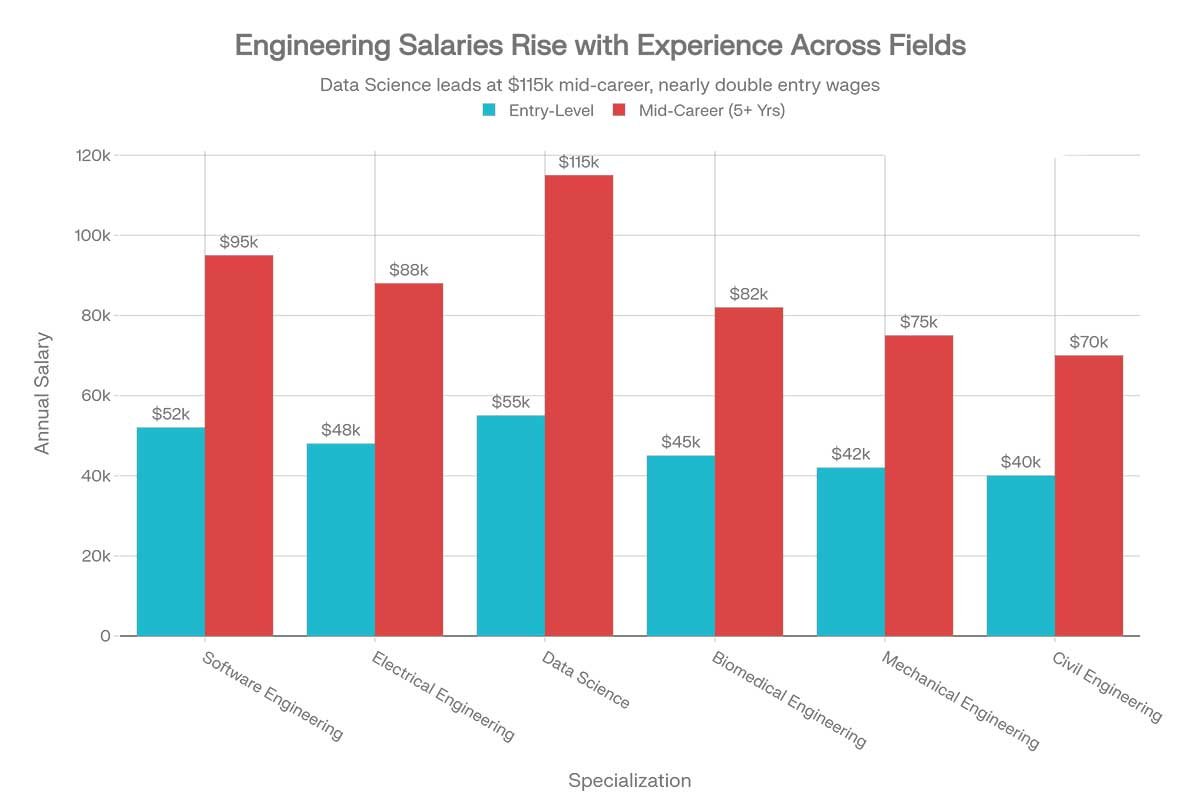
Modern BASc programs offer diverse specializations to meet evolving industry demands. Here are the most sought-after fields in 2026:
Engineering & Technology Specializations
Biomedical Engineering: Combines biology, physics, and engineering principles to develop life-saving medical technologies, from diagnostic devices to surgical innovations. Graduates work in medical device companies, hospitals, and biotech firms. Starting salary: ₹4-8 LPA.
Chemical Engineering: Teaches the transformation of raw materials into useful products across biotechnology, energy, pharmaceuticals, and environmental sectors. Strong global demand. Entry-level salary: ₹3-6 LPA.
Civil Engineering: Focuses on infrastructure design and construction, including buildings, bridges, roads, and water systems. High job stability with employment growth of 5-6% annually. Typical starting salary: ₹3-5 LPA.
Computer Engineering: Bridges software and hardware development. Graduates design processors, embedded systems, and hardware-software integration solutions. High demand from tech companies. Starting salary: ₹4-10 LPA.
Electrical Engineering: One of the most lucrative fields, covering power systems, renewable energy, electronics, and control systems. ROI: 1,600%+. Entry salary: ₹3.5-8 LPA.
Mechanical Engineering: Covers design and manufacturing of mechanical systems. Applications span automotive, aerospace, renewable energy, and HVAC sectors. Starting salary: ₹3-7 LPA. Median career salary: $84,190+.
Mechatronics Engineering: Combines mechanical, electrical, and software engineering to build smart machines, robotics, and autonomous systems. Rapidly growing field with strong future demand. Entry salary: ₹4-9 LPA.
Nanotechnology Engineering: Cutting-edge field designing materials and devices at the nanoscale. Applications in semiconductors, energy storage, and biomedical devices. High specialization value.
Software Engineering: Distinct from computer science, focuses on creating complex software systems. Entry salary: ₹4-10 LPA. Advanced roles (Data Scientist, Cloud Architect): ₹10-35 LPA.
Systems Design Engineering: Interdisciplinary approach to solving complex problems where human, technological, and environmental systems interact. Valuable for IoT, smart cities, and sustainability projects.
Emerging High-Growth Specializations
- AI and Machine Learning Engineering: Projected high growth, salary range ₹6-30 LPA
- Renewable Energy Engineering: Growing 10-12% annually; salary ₹4-12 LPA
- Robotics and Automation: Expanding rapidly across manufacturing; salary ₹5-15 LPA
- Data Science and Big Data Engineering: Highly paid field; ₹8-25 LPA
- Cybersecurity Engineering: Critical field; ₹8-22 LPA
- Environmental Engineering: Growing 12% annually; ₹4-10 LPA
Top Universities Offering BASc Programs Worldwide
Canada (Leading Destination)
University of Toronto: Highly ranked BASc programs across all engineering disciplines. Strong industry connections, excellent placement rates, average starting salary $65,000+ CAD.
University of British Columbia (UBC): Offers BASc across engineering, sciences, and applied fields. Campus in Vancouver offers strong tech industry networking. Acceptance rate: 60-70%.
University of Waterloo: Canada’s top-ranked engineering university. Renowned BASc programs with mandatory co-op placements providing real-world experience. Graduates command premium salaries: $70,000+ CAD starting.
McMaster University: Known for innovative BASc curricula with strong practical components. Focus on problem-based learning. Average tuition: CAD $15,000-25,000/year.
York University (Lassonde School of Engineering): Offers BASc in Computer Science and specialized engineering programs. Competitive admission with 80%+ average requirement.
University of Guelph: 8-semester BASc with focus on applied social and biological sciences. Renowned for research-integrated learning. Tuition: CAD $12,000-20,000/year.
Australia & New Zealand
Australian universities position BASc as a highly specialized professional degree with strong international recognition. Graduates earn 20-30% premium over other bachelor degrees.
European Institutions
Universities of applied sciences (Fachhochschule) in Germany, Netherlands, and Austria offer BASc-equivalent programs with strong practical focus and lower tuition fees ($5,000-12,000 EUR annually).
United States
Growing number of US institutions offering applied baccalaureate programs. Community colleges increasingly partner with universities for seamless transfer into 4-year BASc programs.
International Recognition
The BASc degree from Canadian and Australian institutions is globally recognized for master’s degree admission and professional licensing requirements.
Admission Requirements by Country
Canada
- High School Requirement: Ontario Secondary School Diploma (OSSD) or equivalent
- Minimum GPA: 75-80% for competitive programs
- Required Subjects: Physics (SPH4U or equivalent), Chemistry (SCH4U), Advanced Mathematics (MHF4U or equivalent)
- Minimum Average: 80-90% for top-tier programs like Waterloo
- English Proficiency: For international students: IELTS 6.5+ or equivalent
- Application Timeline: Applications open September; deadline typically January-March
- Cost: CAD $15,000-30,000 per year for domestic; CAD $35,000-60,000 for international
United States
- High School Diploma or GED: Required
- Minimum GPA: 2.0-3.0 on 4.0 scale (varies by institution)
- Standardized Tests: SAT/ACT scores (requirements vary)
- English Requirement: TOEFL/IELTS for international students (minimum scores: TOEFL 80+, IELTS 6.5+)
- Prerequisites: Algebra II, Geometry, Pre-Calculus or higher
- Cost: $30,000-60,000 per year
Australia
- High School Certificate or Equivalent: Required
- ATAR/TER Score: Typically 70-85 depending on institution
- English Requirement: IELTS 6.5+ for international students
- Cost: AUD $15,000-30,000 per year for international students
- Duration: Typically 4 years
United Kingdom
- A-Levels or Equivalent: Required
- Grade Requirements: A*-B in Physics, Chemistry, Mathematics
- UCAS Application: Required through centralized system
- Cost: £9,000-15,000+ per year for UK; £15,000-30,000 for international
India
Some Indian institutions offer BASc-equivalent programs through specialized institutes:
- IISER, IIT: Offer research-intensive engineering programs
- Admission: Through JEE (Joint Entrance Examination)
- Cost: ₹2-10 lakhs per year depending on institute type
- Duration: 4-5 years
Pro Tip: International students should plan applications 6-12 months in advance and prepare for English language proficiency tests simultaneously.
Career Paths & Job Opportunities
Career Landscape for BASc Graduates
One of the primary advantages of a BASc degree is the immediate career readiness graduates demonstrate. Employer surveys show that 70% of entry-level technical positions require a bachelor’s degree, and BASc graduates are increasingly preferred for their practical skills.
In-Demand Career Roles
Engineering Technologist/Technician: Apply technical knowledge to support engineers in designing, testing, and developing products. Salary range: $50,000-85,000 USD annually. Job growth: 6,700+ openings annually.
Software Developer: Create applications and software systems. Salary range: ₹6-20 LPA (India); $70,000-120,000 USD. High demand across all sectors.
Data Scientist: Analyze large datasets to drive business decisions. Salary range: ₹8-25 LPA (India); $100,000-160,000 USD. One of the fastest-growing roles.
Manufacturing Technologist: Optimize production processes and implement automation. Salary range: $55,000-90,000 USD. Strong job security in automotive, aerospace, and consumer goods.
Project Manager: With experience, BASc graduates transition into project management roles overseeing complex technical projects. Salary range: $80,000-150,000 USD. Typical career progression: 5-7 years post-graduation.
Quality Assurance Engineer: Develop and oversee testing protocols. Salary range: $60,000-100,000 USD. Consistent demand across manufacturing and tech sectors.
Environmental Engineer: Design sustainable solutions for water, air, and waste management. Salary range: $84,890+ USD. Job growth: 12% annually (faster than average).
Biomedical Engineer: Develop medical devices and healthcare technologies. Salary range: $65,000-120,000 USD. High growth potential with aging populations globally.
Cybersecurity Analyst: Protect digital infrastructure and data. Salary range: $80,000-150,000 USD. One of the fastest-growing tech fields with 12%+ annual growth.
Sales Engineer: Technical expertise combined with sales skills. Salary range: $70,000-130,000 USD + commissions. Bridge between engineering and business.
Industry Hiring Trends
Tech Industry: High demand for software engineers, cloud architects, and AI engineers. Average salary increase: 5-8% annually. Signing bonuses common (40.8% of employers offering bonuses).
Manufacturing: Strong demand for technologists and process engineers. Recovery from recent downturns. Entry-level to mid-career positions growing 3-5% annually.
Healthcare/Biotech: Expanding rapidly with aging populations. Biomedical engineers in particular high demand. Salary growth: 6-10% annually.
Renewable Energy: One of the fastest-growing sectors. Environmental and renewable energy engineers seeing 10-12% annual growth. Starting salaries competitive: $70,000+ USD.
Aerospace and Defense: Consistent demand despite cyclical nature. Entry-level positions: $65,000-90,000. Advancement opportunities substantial.
Salary Expectations & Return on Investment
Global Salary Benchmarks
India (Entry-Level)
- BTech/BASc Starting Salary: ₹2.5 – 4.5 LPA
- Mid-Career (5-10 years): ₹8 – 18 LPA
- Senior Positions (10+ years): ₹18 – 35+ LPA
- Data Scientists: ₹8-25 LPA
- Software Engineers: ₹6-20 LPA
Canada
- Entry-Level (BASc Engineering): CAD $55,000-75,000
- Mid-Career (5 years): CAD $75,000-110,000
- Senior (10+ years): CAD $110,000-180,000+
- Tech Sector Premiums: 15-25% higher than manufacturing
United States
- Entry-Level: $50,000-75,000
- Mid-Career: $80,000-130,000
- Senior: $130,000-220,000+
- Computer Engineering: $85,000-150,000+ (highest-paying BASc field)
- Petroleum Engineering: $90,000-150,000
Australia
- Entry-Level AUD: $55,000-75,000
- Mid-Career: AUD $80,000-130,000
- Senior: AUD $130,000+
Return on Investment Analysis
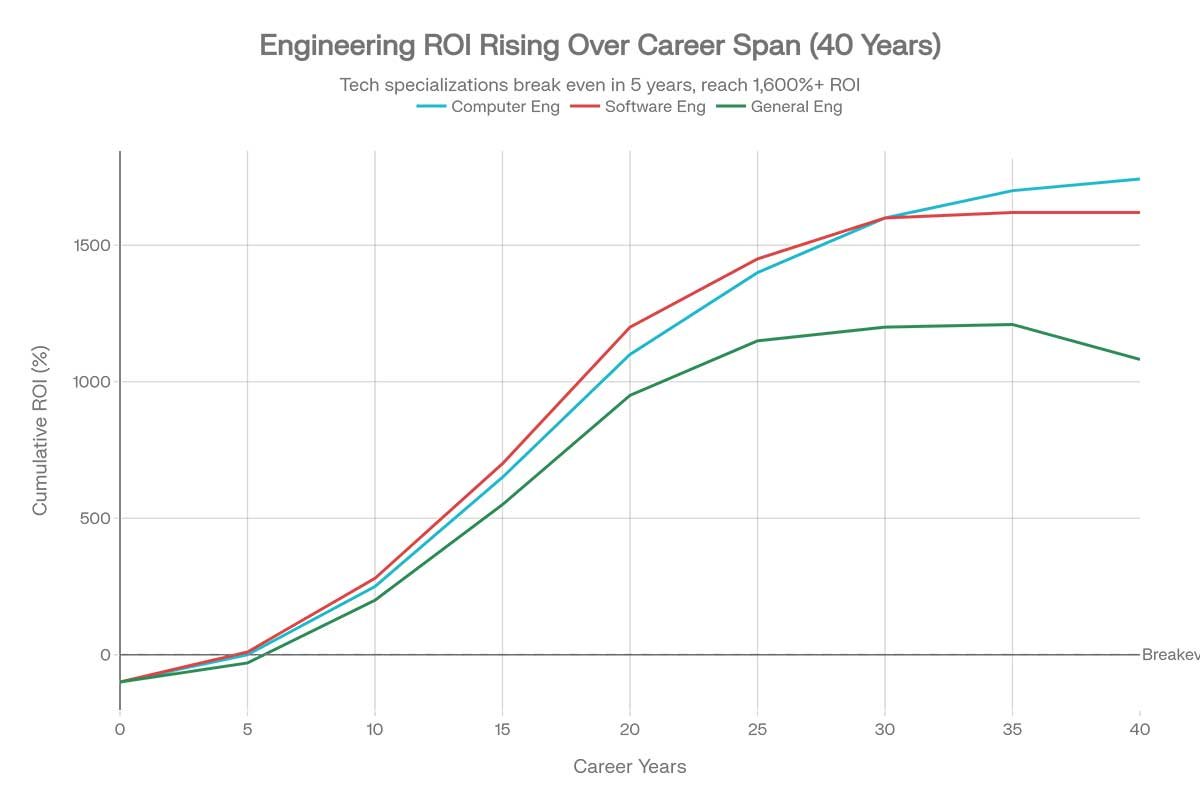
Engineering BASc ROI: 1,082% lifetime return
- Average investment: $100,000-150,000 USD (tuition + living costs)
- Payback period: 6 years
- Lifetime earnings premium: $800,000+
Computer Engineering BASc ROI: 1,743% lifetime return (highest among all degrees)
- Investment: $120,000-180,000
- Payback period: 5 years
- Lifetime earnings premium: $1,200,000+
Software Engineering BASc ROI: 1,600%+ lifetime return
- Investment: $100,000-160,000
- Payback period: 5 years
- Lifetime earnings premium: $1,100,000+
Comparative ROI with Other Degrees:
- Business degree (Finance): 1,842% ROI
- Computer Science: 1,752% ROI
- Economics: 1,707% ROI
- Bachelor of Education: -55.43% ROI (negative return)
- Average Bachelor’s Degree: 681.95% ROI
Employment Rates & Timeline to Job
Based on 2026-2027 employment data:
- Within 3 months of graduation: 70% employed or have job offers
- Within 6 months: 85% employment rate
- Peak earning years: Ages 40-55 (typically 15-20+ years post-graduation)
- Salary growth trajectory: 20-30% increase every 5 years with appropriate experience and skill development
Master’s Degree Impact
Pursuing a Master’s after BASc increases earning potential by 26-40%:
- Bachelor’s median (tech field): $101,600
- Master’s median (same field): $128,800
- Additional earning over career: $500,000-$1,000,000+
Skills You’ll Develop
Technical Skills
Programming & Software Development: Languages like Python, C++, Java, and frameworks for real-world applications
CAD and Design Software: Tools like AutoCAD, SolidWorks, MATLAB, and specialized engineering software
Data Analysis and Statistics: Using Python, R, SQL, and visualization tools like Tableau and Power BI
Hardware and Electronics: Circuit design, microcontrollers, embedded systems, and IoT applications
Database Management: SQL, NoSQL, and cloud-based database systems
Control Systems: PLC programming, automation, and robotics systems
Problem-Solving Skills
- Systematic approach to identifying, analyzing, and solving complex technical challenges
- Breaking down multi-step problems into manageable components
- Creative thinking within engineering constraints
- Critical evaluation of multiple solution pathways
Professional & Soft Skills
Project Management: Leading teams, managing timelines and budgets, coordinating cross-functional work
Communication: Technical writing, presentations to non-technical audiences, documentation
Teamwork: Collaborative design projects, cross-disciplinary team environments, mentoring
Time Management: Meeting deadlines with multiple competing priorities
Leadership: Natural progression from technologist to team lead and management roles
Adaptability: Continuous learning in rapidly evolving tech landscape; staying current with industry standards
Industry-Specific Certifications
BASc graduates often pursue additional certifications to advance careers:
- Professional Engineer (PE/PEng): Required for senior engineering roles
- Project Management Professional (PMP)
- Certified Data Scientist
- Cisco, CompTIA, Microsoft Certifications (tech roles)
- Lean Six Sigma Certification (manufacturing/quality)
- SOLIDWORKS Certifications (design)
Hands-On Learning & Practical Experience
Distinguishing Features of BASc Education
The BASc degree’s hallmark is its emphasis on learning by doing. This approach transforms abstract concepts into tangible skills employers demand.
Lab and Workshop Experience
Students spend significant time in specialized facilities:
- Engineering labs: Working with real equipment, building prototypes, testing designs
- Computer labs: Hands-on programming, software development, network configuration
- Manufacturing shops: Understanding production processes, CNC machining, quality control
- Simulation facilities: Virtual testing of systems before real-world implementation
Project-Based Learning
Throughout the program, students tackle real-world problems:
- Capstone projects: 4th-year comprehensive projects mirroring actual industry challenges
- Design competitions: Teams compete in national/international engineering competitions
- Industry partnerships: Real projects for actual companies as part of coursework
Internship and Co-op Programs
Mandatory co-op experiences (particularly in Canadian programs):
- Duration: Typically 4-8 months per rotation, 2-3 rotations during degree
- Timing: Alternating work and study terms
- Benefits:
- Earn $15,000-25,000+ per co-op term (varies by location/field)
- Build professional network
- Test career interests before graduation
- Gain resume credentials for post-graduation employment
- Success rate: 80-90% of co-op students receive full-time offers from co-op employers
Applied Research Opportunities
- Participate in faculty research projects aligned with industry needs
- Contribute to developing new materials, processes, or technologies
- Publications and patent opportunities available to high-performing students
- Exposure to emerging technologies (AI, quantum computing, nanomaterials)
Postgraduate Opportunities After BASc
Master’s Degree Pathways
A BASc opens doors to specialized master’s programs without requiring a pre-master’s year (unlike some universities).
Applied Master’s Degrees:
- Master of Engineering Management
- Master of Mechanical Engineering
- Master of Software Engineering
- Master of Environmental Engineering
- Master of Engineering Systems
- Master of Data Science
Academic Master’s Degrees:
- MSc in Specialized Engineering Fields
- MSc in Pure Sciences
- MBA (business-focused alternative)
Entry Requirements for Master’s:
- Minimum 2.0 GPA from bachelor’s degree
- Relevant academic background in your specialization
- For research-focused master’s: typically requires GPA 3.0+
- IELTS 6.5+ or TOEFL 80+ for international programs
- Application timeline: 6-12 months before intended start date
Cost of Master’s Programs
- Canada: CAD $10,000-30,000 per year
- US: $25,000-60,000+ per year (varies widely)
- Australia: AUD $15,000-40,000 per year
- Europe: €5,000-20,000 per year (often significantly lower)
- Duration: Typically 1-2 years full-time
Doctoral Pathways (PhD/DPhil)
- BASc provides foundation for research-intensive PhD programs
- PhD typically 4-5 years full-time
- Often fully funded through scholarships and assistantships
- Positions students for academic and advanced research careers
- Prerequisite for becoming a research scientist or professor
Professional Certifications Post-Graduation
- Professional Engineer License (PE/PEng/CEng): Typically requires 4+ years experience + exam
- Specialized technical certifications: Field-dependent (AWS, Certified Kubernetes Administrator, etc.)
- MBA: Many BASc graduates pursue business degrees for management advancement
FAQs About Bachelor of Applied Science Degrees
Q1: How long does a BASc degree take to complete?
A: Typically 3-4 years depending on the institution and country. Canadian programs often use a co-op model stretching to 5 years when work terms are included. International variations exist.
Q2: Is BASc harder than BSc?
A: Difficulty is comparable, but approaches differ. BASc emphasizes practical application while BSc emphasizes theoretical depth. Students typically find BASc more immediately applicable and engaging.
Q3: Can BASc graduates pursue graduate studies?
A: Yes, absolutely. BASc graduates can pursue master’s degrees and PhDs. Some research-intensive universities may require additional prerequisite coursework, but this is increasingly rare.
Q4: What’s the job market like for BASc graduates in 2026?
A: Strong overall. Approximately 6,700 new engineering technology positions open annually. Growth rates vary by specialization: Renewable energy (12%+), Environmental (12%), AI/ML (10%+), Software (8%+), Traditional manufacturing (2-5%).
Q5: Is a BASc degree recognized internationally?
A: Yes, particularly BASc degrees from Canadian, Australian, UK, and US institutions. Recognition is strongest in English-speaking countries and European nations. Graduates from top institutions can work globally.
Q6: How much does a BASc degree cost?
A: Varies significantly by country:
- Canada: CAD $15,000-60,000/year
- US: $30,000-75,000/year
- Australia: AUD $15,000-45,000/year
- Europe: €5,000-15,000/year
- India: ₹2-10 lakhs/year
Q7: What’s the average starting salary for BASc graduates?
A: Ranges from $50,000-85,000 USD ($40,000-65,000 CAD) depending on field, location, and employer. Tech sector commands premium salaries.
Q8: Can I become a Professional Engineer with a BASc?
A: Yes, in most jurisdictions. BASc is recognized as professional engineering education. You’ll need relevant experience (typically 4+ years) and pass licensing exams (Professional Engineer exam varies by region).
Q9: How does co-op experience affect job prospects?
A: Dramatically. Students with 2-3 co-op placements enter the job market with:
- 12-24 months of relevant work experience
- Established professional networks
- 80-90% receive full-time offers from previous co-op employers
- Average starting salary 15-25% higher than non-co-op peers
Q10: What’s the difference between engineering and engineering technology?
A: Subtle but important:
- Engineering (BASc): Broader theoretical foundation, preparation for advanced engineering roles and design leadership
- Engineering Technology: More specialized technical skills, direct entry into technologist/technician roles
- Both have strong career prospects; engineering allows more career flexibility long-term
Q11: Is BASc better than BTech?
A: They’re roughly equivalent, with regional naming differences:
- BTech: Common in India, Bangladesh, Pakistan; 4 years
- BASc: Common in Canada, Australia; 3-4 years
- Engineering degree: US terminology; 4 years
- All are professional engineering degrees with similar career prospects
Q12: Can international students apply to BASc programs?
A: Yes, most Canadian and US universities actively recruit international students. Requirements include:
- Proof of English proficiency (IELTS, TOEFL)
- High school transcripts/equivalent
- Standardized test scores (SAT/ACT for US; sometimes required for Canada)
- Student visa eligibility in destination country
- Financial proof for tuition and living expenses
Conclusion: Is a BASc Degree Right for You?
The Bachelor of Applied Science represents a powerful pathway for students seeking immediate technical careers with strong earning potential and global mobility. With an average ROI of 1,082% and employment rates reaching 85% within six months of graduation, the BASc stands as one of the most career-practical bachelor’s degrees available.
Whether you’re interested in building tomorrow’s infrastructure, developing cutting-edge software, creating medical innovations, or designing sustainable solutions, the BASc provides the practical foundation, industry connections, and professional credentials needed to launch a successful, fulfilling career.
The degree’s emphasis on hands-on learning, mandatory internships/co-ops, and real-world problem-solving ensures graduates enter the workforce not as entry-level novices, but as confident, capable professionals ready to make immediate contributions to their organizations.
Key Takeaways:
- Strong ROI (1,082%+ lifetime return) with 5-6 year payback period
- Diverse specialization options across growing industries
- 85% employment within 6 months of graduation
- Global recognition and mobility opportunities
- Pathway to both technical careers and advanced degrees
- Starting salaries $50,000-85,000 USD depending on field and location
If you’re ready to combine theoretical knowledge with practical skills, eager to solve real-world problems, and motivated by a career with strong job security and earning potential, a BASc degree could be your ideal choice.


Leave a Reply
You must be logged in to post a comment.