
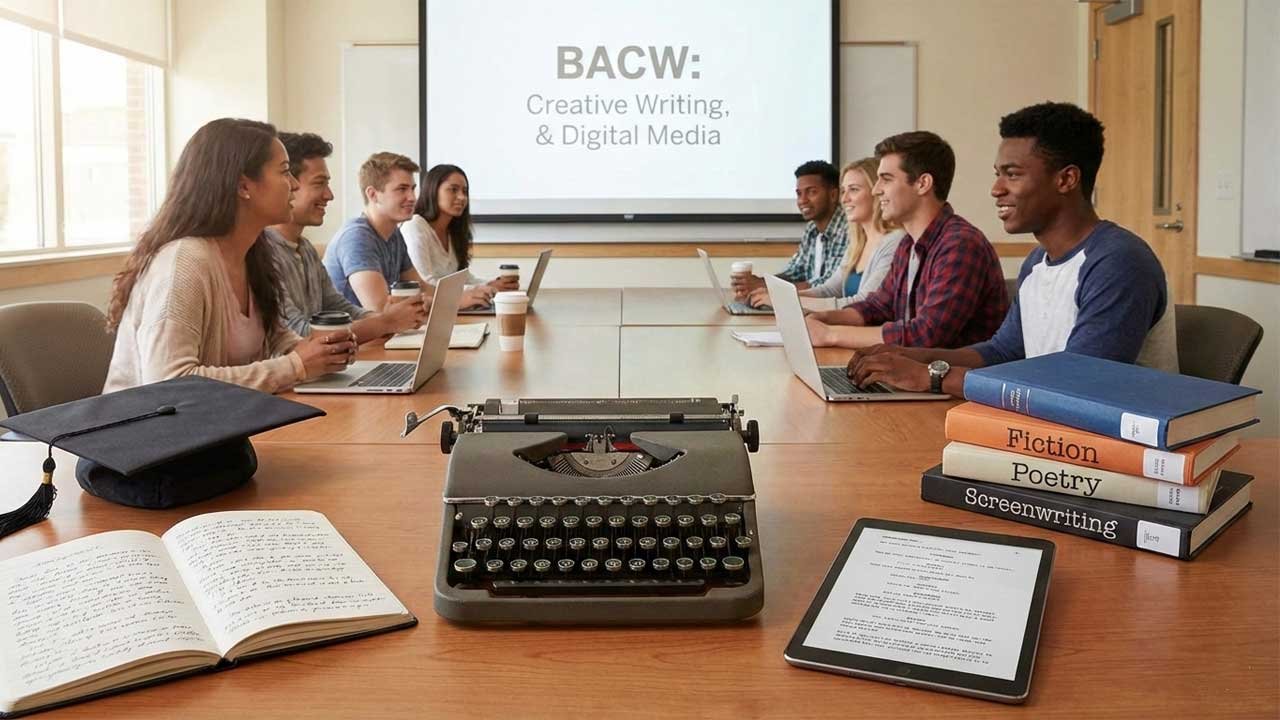
A Bachelor of Arts in Creative Writing (BACW) is a four-year undergraduate degree that develops strong writing, critical thinking, research, and communication skills through workshops and literary study across genres such as fiction, poetry, screenwriting, and drama.
The program emphasizes developing a unique creative voice, building a professional portfolio, and gaining industry-relevant skills in editing, publishing, and storytelling. Graduates are prepared for diverse careers including authorship, copywriting, journalism, content creation, editing, screenwriting, publishing, and teaching, with opportunities expanding in digital media, marketing, and emerging technologies.
Offered by leading universities worldwide in on-campus, online, and hybrid formats, the BACW provides flexible pathways, transferable skills, and long-term career growth, making it a valuable degree for both creative fulfillment and professional success.
| Category | Information |
|---|---|
| Degree Type | Undergraduate (Bachelor of Arts) |
| Duration | 3–4 years (full-time) |
| Focus Areas | Fiction, poetry, screenwriting, drama, editing |
| Learning Style | Writing workshops + literary analysis |
| Skills Gained | Creative writing, critical thinking, research, communication |
| Program Outcome | Professional writing portfolio |
| Career Options | Author, copywriter, journalist, editor, screenwriter, teacher |
| Industries | Publishing, media, marketing, entertainment, education |
| Admission Needs | Strong English background, writing portfolio |
| Study Modes | On-campus, online, or hybrid |
What Is a Bachelor of Arts in Creative Writing?
A Bachelor of Arts in Creative Writing (BACW) is a four-year undergraduate degree. It develops your writing skills across multiple genres. You study fiction, poetry, screenwriting, and drama. The program combines practical writing workshops with literary analysis. Students learn the craft of writing from experienced faculty. You develop your unique voice as a writer. This degree prepares you for creative careers in publishing, media, and entertainment.
Why Choose a Creative Writing Degree?
Writing skills remain in high demand across industries. A creative writing degree teaches more than storytelling. You gain research abilities. You develop critical thinking skills. You learn communication that works in any profession. The degree is flexible and adaptable. Employers value the skills creative writers possess. You build a professional portfolio during your studies. Many graduates launch successful careers immediately after graduation.
Core Subjects in BACW Programs
Fiction Writing
Fiction courses teach narrative structure and character development. You write short stories and novel chapters. Instructors provide detailed feedback on your work. You learn editing and revision techniques. Peer workshops help you improve your craft. Advanced courses focus on specific genres like mystery, romance, or science fiction.
Poetry Writing
Poetry classes explore various forms and styles. You study classical and contemporary poets. You practice different poetic techniques. Workshops focus on imagery, rhythm, and meaning. You develop your personal poetic voice. Advanced students often publish their work in literary journals.
Screenwriting and Dramatic Writing
Screenwriting courses teach script formatting and structure. You learn to write dialogue that sounds authentic. You study successful films and television shows. Dramatic writing classes cover stage plays and dramatic works. Many programs offer production opportunities. Your scripts may be performed by student actors during the program.
Professional Writing and Editing
These courses prepare you for publishing careers. You learn editing techniques and proofreading skills. Understanding of publishing industry standards is covered. Technical writing and copywriting basics are taught. You gain knowledge of style guides and formatting. Internship opportunities connect you with industry professionals.
Program Structure and Duration
Most BACW programs require 120 semester hours. Minimum 36-42 credit hours focus on creative writing courses. The remaining credits include literature studies and general education. Programs typically take four years to complete. Some universities offer accelerated three-year options. Online and hybrid delivery models are increasingly available. Full-time and part-time enrollment options exist at many institutions.
Career Opportunities After BACW
Author and Novelist
Authors write fiction and non-fiction books. Your average salary as an author is ₹6,07,575 per year in India. Top earners make significantly more. Self-publishing offers additional income potential. Many successful authors combine writing with teaching. Building an audience takes time and persistence. Your first book is often the hardest to sell. Author income varies widely based on sales and contracts.
Copywriter and Marketing Writer
Copywriters create persuasive marketing messages. Average salary ranges from ₹4,13,919 to ₹60,000 per month. Copywriting skills apply to advertisements, email campaigns, and social media. You write compelling product descriptions and promotional content. This career offers strong earning potential. Companies always need skilled copywriters. Copywriting skills are highly valued in digital marketing.
Journalist and Magazine Writer
Journalists report news and current events. Magazine writers create feature stories and articles. Career earnings range from ₹2,46,322 to ₹5,00,000+ annually. Many journalists work for newspapers, magazines, or online news sites. Freelance journalism offers flexible income opportunities. Digital journalism is growing rapidly. Strong research skills are essential for this path.
Content Writer
Content writers create blog posts and website copy. Average salary is ₹2,93,480 per year in India. This role works well for remote employment. You might specialize in SEO content writing. Technical content writing commands higher rates. Content writing offers flexible work arrangements. Freelance content writers earn between ₹50,000 and ₹90,000 monthly with experience.
Editor and Proofreader
Editors review and improve written content. Average editor salary ranges from $61,529 to $80,800 annually. Proofreading commands premium rates from clients. Publishing houses hire editors and proofreaders. Freelance editing offers excellent earning potential. Your editing skills are always in demand. Editors earn between ₹50,000 and ₹80,000+ monthly with experience.
Screenwriter
Screenwriters create scripts for film and television. You write for movies, TV shows, web series, and video games. Strong networking is essential in this field. Your first screenplay is typically the hardest to sell. Successful screenwriters earn substantial income from contracts. Screenwriting combines creativity with commercial appeal. Many screenwriters work on a freelance or project basis.
Publishing Industry Roles
Publishing houses employ creative writers in multiple positions. Editorial assistants support editors and publishers. Literary agents represent authors and manage contracts. Marketing managers promote published books. Rights managers handle licensing and adaptations. Publishing careers offer stable employment and advancement opportunities. Your creative writing background gives you significant advantages in publishing.
Teaching Creative Writing
Educational institutions hire creative writing instructors. Universities employ full-time and adjunct faculty. Secondary schools hire writing teachers. Adult education centers offer writing classes. Teaching income ranges from ₹35,000 to ₹1,20,000+ monthly. Teaching allows you to influence the next generation of writers. Many teachers combine writing with instruction.
Top Universities for BACW Programs
United Kingdom
- University of Warwick (Ranked #1 for creative writing 2025)
- University of Manchester (Located in UNESCO City of Literature)
- University of Oxford
- University of Cambridge
- Goldsmiths, University of London
United States
- Harvard University
- Stanford University
- University of Iowa (Strong MFA program)
- New York University (NYU)
- University of Washington
India
- Ashoka University (Undergraduate program in creative writing)
- Ambedkar University Delhi
- Presidency University
Australia and Other Regions
- University of Melbourne
- University of Sydney
- University of Toronto (Canada)
Admission Requirements for BACW
Academic Prerequisites
Most universities require strong English grades. A-levels or IB qualifications are typically needed. High school diploma or equivalent is mandatory. Some programs accept contextual offers for eligible candidates. Your grades in English Literature are most important. Writing samples or essays strengthen applications. Strong communication skills are essential.
Application Materials
Most programs require a writing portfolio. Your portfolio typically includes 10-20 pages of original work. Fiction, poetry, or mixed samples are acceptable. Cover letter explaining your writing goals. Personal statement about your creative interests. Academic references from teachers or instructors. Some universities conduct interviews with shortlisted candidates.
English Language Requirements
International students typically need IELTS or TOEFL scores. Minimum IELTS band is usually 6.5 or higher. TOEFL scores of 100+ are typically required. Some universities waive these for native speakers. English proficiency is non-negotiable for this degree. Strong written communication is central to the program.
Skills You Will Develop
Creative Expression
You learn to express ideas in unique ways. Developing your authentic voice is central to the program. You explore different writing styles and techniques. You create original characters and compelling narratives. Your creative confidence grows throughout the program. Peer feedback helps refine your creative vision.
Critical Thinking
Analyzing literature builds strong analytical skills. You learn to identify themes, symbolism, and meaning. Understanding story structure improves your writing. Critiquing others’ work develops your evaluation abilities. You apply literary theory to your own writing. Critical thinking transfers to all professional fields.
Research and Investigation
Strong research skills support all writing. You learn to find and evaluate sources. Fact-checking becomes second nature. Understanding different research methodologies is essential. You discover how to conduct interviews and gather information. Research skills are valuable in many careers.
Collaboration and Feedback
Workshop settings teach collaboration with peers. Receiving constructive feedback improves your work. Giving feedback to others develops your editorial eye. Networking with fellow writers creates lasting connections. Teamwork skills are essential in publishing and media. Professional relationships often lead to future opportunities.
Cost and Financial Considerations
Tuition and Fees
UK universities typically cost £9,000-£25,000+ annually. US universities range from $30,000-$80,000+ per year. Indian universities cost significantly less: ₹2,00,000-₹5,00,000 annually. Total four-year degree costs vary widely. Budget for books, software, and materials. Consider living expenses in addition to tuition.
Scholarships and Financial Aid
Many universities offer merit-based scholarships. Need-based financial aid is available at many institutions. Athletic scholarships may apply to some programs. Subject-specific scholarships support creative writing students. Government loans and grants are available. External organizations offer writing-specific scholarships. Scholarships can reduce or eliminate tuition costs.
Return on Investment
Graduate salaries typically range from $30,866 early career. Five years experience increases earnings to $36,061+. Top earners make $73,586+ annually. Your earning potential depends on career choices. Publishing and screenwriting offer high earning potential. Teaching provides stable income and benefits. Freelance writing offers variable but often excellent income.
How to Succeed in a BACW Program
Read Extensively: Reading great literature improves your writing. Read in your chosen genres regularly. Explore classic and contemporary works. Understanding literary traditions strengthens your work. Reading develops your critical analysis skills. Set a reading goal of at least one book monthly. Different genres teach different writing techniques.
Write Every Day: Consistent writing develops your craft. Writing daily builds discipline and habit. Morning pages or journaling keeps your skills sharp. Experiment with different genres and styles. Track your writing progress in a journal. Daily practice reveals patterns in your work. Professional writers maintain daily writing routines.
Seek Feedback and Critique: Join writing groups and critique circles. Peer feedback identifies strengths and weaknesses. Learn to receive criticism constructively. Give thoughtful feedback to other writers. Professional critique services offer expert advice. Revision based on feedback improves your work. The best writers continuously refine their craft.
Build Your Writing Portfolio: Submit work to literary journals during college. Building publication credits strengthens job prospects. Online platforms publish emerging writers. Enter writing competitions for recognition. Create a professional website showcasing your work. A strong portfolio opens career doors. Publications demonstrate your professional credibility.
Network in the Writing Community: Attend writing conferences and workshops. Connect with published authors and industry professionals. Join online writing communities and forums. Building relationships leads to career opportunities. Networking often results in collaboration and mentorship. Professional networks support long-term career growth. Industry connections are invaluable for writers.
Online BACW Programs
Advantages of Online Learning
Online programs offer schedule flexibility. You study from anywhere with internet access. Tuition is often lower than on-campus programs. You maintain employment while studying. Balancing work and education is possible. Online workshops connect you with writers worldwide. Self-paced learning suits some students well.
Reputable Online Providers
Many traditional universities now offer online BACW degrees. Open University offers distance learning creative writing programs. Coursera and Udemy provide creative writing courses. Extended university programs combine flexibility with credentials. Verify accreditation before enrolling. Research program reviews and graduate outcomes. Ensure programs include peer feedback and workshops.
Common Challenges in Creative Writing Programs
Writer’s Block
Writer’s block affects most creative writers. Solutions include daily writing exercises and prompts. Changing your environment can spark creativity. Discussing ideas with others helps generate momentum. Sometimes stepping away briefly helps. Reading other authors’ work often reignites inspiration. Writer’s block is temporary and manageable with techniques.
Criticism and Rejection
Receiving critical feedback can be difficult. Rejection is part of every writer’s journey. Professional writers accumulate many rejections. Developing resilience is essential for writers. Your work isn’t personal—feedback strengthens your writing. Learning to separate yourself from your work helps. Successful authors share stories of numerous rejections.
Balancing Commercial and Literary Aspirations
Some writers want commercial success; others seek artistic expression. Many successful writers achieve both goals. Understanding your audience shapes your writing. Commercial appeal doesn’t diminish literary quality. Many bestselling books are also critically acclaimed. Your goals may evolve throughout your career. Different types of writing serve different purposes.
Career Growth and Continuing Education
Master’s Degree Options
An MFA (Master of Fine Arts) develops advanced skills. Most MFA programs require 2-3 years of study. MFA graduates often teach creative writing. Master’s programs provide specialized training. PhD programs prepare you for academic positions. Specialized master’s programs exist in screenwriting, publishing, and journalism. Advanced degrees increase earning potential in academic settings.
Professional Development
Writing conferences build skills and connections. Workshops with established authors accelerate learning. Online courses from reputable organizations develop specific skills. Writing residencies provide focused creative time. Industry certifications enhance credentials. Teaching certifications prepare you for educational roles. Continuous learning keeps your skills current.
Building Your Author Platform
Starting a blog builds your audience. Social media presence connects you with readers. Email newsletters maintain reader relationships. Speaking engagements establish authority. Guest posting on popular blogs increases visibility. Podcast appearances reach new audiences. Building an author platform takes consistent effort over time.
The Future of Creative Writing as a Career
Growing Opportunities
Digital content creation demands skilled writers constantly. Streaming services produce vast amounts of content. Online publishing platforms proliferate. Self-publishing offers viable career paths. Content marketing expands writer opportunities. Virtual assistant roles for writers emerge. Writing careers are evolving and expanding.
Emerging Markets
Audio content (podcasts, audiobooks) requires writers. Video content increasingly needs script writers. Interactive fiction and games need talented writers. Virtual reality experiences require specialized writing. Corporate training content demands professional writers. Technical writing for AI and software grows rapidly. Emerging technologies create new writing career paths.
Staying Relevant
Digital literacy is increasingly essential. Understanding SEO improves content visibility. Learning multimedia production enhances marketability. Adaptability to new platforms matters greatly. Continuous skill development keeps you competitive. Understanding your audience’s preferences shapes your work. Flexibility ensures long-term career success.
Conclusion
A Bachelor of Arts in Creative Writing opens doors to diverse career opportunities. Your writing skills remain valuable across industries. Strong earning potential exists in multiple fields. The degree develops transferable skills beyond writing. Creative writing careers offer fulfillment and financial reward.
Whether you pursue traditional publishing, screenwriting, content marketing, or teaching, your BACW degree provides a strong foundation. Start building your writing portfolio today. Your creative journey begins now.
FAQs
What is a Bachelor of Arts in Creative Writing?
It is an undergraduate degree focused on developing writing skills across genres like fiction, poetry, screenwriting, and drama through workshops and literary study.
How long does a BA in Creative Writing take?
Most programs take three to four years to complete, depending on the country and study mode.
What skills do students gain from this degree?
Students develop creative expression, critical thinking, research ability, editing skills, communication, and collaboration.
Is a writing portfolio required for admission?
Many universities require a portfolio of original writing, though requirements vary by institution.
Can I study Creative Writing online?
Yes, many universities offer online or hybrid Creative Writing programs with workshops and peer feedback.
What careers can I pursue after this degree?
Graduates work as authors, content writers, copywriters, journalists, editors, screenwriters, teachers, and publishing professionals.
Is Creative Writing a practical degree?
Yes, it builds transferable skills valued across industries such as media, marketing, education, and digital content.
Do Creative Writing graduates earn well?
Earnings vary by role, experience, and location, with strong potential in copywriting, content marketing, publishing, and screenwriting.
Does this degree help with publishing a book?
It helps by improving craft, building a portfolio, and offering industry exposure, but publication depends on persistence and market factors.
Is Creative Writing only for aspiring authors?
No, the degree suits anyone interested in communication, storytelling, media, or creative industries.
What subjects are taught in the program?
Common subjects include fiction writing, poetry, screenwriting, dramatic writing, editing, and literary analysis.
Can I combine Creative Writing with another subject?
Many universities allow double majors or minors in fields like journalism, media studies, or marketing.
Is an MFA required after a BA in Creative Writing?
An MFA is optional and mainly needed for advanced writing practice or teaching at the university level.
Are internships part of the program?
Some programs offer internships in publishing, media, or marketing to gain real-world experience.
What makes a Creative Writing degree valuable?
Its flexibility, emphasis on communication, and applicability across traditional and digital careers make it highly valuable.
Is strong English required for this degree?
Yes, strong reading and writing skills in English are essential for success.
Can international students apply for BACW programs?
Yes, international students can apply, usually with proof of English proficiency.
Does the degree focus more on creativity or academics?
It balances creative practice with academic study of literature and theory.
Is Creative Writing suitable for freelancing careers?
Yes, many graduates work as freelance writers, editors, and content creators.
What is the biggest challenge in a Creative Writing program?
Handling feedback, overcoming writer’s block, and maintaining consistent writing habits are common challenges.


Leave a Reply
You must be logged in to post a comment.