

The Bachelor of Science in Neuroscience (BScNeuro) is a rigorous, interdisciplinary undergraduate degree that integrates biology, psychology, chemistry, and quantitative sciences to study the structure, function, and disorders of the nervous system, preparing students for careers in healthcare, research, and neurotechnology.
Its structured curriculum progresses from foundational sciences to advanced clinical, research, and neuroimaging applications, while global admission standards emphasize strong academic performance and research exposure. Graduates benefit from diverse career pathways with strong ROI potential, ranging from research and industry roles to high-earning clinical professions with further training (MD/PhD), and salaries that scale significantly with experience and geography.
Driven by growth in neurotechnology, mental health, aging populations, and AI integration, BScNeuro offers substantial financial, intellectual, and societal returns, making it a high-value option for students with strong scientific aptitude, long-term career vision, and geographic flexibility.
| Category | Information |
|---|---|
| Degree Name | Bachelor of Science in Neuroscience (BSc Neuroscience / BScNeuro) |
| Duration | 3 years (UK, Europe, India) · 4 years (USA, Canada) |
| Discipline | Interdisciplinary (Biology, Psychology, Chemistry, Physics, Mathematics) |
| Core Subjects | Neuroanatomy, Neurophysiology, Molecular Neuroscience, Cognitive Neuroscience, Neuropharmacology, Research Methods |
| Eligibility | 10+2 with BiologyCB (Biology & Chemistry mandatory); Physics/Maths preferred |
| Admission Criteria | Merit-based, entrance exams, or standardized tests depending on country |
| Global Study Destinations | USA, UK, Canada, Australia, Europe, India |
| Entry-Level Careers | Research Assistant, Lab Technician, Clinical Trial Coordinator, Pharma Associate |
| Higher Study Pathways | MD, MSc Neuroscience, PhD, PsyD, Biomedical Engineering |
| Average Starting Salary | USA: $50k–$65k · UK: £25k–£35k · India: ₹3–4 LPA |
| Long-Term Salary Potential | $120k–$220k+ with specialization and experience |
| Emerging Fields | Neurotechnology, AI & Computational Neuroscience, Digital Therapeutics |
| ROI Outlook | High (especially with advanced degrees and international exposure) |
| Ideal For | Students with strong science aptitude and interest in brain research |
The Complete Guide to Bachelor of Science in Neuroscience (BScNeuro): Career ROI, Global Opportunities, and High-Value Education Path
What is a Bachelor of Science in Neuroscience? A Bachelor of Science in Neuroscience (BScNeuro) is an intensive three-to-four-year undergraduate degree that provides students with a comprehensive understanding of the nervous system’s structure, function, and disorders. This interdisciplinary program merges biology, psychology, chemistry, physics, and mathematics to explore how neural circuits generate behavior, cognition, and consciousness.
Unlike traditional biology or psychology degrees, BScNeuro offers specialized training in neuroanatomy, neurophysiology, molecular neurobiology, and cognitive neuroscience, preparing graduates for cutting-edge careers in healthcare, research, and neurotechnology. The program’s rigorous scientific foundation makes it one of the most intellectually demanding yet rewarding undergraduate pathways available.
Core Curriculum and Course Structure
The BScNeuro curriculum is systematically designed to build expertise from foundational sciences to advanced neurobiological concepts. While specific course sequences vary by institution, the typical six-semester structure includes:
First Year: Foundational Sciences
- Neurophysiology and Neuroanatomy – Understanding nervous system structure and electrical signaling
- Molecular Biology and Neurogenetics – Genetic basis of neural development and function
- Applied Physics and Biochemistry – Physical and chemical principles underlying neural activity
- Microbiology and Embryology – Developmental biology and pathogenic influences on neural systems
Second Year: Specialized Neuroscience
- Neuropharmacology – Drug actions on neural circuits and synaptic transmission
- Cognitive Neuroscience – Neural basis of memory, attention, and decision-making
- Neuropathology – Disease mechanisms in neurodegenerative and psychiatric disorders
- Cell Biology and Biostatistics – Research methodologies and quantitative analysis
Third Year: Advanced Applications
- Clinical Neuroscience – Diagnostic approaches and therapeutic interventions
- Neuroimaging and Neurotechnology – fMRI, EEG, and brain-computer interfaces
- Research Methodology – Independent project design and data analysis
- Professional Development – Ethics, communication, and career preparation
This comprehensive curriculum ensures graduates possess both theoretical knowledge and practical laboratory skills essential for high-paying neuroscience careers.
Global Admission Requirements and Eligibility
Academic Prerequisites
Top universities worldwide maintain rigorous entry standards for BScNeuro programs:
United Kingdom (Leading Institutions):
- A-level grades: AAA-AAB, including grade A in Biology and Chemistry
- GCSE requirements: English Language and Mathematics at grade B/6 minimum
- Alternative qualifications: Access to HE Diploma with 36+ credits at Distinction in science units
United States:
- High school GPA: 3.5+ with advanced science coursework
- SAT Subject Tests: Biology and Chemistry recommended
- AP Biology/Chemistry scores of 4+ often required
India and International Programs:
- 10+2 with Physics, Chemistry, Biology (PCB) minimum 50-60% aggregate
- Age limit: Typically 17-25 years
- Entrance exams: NEET, institute-specific CETs, or merit-based admission
Competitive Edge Strategies
Prospective students should demonstrate:
- Laboratory research experience (summer internships, science fairs)
- Strong quantitative skills (calculus, statistics)
- Evidence of scientific curiosity through projects or publications
- Volunteer work in healthcare or mental health settings
Career Prospects and Salary Potential: The ROI Analysis
High-Growth Career Pathways
BScNeuro graduates access diverse, high-paying career tracks across healthcare, research, and technology sectors:
Clinical and Healthcare Careers:
- Neurologist (requires MD): $220,109 median annual salary
- Neuropsychologist (requires PhD/PsyD): $94,340 median annual salary
- Nurse Practitioner (requires MSN): $119,999 median annual salary, 25.7% projected job growth
- Medical Scientist: $95,129 median annual salary, 10.1% projected growth
Research and Academic Careers:
- Biological Science Professor: $79,062 median annual salary
- Research Scientist: $50,000-$80,000 entry-level; $100,000+ with PhD
- Neurotechnology Developer: $75,000-$120,000 depending on specialization
Industry and Corporate Roles:
- Natural Sciences Manager: $137,904 median annual salary
- Pharmaceutical Sales Specialist: $70,000-$90,000 plus commissions
- Biomedical Engineer: $85,000-$110,000 in neurotech startups
Global Salary Comparison
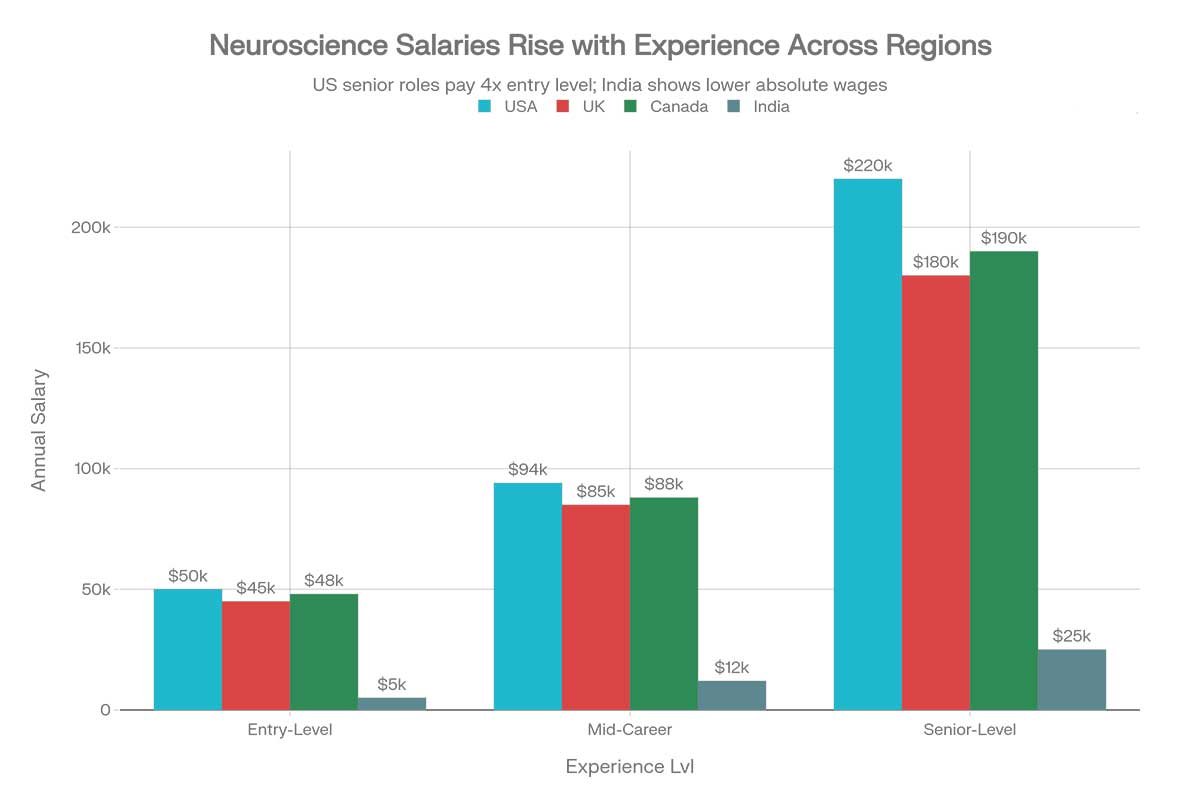
The financial returns on a BScNeuro degree vary significantly by region and experience level:
Entry-Level Salaries (0-2 years):
- United States: $50,000-$65,000 (research associate positions)
- United Kingdom: £25,000-£35,000 ($32,000-$45,000)
- India: ₹3-4 lakh annually ($4,000-$5,000 USD equivalent)
- Canada: CAD 45,000-55,000 ($35,000-$43,000)
Mid-Career Salaries (5-10 years):
- United States: $94,340 (neuropsychologists) to $137,904 (science managers)
- India: ₹8-10 lakh annually ($10,000-$12,500) with master’s degree
- Global average with PhD: $80,000-$120,000 in academic research
Senior-Level Compensation (15+ years):
- Neurologists in the US: $220,109+ annually
- Senior neuroscientists in India: ₹20-40 lakh ($25,000-$50,000) in specialized fields
- Neurotech executives: $150,000-$250,000+
The following visualization illustrates the dramatic salary progression across major markets:
Top Global Universities for BScNeuro
United Kingdom
- University College London (UCL): AAA with Chemistry and Biology required
- University of Manchester: AAA-AAB, contextual admissions available
- King’s College London: AAA including Biology and Chemistry A-levels
United States
- MIT: Interdisciplinary neuroscience program with engineering focus
- Johns Hopkins: Renowned for medical neuroscience integration
- UC Berkeley: Strong molecular and computational neuroscience tracks
Canada and Australia
- University of Toronto: Comprehensive neuroscience specialization
- University of Melbourne: Research-intensive program with clinical rotations
- McGill University: Bilingual program with neuroimaging emphasis
India
- Amity University: Direct admission with competitive fee structure
- Saveetha Amaravati University: NEET-based selection process
- Sumandeep Vidyapeeth: Specialized neuroscience technology focus
Future Trends and Emerging Opportunities
The neuroscience field is experiencing unprecedented growth driven by several factors:
Neurotechnology Revolution: Brain-computer interfaces, neural prosthetics, and AI-driven neuroimaging are creating new industries requiring neuroscience expertise. Companies like Neuralink and Kernel are recruiting BScNeuro graduates for technical roles.
Aging Population Demographics: Increased prevalence of neurodegenerative diseases (Alzheimer’s, Parkinson’s) is driving demand for clinical neuroscientists and research funding.
Mental Health Awareness: Expanded recognition of psychiatric disorders as neurobiological conditions is opening careers in pharmaceutical development and digital therapeutics.
Artificial Intelligence Integration: Neuroscience insights are informing AI development, creating hybrid careers in computational neuroscience and machine learning.
ROI and Educational Value Proposition
Investment Analysis
- Tuition Costs: $30,000-$60,000 total for three-year programs (UK/India); $120,000-$200,000 for four-year US programs
- Opportunity Cost: 3-4 years of foregone earnings
- Lifetime Earnings Premium: $500,000-$1,200,000+ over non-degree careers
Break-Even Timeline
- High-salary regions (US/UK): 5-7 years post-graduation
- Growth markets (India): 8-10 years, but with lower initial investment
- Specialized roles (MD/PhD): 10-15 years, but exponential long-term returns
Non-Monetary Returns
- Intellectual fulfillment from solving complex neural mysteries
- Societal impact through disease treatment and prevention
- Flexibility to pivot across medicine, research, and technology sectors
Conclusion: Is BScNeuro Right for You?
The Bachelor of Science in Neuroscience represents a high-value educational investment for students passionate about understanding the brain and nervous system. With strong ROI potential, diverse career pathways, and alignment with future economic trends, BScNeuro graduates are positioned for both financial success and meaningful societal contribution.
Key Decision Factors:
- Academic Aptitude: Success requires strong science and mathematics foundation
- Career Clarity: Ideal for those committed to healthcare, research, or neurotechnology
- Geographic Flexibility: International opportunities significantly enhance earning potential
- Long-term Vision: Advanced degrees (MD, PhD) unlock maximum salary potential
For students meeting the rigorous admission requirements and willing to invest in advanced training, BScNeuro offers exceptional returns that justify the educational investment. The degree’s versatility across clinical, academic, and commercial sectors provides career resilience in an evolving job market.
Next Steps: Research specific university programs, connect with current neuroscience students via LinkedIn, and arrange informational interviews with professionals in your target career path. Consider shadowing neurologists or volunteering in research laboratories to confirm your interest before committing to this demanding yet rewarding field.
FAQs
What is a Bachelor of Science in Neuroscience (BScNeuro)?
A BScNeuro is an undergraduate degree focused on the scientific study of the brain and nervous system, combining biology, psychology, chemistry, physics, and data analysis to understand behavior, cognition, and neurological disorders.
How long does a BScNeuro degree take to complete?
The program typically takes three years in the UK, Europe, and India, and four years in the United States and some other countries.
Is BScNeuro harder than general biology or psychology degrees?
Yes, BScNeuro is generally more demanding due to its heavy emphasis on molecular biology, neurophysiology, quantitative analysis, and interdisciplinary integration.
What subjects are required in high school to apply for BScNeuro?
Most universities require Biology and Chemistry, with Physics or Mathematics often recommended or required depending on the institution.
Can students without mathematics background succeed in neuroscience?
Basic mathematics and statistics are essential, but most programs teach applied biostatistics and quantitative methods from the ground up.
What are the core subjects taught in BScNeuro?
Core subjects include neuroanatomy, neurophysiology, molecular neuroscience, cognitive neuroscience, neuropharmacology, neuropathology, and research methodology.
Does BScNeuro include laboratory and research work?
Yes, hands-on laboratory training, data analysis, and independent or supervised research projects are integral components of the degree.
Is BScNeuro suitable for students interested in medicine?
Yes, it is an excellent pre-med pathway, especially for students aiming for neurology, psychiatry, or neuroscience-focused medical careers.
Can BScNeuro graduates become neurologists directly?
No, becoming a neurologist requires medical school (MD) followed by residency and specialization.
What careers are available after only a BScNeuro degree?
Graduates can work as research assistants, clinical trial coordinators, lab technicians, data analysts, pharmaceutical associates, or neurotechnology support specialists.
Is a master’s or PhD necessary after BScNeuro?
Advanced degrees are required for clinical practice, independent research, academia, and higher-paying specialized roles.
What is the average salary after BScNeuro?
Entry-level salaries range from $50,000–$65,000 in the US, £25,000–£35,000 in the UK, and ₹3–4 lakh annually in India, varying by role and location.
Does neuroscience have good return on investment (ROI)?
Yes, especially for students pursuing advanced degrees or working in high-income regions, with strong long-term salary growth.
Which countries offer the best opportunities for neuroscience graduates?
The United States, United Kingdom, Canada, Germany, Australia, and increasingly India offer strong academic and industry opportunities.
Is BScNeuro in demand globally?
Yes, demand is rising due to aging populations, mental health awareness, neurodegenerative diseases, and neurotechnology innovation.
Can BScNeuro graduates work in the pharmaceutical industry?
Yes, roles include drug development, clinical research, pharmacovigilance, regulatory affairs, and medical sales.
What is neurotechnology and how is it related to BScNeuro?
Neurotechnology involves tools like brain-computer interfaces, neural implants, and advanced neuroimaging, and neuroscience graduates are well-suited for these roles.
Can neuroscience graduates work in artificial intelligence (AI)?
Yes, especially in computational neuroscience, brain-inspired AI models, and human–machine interface research.
Is BScNeuro good for mental health careers?
Yes, it provides a strong foundation for careers in clinical psychology, neuropsychology, psychiatry, and mental health research with further training.
What skills do neuroscience graduates develop?
Graduates gain analytical thinking, data interpretation, laboratory techniques, research design, problem-solving, and scientific communication skills.
Are internships important during BScNeuro?
Yes, internships and research experience significantly improve graduate school admissions and job prospects.
What is the difference between neuroscience and psychology?
Neuroscience focuses on the biological and physiological basis of behavior, while psychology emphasizes behavior, cognition, and mental processes, often at a higher level.
Can arts students switch to neuroscience?
Switching is difficult without prior science coursework, but some universities offer foundation or bridging programs.
Is BScNeuro suitable for students interested in teaching or academia?
Yes, with a PhD, graduates can pursue careers as professors, lecturers, and academic researchers.
What are the top universities for BScNeuro?
Top institutions include UCL, King’s College London, MIT, Johns Hopkins, UC Berkeley, University of Toronto, McGill, and University of Melbourne.
Is BScNeuro available in India?
Yes, several private and deemed universities in India offer neuroscience or neuroscience-related undergraduate programs.
Does BScNeuro involve patient interaction?
Direct patient interaction is limited at the undergraduate level and increases significantly in clinical or medical training paths.
What are the future trends in neuroscience careers?
Key trends include neurotechnology, AI integration, digital therapeutics, precision medicine, and brain health research.
Is neuroscience a stable career choice?
Yes, its applications across healthcare, research, and technology provide strong career resilience.
Who should choose BScNeuro?
Students with strong interest in science, curiosity about the brain, comfort with rigorous academics, and long-term career planning benefit most from this degree.


Leave a Reply
You must be logged in to post a comment.