
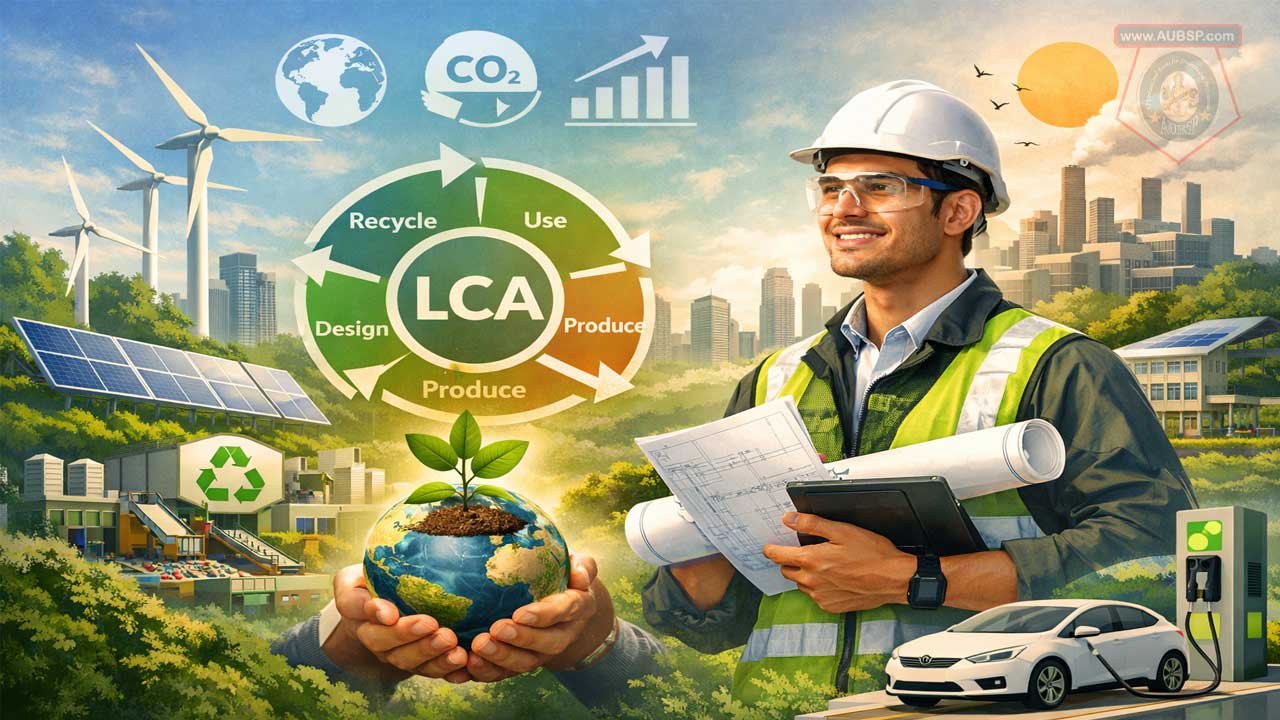
A Bachelor of Sustainable Engineering (BSustE) is a four-year undergraduate degree that combines core engineering principles with sustainability-focused training to prepare graduates to design, build, and manage systems that minimize environmental impact while supporting economic viability and social equity.
Unlike traditional engineering programs, it integrates life cycle thinking, circular economy concepts, renewable energy systems, environmental impact assessment, ESG reporting, and climate change mitigation into every stage of engineering practice. Driven by global climate policies, corporate sustainability mandates, and rapid growth in green industries, the degree responds to strong labor market demand, competitive salaries, and expanding regulatory requirements.
Graduates pursue careers in renewable energy, environmental engineering, sustainable infrastructure, corporate sustainability strategy, and emerging climate-focused roles across industries such as construction, manufacturing, government, technology, and finance. With accreditation standards such as ABET and international equivalents ensuring quality, a BSustE equips students with technical expertise, systems thinking, and sustainability leadership skills needed to address global environmental challenges while securing long-term career opportunities.
| Category | Information |
|---|---|
| Degree Name | Bachelor of Sustainable Engineering (BSustE) |
| Duration | 4 years (240 ECTS Europe / 120–130 credits North America) |
| Core Focus | Engineering systems that minimize environmental impact while ensuring economic and social sustainability |
| Key Concepts | Life Cycle Assessment (LCA), Circular Economy, ESG, Renewable Energy, Climate Mitigation |
| Foundation Subjects | Mathematics, Physics, Chemistry, Engineering Fundamentals, Computer Science |
| Specialized Subjects | Renewable Energy Systems, Environmental Impact Assessment, Green Building, Carbon Accounting, Environmental Economics |
| Practical Training | Capstone projects, labs, internships/co-ops, industry partnerships |
| Accreditation Bodies | ABET, CEAB, EUR-ACE |
| Entry Requirements | Strong math & science background, GPA ~3.0+, English proficiency (IELTS/TOEFL), possible entrance exams |
| Career Paths | Sustainability Engineer, Environmental Engineer, Renewable Energy Engineer, Sustainability Manager, ESG Analyst |
| Entry-Level Salary | ~$78,000+ total compensation (varies by region) |
| Industries | Renewable energy, construction, manufacturing, government, consulting, tech, finance |
| Career Outlook | High global demand; sustainability roles projected to grow ~33% |
What Is a Bachelor of Sustainable Engineering?
A Bachelor of Sustainable Engineering (BSustE) is an undergraduate degree program that trains engineers to design, build, and manage systems that minimize environmental harm while maintaining economic viability and social equity. Unlike traditional engineering disciplines that focus narrowly on technical problem-solving, sustainable engineering integrates life cycle thinking, circular economy principles, and environmental stewardship into every stage of the engineering process — from initial design through construction, operation, and decommissioning.
At its core, sustainable engineering applies engineering practices to conserve ecosystems, minimize natural resource consumption, reduce waste, and safeguard human health and well-being. The discipline aligns directly with the United Nations Sustainable Development Goals (SDGs), the Paris Agreement, and global net-zero commitments that are reshaping industries worldwide.
The growing urgency of climate change, resource depletion, and stricter environmental regulations has elevated sustainable engineering from a niche specialization to a foundational pillar of modern engineering education. Universities across Europe, North America, Asia, and beyond are now offering dedicated bachelor’s programs in this field, reflecting surging employer demand for engineers with sustainability competencies.
Why Choose a BSustE Degree?
Growing Global Demand for Sustainability Professionals
The sustainability sector is experiencing unprecedented growth. The World Economic Forum projects that sustainability specialists will grow by 33% and environmental protection professionals by 34%, translating to roughly 1 million new jobs in these categories alone. Global renewable energy employment surged to 16.2 million in 2023 — an 18% increase from the prior year — signaling a massive structural shift in the global labor market.
Green hiring grew 7.7% between 2024 and 2025, nearly double the 4.3% growth rate of green skills in the global workforce, indicating that demand continues to outpace supply. Job postings requiring at least one green skill rose by nearly 22% in recent years, and 35% of engineering employers identified sustainability and environmental engineering skills as key to meeting their future business goals.
Competitive Salaries
Sustainability engineering careers offer strong financial rewards:
| Role | Average/Median Salary (USD) | Salary Range |
|---|---|---|
| Sustainability Engineer | $94,265 | $70,000 – $140,000 |
| Environmental Engineer | $96,820 | $88,000+ |
| Sustainability Manager | $103,415 (median) | $80,800 – $166,910 |
| Renewable Energy Engineer | £50,000 – £90,000 | Varies by market |
| Corporate Sustainability Strategist | $103,415 (total comp) | $79,298 – $136,422 |
Entry-level sustainability engineers with less than one year of experience can expect total compensation of approximately $78,488, while those with 1–4 years of experience earn around $85,686.
Future-Proof Career Security
Sustainability goals and climate policies are becoming regulatory mandates rather than optional initiatives. Carbon taxes, emission limits, and ESG (Environmental, Social, and Governance) reporting requirements — such as the EU’s Corporate Sustainability Reporting Directive (CSRD) — are making sustainable engineering expertise non-negotiable for businesses worldwide. Global investments in renewable energy reached approximately $500 billion in 2024, with the green bond market projected to exceed $1 trillion by 2025.
Core Curriculum and Subjects
A BSustE program typically spans four years (240 ECTS in European systems or approximately 120–130 credit hours in North American systems) and combines foundational engineering sciences with specialized sustainability coursework.
Foundation Courses
The first two years establish a rigorous engineering base:
- Mathematics: Calculus, differential equations, linear algebra, probability, and statistics
- Physics and Chemistry: Mechanics, thermodynamics, materials science, and general chemistry
- Engineering Fundamentals: Fluid mechanics, hydraulics, electrotechnics, electronics, and machine elements
- Computer Science: Computer-aided design (CAD), programming, and data analysis
Sustainability-Specific Courses
Upper-level coursework dives into the sustainability specialization:
- Sustainable Development Concepts: SDGs, triple bottom line (economic-social-environmental), green economy, and low-carbon economy frameworks
- Life Cycle Assessment (LCA): Goal and scope definition, life cycle inventory, impact assessment, interpretation, and LCA software tools
- Environmental Impact Assessment (EIA): Strategic environmental assessment, environmental auditing, and cleaner production assessment
- Renewable Energy Systems: Solar, wind, hydro, biomass, and hydrogen energy technologies
- Circular Economy and Waste Management: Waste-to-value processes, resource recycling, zero-waste concepts, and 3R (reduce, reuse, recycle) methodologies
- Green Building and Sustainable Construction: LEED standards, net-zero design, sustainable materials, and building science
- Climate Change Mitigation: Carbon capture and storage (CCUS), carbon footprinting, water footprinting, and greenhouse gas accounting
- Environmental Economics: Environmental valuation, market-based incentives, command-and-control instruments, and pollution control models
- ESG and Sustainability Reporting: Environmental management systems (EMS), ISO 14000, and corporate sustainability frameworks
Practical Components
Most BSustE programs emphasize hands-on experience through:
- Project-based learning integrating real-world sustainability challenges
- Capstone projects involving multidisciplinary team collaboration
- Mandatory co-operative education (co-ops) or internships with industry partners
- Laboratory work in sustainable biosystems, environmental monitoring, and energy systems
- Research projects in partnership with faculty and industry
Universities Offering Sustainable Engineering Bachelor’s Degrees
Several universities around the world now offer dedicated undergraduate programs in sustainable engineering:
| University | Program Name | Duration | Location | Language |
|---|---|---|---|---|
| Vytautas Magnus University | Bachelor in Sustainable Engineering | 4 years | Kaunas, Lithuania | English |
| Conestoga College | BEng – Sustainable Design Engineering | 4 years | Cambridge, Canada | English |
| TU Braunschweig | BSc – Sustainable Engineering of Products and Processes | 6 semesters | Braunschweig, Germany | English/German |
| University of Applied Sciences Ansbach | BEng – Applied Sustainable Engineering | 8 semesters | Ansbach, Germany | English/German |
| LAB University of Applied Sciences | BEng – Sustainable Solutions Engineering | 4 years | Lahti/Lappeenranta, Finland | English |
| LAB University of Applied Sciences | BEng – Sustainable Construction Technology | 4 years | Lahti, Finland | English |
| ASU (Ira A. Fulton Schools) | BSE – Civil Engineering (Sustainable Engineering) | 4 years | Tempe, USA | English |
| UAlbany (CNSE) | BS – Environmental and Sustainable Engineering | 4 years | Albany, USA | English |
| Murray State University | Civil and Sustainability Engineering | 4 years | Murray, USA | English |
| UPES | BTech – Sustainability Engineering | 4 years | Dehradun, India | English |
Programs such as Purdue University’s newly launched School of Sustainability Engineering and Environmental Engineering (SEE), effective July 2025, represent the trend of top-tier institutions investing heavily in this discipline. ASU’s sustainable engineering concentration is ABET-accredited, UAlbany’s environmental and sustainable engineering program earned ABET accreditation in 2024, and Murray State’s civil and sustainability engineering program received ABET accreditation through 2028.
Accreditation and Quality Standards
Accreditation ensures that a BSustE program meets rigorous academic standards and prepares graduates for professional practice. Key accreditation bodies include:
- ABET (Accreditation Board for Engineering and Technology): The gold standard for engineering programs in the United States and globally recognized. ABET has made sustainability an integral part of its accreditation philosophy, encouraging programs to integrate sustainability throughout the curriculum. Graduating from an ABET-accredited program is typically the first step toward professional engineering licensure.
- CEAB (Canadian Engineering Accreditation Board): The Canadian equivalent. Conestoga College’s Sustainable Design Engineering program is designed to meet all CEAB requirements and expects accreditation upon graduating the first cohort.
- EUR-ACE: The European accreditation framework for engineering degree programs.
ABET recently launched an online sustainability microcredential in partnership with Engineering for One Planet (OES), further demonstrating the centrality of sustainability to modern engineering education.
Career Paths After a BSustE Degree
Graduates of a BSustE program can pursue a wide range of roles across multiple industries:
Engineering and Technical Roles
- Sustainability Engineer: Design and implement systems that reduce environmental impact while maintaining operational efficiency. Average salary: $94,265.
- Renewable Energy Engineer: Design and optimize solar, wind, and hydroelectric systems. One of the fastest-growing roles globally.
- Environmental Engineer: Develop solutions for water treatment, air quality management, pollution control, and waste management. Average salary: $96,820.
- Green Building Engineer: Apply LEED and net-zero design principles to construction projects.
- Civil Engineer (Sustainable Infrastructure): Plan and design resilient urban infrastructure, transportation systems, and water resources.
Strategy and Management Roles
- Sustainability Manager: Lead corporate ESG strategies and sustainability initiatives. Salary range: $80,800 – $166,910 per year.
- Chief Sustainability Officer (CSO): A C-suite position responsible for driving organization-wide sustainability strategy, regulatory compliance, and ESG identity.
- Environmental Consultant: Advise organizations on environmental compliance, impact assessment, and sustainable practices.
Emerging and Specialized Roles
- Green Data Analyst / Environmental Data Scientist: Analyze climate and ecological data to guide sustainable decision-making. Median salary: $73,230.
- Circular Economy Specialist: Design products and systems for maximum reuse, recycling, and waste minimization.
- Carbon and Climate Analyst: Manage carbon accounting, carbon trading, and climate risk assessment.
- Climate Adaptation Engineer: Design infrastructure resilient to extreme weather events and changing climate conditions.
Industries That Hire BSustE Graduates
BSustE graduates find employment across virtually every sector:
- Renewable energy (solar, wind, hydrogen, biomass)
- Construction and real estate
- Manufacturing and industrial production
- Government agencies and regulatory bodies
- Consulting firms (environmental and engineering)
- Technology and data centers
- Transportation and logistics (EV infrastructure)
- Agriculture and food systems
- Finance and ESG advisory
Key Skills Developed in a BSustE Program
A BSustE degree cultivates a distinctive blend of technical and interdisciplinary skills:
- Life Cycle Assessment and Eco-Auditing: Evaluating environmental impacts across a product’s or system’s entire life span
- Systems Thinking: Understanding complex interconnections between engineering, environmental, economic, and social systems
- Renewable Energy Technology: Designing and implementing solar, wind, hydro, and alternative energy solutions
- Data Analysis and AI for Sustainability: Leveraging data analytics, machine learning, and digital twins for optimizing sustainable systems
- Environmental Management Systems: Implementing ISO 14000, EMS, and ESG reporting frameworks
- Project Management: Leading multidisciplinary sustainability projects from conception to completion
- Sustainable Design: Applying eco-design principles, green materials selection, and cradle-to-cradle methodologies
- Regulatory and Policy Literacy: Understanding environmental law, carbon markets, and sustainability regulations
How BSustE Differs from Related Degrees
Prospective students often wonder how a BSustE compares to similar programs. The table below clarifies the distinctions:
| Aspect | BSustE (Sustainable Engineering) | Environmental Engineering | Civil Engineering | Environmental Science |
|---|---|---|---|---|
| Primary Focus | Integrating sustainability across all engineering processes | Solving specific environmental problems (water, air, waste) | Designing physical infrastructure (roads, bridges, buildings) | Understanding natural systems and ecological processes |
| Approach | Systems-level, life cycle thinking, circular economy | Applied engineering for pollution control and remediation | Structural design and construction | Scientific research and data collection |
| Key Tools | LCA, EIA, carbon footprinting, ESG frameworks | Water treatment design, air quality modeling | Structural analysis, geotechnical modeling | Field sampling, statistical analysis |
| Career Orientation | Cross-industry sustainability roles | Environmental compliance and remediation | Infrastructure design and project management | Research, policy advisory, conservation |
The BSustE’s distinguishing feature is its holistic, cross-disciplinary approach: rather than specializing in a single environmental problem, it equips graduates to embed sustainability thinking into any engineering domain.
Professional Certifications to Complement a BSustE
Earning professional certifications can significantly enhance career prospects after a BSustE degree:
- LEED Green Associate / LEED AP: Awarded by the U.S. Green Building Council for expertise in green building practices
- Certified Energy Manager (CEM): Offered by the Association of Energy Engineers for energy efficiency expertise
- Sustainability Excellence Professional (SEP): From the International Society of Sustainability Professionals
- Professional Engineer (PE) License: Requires graduation from an ABET-accredited program, passing the Fundamentals of Engineering (FE) exam, gaining relevant work experience, and passing the PE exam
- IEMA Sustainability Certificate: Recognized in the UK and Europe for environmental management competence
- Six Sigma (Green/Yellow Belt): For process optimization and waste reduction in manufacturing
Admission Requirements
Admission criteria vary by institution, but common requirements include:
- High school diploma with strong performance in mathematics, physics, and chemistry
- Standardized test scores: SAT (minimum ~1210) or ACT (minimum ~24) for U.S. programs; other countries may require national-level entrance exams
- English proficiency: TOEFL iBT 79–87+, IELTS 6.5+, or PTE 58+ for international applicants
- Pre-study internship: Some European programs (e.g., TU Braunschweig) require an 8-week pre-study internship
- Minimum GPA: Typically 3.00 or equivalent on a 4.0 scale for competitive programs
- CV/Resume and Motivation Letter: Required by some European universities
The Global Outlook for Sustainable Engineering
The long-term outlook for sustainable engineering professionals is exceptionally strong. Several macro-trends ensure sustained demand for decades to come:
- Regulatory momentum: Governments worldwide are implementing binding carbon reduction targets, emission trading systems, and mandatory ESG disclosure requirements.
- Corporate transformation: Companies are increasingly evaluated by their environmental footprint, driving demand for in-house sustainability expertise across all industries.
- Investment flows: Global renewable energy investment surpassed $800 billion in 2026, and the green bond market is projected to exceed $1 trillion.
- Workforce gap: Despite a 12% global increase in workers acquiring green skills between 2024 and 2025, demand continues to significantly outpace supply. The sustainability sector has approximately 12 million job openings as of 2026.
- Technological evolution: Net-zero technologies, digital twins, bio-engineering, and AI-driven optimization are creating entirely new roles that did not exist a decade ago.
The engineering services market itself is projected to grow at nearly 6% annually from 2025 to 2030, with demand for environmentally sustainable engineering services cited as a primary growth driver.
Conclusion
A Bachelor of Sustainable Engineering (BSustE) represents one of the most strategically valuable undergraduate degrees available today. It combines rigorous engineering fundamentals with the sustainability expertise that employers across every industry now urgently require.
With competitive salaries starting above $78,000 at the entry level, a projected 33% growth in sustainability specialist roles, and a global workforce gap that shows no signs of closing, graduates of BSustE programs are positioned at the intersection of engineering excellence and one of the defining challenges of the 21st century. Whether the goal is designing renewable energy systems, leading corporate ESG strategy, engineering climate-resilient infrastructure, or pioneering circular economy solutions, this degree provides the knowledge, skills, and credentials to build a meaningful and prosperous career.
FAQs about Bachelor of Sustainable Engineering
What is a Bachelor of Sustainable Engineering (BSustE)?
A BSustE is a four-year undergraduate engineering degree focused on designing and managing systems that reduce environmental impact while maintaining economic viability and social responsibility.
How long does a BSustE program take to complete?
Most programs take four years full-time, equivalent to about 240 ECTS in Europe or 120–130 credit hours in North America.
What makes sustainable engineering different from traditional engineering?
It integrates life cycle thinking, circular economy principles, and environmental stewardship into all engineering processes rather than focusing only on technical performance.
What subjects are studied in a BSustE program?
Students study mathematics, physics, chemistry, engineering fundamentals, renewable energy, life cycle assessment, environmental impact assessment, ESG reporting, and climate mitigation.
Is sustainable engineering the same as environmental engineering?
No. Environmental engineering focuses on solving specific pollution problems, while sustainable engineering embeds sustainability across all engineering disciplines.
What careers can I pursue with a BSustE degree?
Graduates can work as sustainability engineers, renewable energy engineers, environmental engineers, ESG analysts, sustainability managers, and climate consultants.
What is the average salary after graduation?
Entry-level salaries typically start around $75,000–$80,000 annually, with higher earnings as experience grows.
Is there strong demand for sustainable engineers?
Yes. Global demand for sustainability professionals is growing rapidly due to climate policies, ESG regulations, and renewable energy expansion.
Which industries hire BSustE graduates?
Renewable energy, construction, manufacturing, government agencies, consulting firms, technology companies, transportation, agriculture, and finance.
Do BSustE programs include internships?
Most programs require internships, co-ops, or industry projects to provide real-world experience.
What skills will I gain from this degree?
Systems thinking, life cycle assessment, renewable energy design, carbon accounting, sustainable design, environmental data analysis, and project management.
Is accreditation important for a BSustE program?
Yes. Accreditation ensures quality standards and is often required for professional engineering licensure.
Can I become a licensed Professional Engineer (PE) with this degree?
Yes, if the program is accredited and you meet licensing requirements such as passing exams and gaining work experience.
What are the admission requirements?
Strong high school performance in mathematics and science, English proficiency for international students, and sometimes standardized test scores.
Does the degree align with global sustainability goals?
Yes. It supports the UN Sustainable Development Goals, climate agreements, and global net-zero commitments.
Is sustainable engineering future-proof?
Yes. Climate regulations, renewable investments, and ESG mandates ensure long-term career relevance.
Can I specialize within a BSustE program?
Many programs allow specialization in renewable energy, green construction, climate analytics, or circular economy systems.
Is coding required in this degree?
Basic programming and data analysis are typically included, especially for sustainability modeling and optimization.
Are there postgraduate options after BSustE?
Graduates can pursue master’s degrees in sustainable engineering, renewable energy, environmental management, or related fields.
Is sustainable engineering suitable for students interested in climate change solutions?
Yes. The degree directly prepares students to design technologies and systems that address climate mitigation and adaptation challenges.


Leave a Reply
You must be logged in to post a comment.