
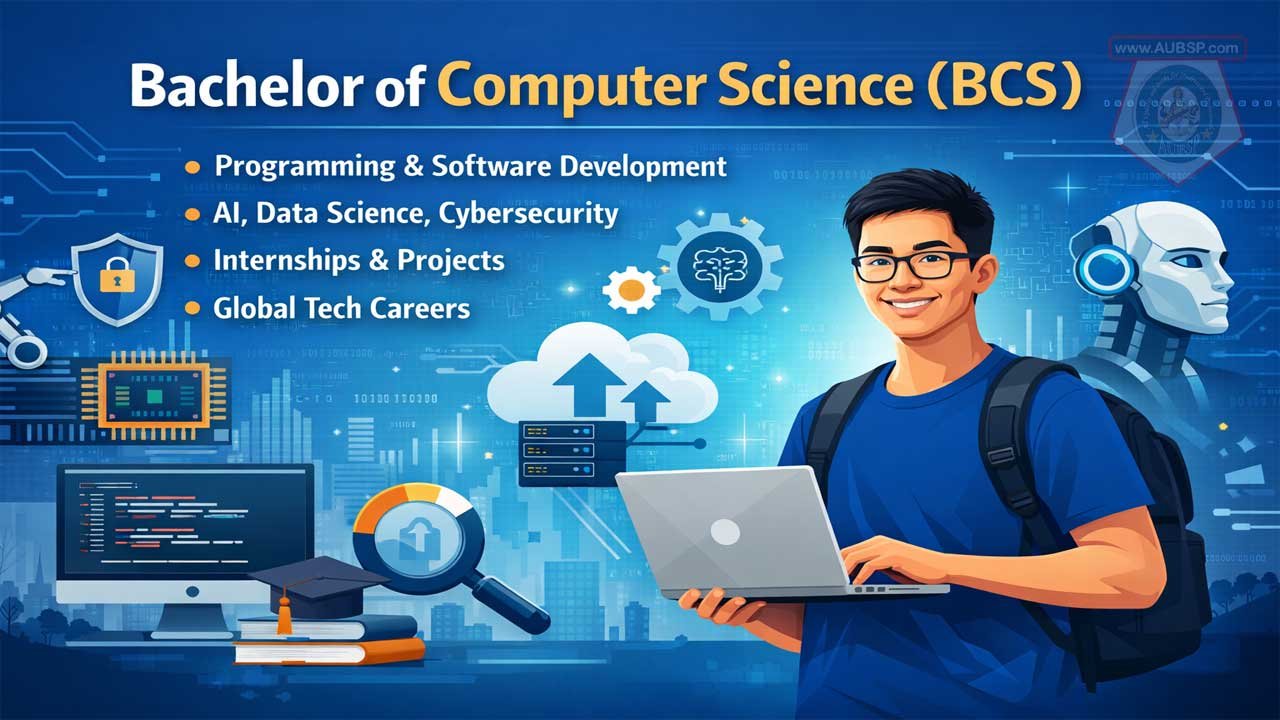
The Bachelor of Computer Science (BCS) is a professional undergraduate degree focused on computer systems, programming, software development, and modern IT, designed to prepare students for careers in software engineering, IT services, and emerging technology fields.
Typically lasting 3–4 years, the program combines strong theoretical foundations—such as algorithms, data structures, operating systems, databases, and networks—with practical, hands-on learning through labs, projects, and internships. Compared to a more theory-heavy BSc Computer Science, BCS is generally more career-oriented and aligned with industry needs, offering specializations like AI, data science, cybersecurity, cloud computing, and web development.
Graduates gain in-demand skills in coding, problem-solving, system design, and teamwork, leading to wide career opportunities across industries worldwide, as well as pathways to higher studies such as MCA, MSc, or specialized master’s degrees.
| Aspect | Details |
|---|---|
| Degree Name | Bachelor of Computer Science (BCS) |
| Level | Undergraduate |
| Duration | 3–4 years |
| Focus | Programming, software development, computer systems, IT |
| Eligibility | 12th grade (or equivalent) with Mathematics |
| Core Subjects | Programming, Data Structures, OS, DBMS, Networks, Software Engineering |
| Specializations | AI, Data Science, Cybersecurity, Cloud, Web & App Development |
| Skills Gained | Coding, problem-solving, system design, analytical thinking |
| Career Roles | Software Developer, Web Developer, Data Analyst, Cloud Engineer |
| Higher Studies | MCA, MSc Computer Science, specialized master’s degrees |
| Global Scope | High demand across IT, startups, MNCs, and government sectors |
What is Bachelor of Computer Science (BCS)?
The Bachelor of Computer Science (BCS) is a professional undergraduate degree focused on computer systems, programming, software development, and modern information technology. It is designed for students who want a career‑oriented pathway into software engineering, IT services, data‑driven roles, and emerging tech fields.
In most countries, the BCS program runs for 3–4 years and combines theoretical foundations of computing with practical, hands‑on training. Students learn how computers work, how software is designed and built, and how to solve real‑world problems using algorithms, data structures, and code.
Key Features of a BCS Degree
A BCS is considered one of the most in‑demand tech degrees because it aligns closely with industry requirements. Some of its most important features include:
- Strong focus on programming and software development
- Emphasis on problem‑solving and logical thinking
- Blend of theory (algorithms, computation) and practice (projects, labs, internships)
- Good portability and recognition for jobs across different countries
- Multiple specializations like AI, data science, cybersecurity, cloud, and web development
Because of this mix, BCS graduates are prepared for both entry‑level tech jobs and higher studies such as MCA, MSc Computer Science, or specialized master’s degrees abroad.
BCS vs BSc Computer Science
Many students get confused between BCS and BSc Computer Science, especially when they search for courses abroad or in countries like India, Canada, Australia, and the UK. The table below highlights the usual differences.
BCS and BSc Computer Science: Main Differences
| Factor | BCS (Bachelor of Computer Science) | BSc Computer Science |
|---|---|---|
| Nature of degree | Professional, career‑oriented computer science degree | Academic, science‑oriented degree with CS as a major |
| Focus | Practical software development, systems, applications | Theoretical foundations, mathematics, computing concepts |
| Curriculum style | Heavier on core CS and IT subjects, fewer non‑CS papers | Mix of CS, maths, and other science/general subjects |
| Skills developed | Coding, software engineering, system design, applied IT | Analytical thinking, theory, research and advanced CS concepts |
| Ideal for | Students targeting tech jobs and applied roles quickly | Students considering research, academia, or broad science exposure |
In practice, both degrees can lead to similar job roles. Recruiters usually look more at your skills, projects, internships, and problem‑solving ability than the exact title of the degree.
Duration and Course Structure
The exact duration of a BCS depends on the country and university, but common patterns include:
- 3 years: Many universities in India, the UK, Europe, and some Asian countries
- 4 years: Some programs in Canada, the US (where the degree might be titled differently but is equivalent), and certain integrated or co‑op tracks
A typical BCS curriculum is divided into semesters or terms and gradually shifts from core fundamentals in the first year to advanced and elective subjects in later years. Many institutions now add mini‑projects, capstone projects, internships, and industry‑oriented training to make the program more job‑ready.
Core Subjects in BCS
While the exact syllabus varies by university, most BCS programs include the following major subject areas:
- Programming Fundamentals
- C, C++, Java, Python, or similar languages
- Object‑oriented programming concepts
- Data Structures and Algorithms
- Arrays, linked lists, trees, graphs, hashing
- Searching, sorting, dynamic programming
- Computer Organization and Architecture
- Digital logic, processors, memory, instruction cycles
- Operating Systems
- Process management, memory management, file systems, concurrency
- Database Management Systems (DBMS)
- SQL, relational databases, normalization, indexing
- Computer Networks
- Network models, protocols, routing, switching, basic network security
- Software Engineering
- Software development life cycle (SDLC)
- Testing, documentation, version control, project management
- Web Technologies
- HTML, CSS, JavaScript, frontend and backend basics
- Mathematics for Computing
- Discrete mathematics, probability, statistics, linear algebra (depending on curriculum)
Many colleges also offer elective subjects such as:
- Artificial Intelligence and Machine Learning
- Data Science and Big Data Analytics
- Cybersecurity and Ethical Hacking
- Cloud Computing and DevOps
- Mobile App Development
- Internet of Things (IoT)
Skills You Gain from a BCS Degree
A strong BCS program does not just teach theory; it builds a set of highly marketable skills. Some of the most important skills you develop are:
- Programming and coding proficiency in multiple languages
- Logical and analytical thinking
- Ability to design, test, and deploy software solutions
- Strong understanding of algorithms and data structures
- Familiarity with databases, networks, and operating systems
- Problem‑solving and debugging skills
- Teamwork, collaboration, and communication through group projects
- Exposure to tools like Git, IDEs, cloud platforms, and development frameworks
These skills are globally demanded across IT services, product companies, startups, and even non‑tech sectors that rely heavily on software and automation.
Eligibility and Admission Requirements
Eligibility for BCS usually depends on country and institution, but common patterns include:
- Completion of high school/12th grade or equivalent
- Mathematics as a compulsory subject in most universities
- Minimum aggregate percentage (varies by institution)
For international or English‑medium programs, you may also need:
- English proficiency test scores: IELTS, TOEFL, PTE, or equivalent
- Standardized test scores (for some countries)
- Statement of purpose (SOP), letters of recommendation, or resume for competitive programs
Always check the official website of each university for:
- Exact eligibility criteria
- Entrance exam requirements (if any)
- Application deadlines
- Fees and scholarship options
Popular Countries to Study BCS or Equivalent
Because “BCS” is not used as a title everywhere, you will often find equivalents like “Bachelor of Computer Science”, “BSc in Computer Science”, or “Bachelor of Information Technology”. Some popular study destinations are:
- Canada: Known for co‑op programs that combine study with paid work placements
- Australia: Strong industry‑linked CS programs with specializations in AI, cybersecurity, and data
- UK: 3‑year CS degrees with options for a placement year or integrated master’s
- USA: Typically labeled “BS in Computer Science”, but similar in content and outcomes
- India and South Asia: BCS/BSc CS/BCA options with growing IT and startup ecosystems
When targeting international education, compare curriculum, tuition fees, living costs, part‑time work rules, and post‑study work visa policies.
Career Opportunities After BCS
One of the biggest reasons students choose BCS is the wide career scope and strong salary potential. After completing a BCS, you can work in:
- IT services and consulting companies
- Software product companies and startups
- Banks, fintech, insurance, and other financial services
- E‑commerce and digital platforms
- Telecom, healthcare tech, ed‑tech, and manufacturing
- Government IT departments and public sector units
Common Job Roles for BCS Graduates
- Software Developer / Software Engineer
- Web Developer / Full‑Stack Developer
- Mobile App Developer
- System Analyst
- Database Administrator
- Network Administrator / Network Engineer
- Cybersecurity Analyst
- Cloud Engineer / DevOps Engineer
- Data Analyst (with additional data tools training)
- IT Support Engineer / Helpdesk Technician
With experience and additional certifications, BCS graduates can move into higher‑level roles such as Technical Architect, Project Manager, Product Manager, or CTO in startups.
Salary Scope After BCS
Salary after BCS depends on many factors:
- Country and city of employment
- Company type (startup, MNC, government, remote job, etc.)
- Your skills, projects, and performance in interviews
- Additional certifications (cloud, data, security, etc.)
In many markets, entry‑level software developers and IT professionals earn competitive starting salaries, with strong growth over 3–5 years. Completing internships during your BCS and building a strong portfolio (GitHub projects, live apps, hackathon wins) can significantly increase your earning potential.
Higher Studies Options After BCS
Many students choose higher education to deepen their expertise or switch into specialized domains. Common options include:
- MCA (Master of Computer Applications)
- MSc in Computer Science or Information Technology
- Specialized master’s programs in:
- Data Science and Analytics
- Artificial Intelligence / Machine Learning
- Cybersecurity and Digital Forensics
- Cloud Computing and DevOps
- Human–Computer Interaction (HCI)
Higher studies abroad can open doors to better roles, research positions, and global networking opportunities.
Advantages of BCS for International Students
For students planning to study abroad, a BCS or equivalent CS degree offers several advantages:
- High global demand for computer science graduates
- Opportunities for internships and industry projects
- Possibility of post‑study work visas in countries facing tech skill shortages
- Flexibility to work remotely or freelance worldwide
- Ability to shift across industries because almost every sector uses software and data
If you plan an international career, focus on:
- Improving your English and communication skills
- Building a strong online portfolio (GitHub, LinkedIn, personal website)
- Learning in‑demand technologies such as cloud platforms, modern frameworks, and data tools
Is BCS the Right Choice for You?
BCS is a great fit if:
- You enjoy mathematics, logic, and problem‑solving
- You like building things using code (websites, apps, tools)
- You are comfortable with continuous learning because technology changes fast
- You want a degree with strong job prospects in multiple countries
You might consider alternatives like BSc Computer Science, BCA, or IT‑focused degrees if you prefer:
- More theoretical depth and research
- A broader science‑oriented program
- More application‑oriented, business‑focused IT roles
Before deciding, compare syllabi, talk to current students or alumni, and think about where you want to see yourself in 5–10 years.
Final Tips for Aspirants
- Start coding early: Learn at least one language (like Python or Java) during school.
- Strengthen your math basics: Especially algebra, logic, and discrete mathematics.
- Build mini‑projects: Even simple apps and websites will make your profile stand out.
- Participate in hackathons, coding contests, and open‑source contributions.
- Keep an eye on scholarships, internships, and global opportunities as you progress through your BCS.
A well‑planned Bachelor of Computer Science can be your gateway to a high‑growth, future‑proof tech career anywhere in the world.
FAQs
What is Bachelor of Computer Science (BCS)?
Bachelor of Computer Science (BCS) is an undergraduate degree focused on programming, software development, computer systems, and modern information technology.
What is the duration of a BCS degree?
The BCS degree usually takes 3 to 4 years to complete, depending on the country and university.
Is BCS a professional or academic degree?
BCS is generally considered a professional, career-oriented degree aligned with industry requirements.
What is the difference between BCS and BSc Computer Science?
BCS focuses more on practical software development and applied IT skills, while BSc Computer Science is more theory- and research-oriented.
Is BCS equivalent to BSc Computer Science?
In many countries, BCS and BSc Computer Science are considered equivalent for jobs and higher studies, though the curriculum focus may differ.
Who should choose a BCS degree?
Students interested in programming, software development, problem-solving, and building a career in the tech industry should choose BCS.
What subjects are taught in BCS?
BCS includes programming, data structures, algorithms, operating systems, databases, networks, software engineering, and web technologies.
Is mathematics required for BCS?
Yes, mathematics is usually required both for admission and during the course, especially topics like discrete math and logic.
What programming languages are taught in BCS?
Common languages include C, C++, Java, Python, and sometimes JavaScript or other modern languages.
Does BCS include practical training?
Yes, BCS programs include labs, projects, internships, and sometimes industry training or co-op programs.
What skills do you gain from a BCS degree?
You gain coding skills, analytical thinking, problem-solving ability, software design knowledge, and teamwork skills.
What are the career options after BCS?
BCS graduates can work as software developers, web developers, data analysts, system analysts, cloud engineers, and IT professionals.
Can BCS graduates work abroad?
Yes, BCS is globally recognized and offers strong opportunities for international jobs and post-study work options.
Is BCS good for software engineering?
Yes, BCS provides a strong foundation for software engineering roles and related tech careers.
What is the salary after BCS?
Salary varies by country, company, and skills, but BCS graduates generally earn competitive entry-level salaries with strong growth potential.
Can I do higher studies after BCS?
Yes, common options include MCA, MSc Computer Science, and specialized master’s degrees in AI, data science, or cybersecurity.
Is BCS suitable for data science or AI careers?
Yes, with the right electives and additional training, BCS is a strong base for AI and data science careers.
Does BCS include internships?
Many universities include internships or encourage industry projects to improve job readiness.
Is BCS difficult?
BCS can be challenging due to programming and logical thinking requirements, but it is manageable with consistent practice.
Can non-science students apply for BCS?
Most universities require a science background with mathematics, though requirements may vary.
Is BCS better than BCA?
BCS is usually more in-depth and computer-science-focused than BCA, but both can lead to similar careers with the right skills.
What industries hire BCS graduates?
IT services, startups, product companies, finance, healthcare tech, e-commerce, government, and telecom sectors hire BCS graduates.
Is coding mandatory in BCS?
Yes, coding is a core part of the BCS curriculum and essential for success in the degree.
Can I do BCS without prior coding knowledge?
Yes, most programs start from basics, but learning coding early is a big advantage.
Is BCS future-proof?
Yes, due to global demand for tech skills, BCS remains one of the most future-oriented degrees.
What countries are best to study BCS?
Popular countries include Canada, USA, UK, Australia, and India, each offering strong computer science programs.
Does BCS allow remote job opportunities?
Yes, BCS graduates often qualify for remote and freelance tech jobs worldwide.
Is BCS good for startups and entrepreneurship?
Yes, BCS equips students with technical skills needed to build products, apps, and tech startups.
What should I do during BCS to get a good job?
Build projects, do internships, practice coding, contribute to GitHub, and learn in-demand technologies.
Is BCS worth it in today’s market?
Yes, with the right skills and continuous learning, BCS offers strong career growth and global opportunities.


Leave a Reply
You must be logged in to post a comment.