
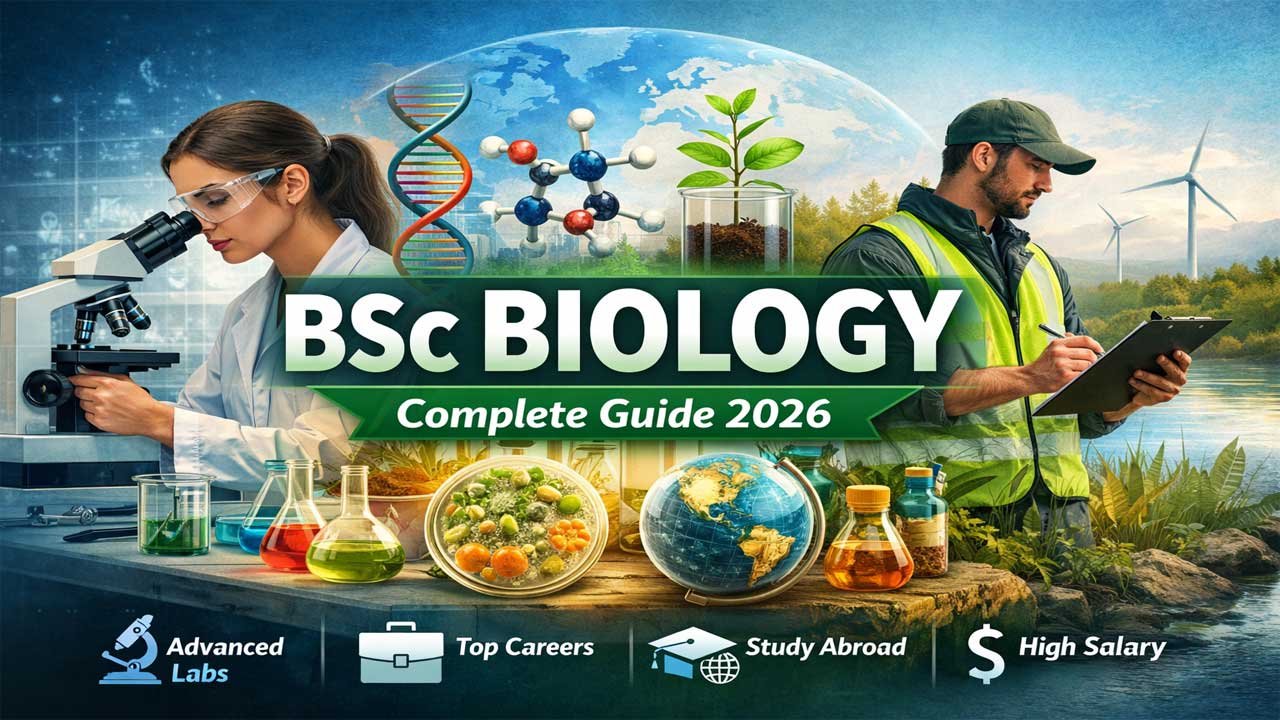
A Bachelor of Science in Biology (BSc Biology) is a globally recognized 3–4 year undergraduate degree that provides comprehensive theoretical and hands-on training in living systems, from molecular biology to ecology, preparing students for diverse careers in research, healthcare, biotechnology, pharmaceuticals, and environmental science.
Highly sought after by international students, the program offers strong flexibility, broad specialization options, and clear pathways to advanced degrees (MSc, PhD, MBA, or medical school), with global demand driving solid salary prospects—from ~$50,000 at entry level to $120,000+ in senior roles.
While top universities are competitive and costs can be high in countries like the US and UK, affordable, high-quality options (notably Germany and Canada) and extensive scholarships make the degree accessible, offering strong long-term ROI and relevance in fast-growing fields such as biotech, personalized medicine, and environmental sustainability.
| Aspect | Details |
|---|---|
| Degree | Bachelor of Science (BSc) in Biology |
| Duration | 3 years (UK/India), 4 years (USA/Canada) |
| Eligibility | 10+2 with Physics, Chemistry & Biology |
| Study Mode | Full-time (Lectures + Labs + Research) |
| Core Focus | Cell biology, genetics, microbiology, ecology |
| Practical Component | ~40% (labs, fieldwork, research project) |
| Top Careers | Research, Biotech, Pharma, Healthcare, Environment |
| Entry Salary | $50,000–$65,000 (international average) |
| Top Countries | USA, UK, Germany, Canada, Australia |
| Higher Studies | MSc, PhD, MD/MBBS, MBA, MPH |
| Global Demand | High (biotech & healthcare growth 10–12%) |
Bachelor of Science in Biology (BSc Biology): Complete Guide for 2026
A Bachelor of Science in Biology (BSc Biology) is a three-year undergraduate degree program that provides comprehensive knowledge of living organisms, biological systems, molecular processes, and ecological relationships. This degree represents one of the most sought-after academic qualifications globally, with particular demand from international students seeking world-class scientific education. The program combines theoretical understanding with hands-on laboratory work, preparing graduates for diverse career paths in research, healthcare, biotechnology, pharmaceuticals, and environmental conservation.
The global demand for biology graduates continues to surge. India has emerged as the leading source of international biology students to countries like Germany (49,008 students), while biology ranks among the top five majors for international undergraduates at prestigious US institutions. For international students, a BSc Biology degree offers not only academic excellence but also significant career advancement opportunities, with median salaries ranging from $57,000 to over $100,000 depending on specialization and location.
What is a Bachelor of Science in Biology?
A BSc Biology is a full-time undergraduate degree that typically spans three to four years (depending on the country) and focuses on the study of living organisms at multiple biological levels—from molecular and cellular biology to ecosystem dynamics. The program provides rigorous training in fundamental biological sciences while allowing students to specialize in areas aligned with their interests.
Key Characteristics:
- Duration: 3 years (UK/India), 4 years (USA/Canada)
- Delivery: Mix of lectures, laboratory practicals, and research projects
- Assessment: Examinations, continuous assessment, lab reports, and thesis work
- Focus: Hands-on experimental learning combined with theoretical knowledge
Unlike other science degrees, BSc Biology emphasizes experimental methodology and critical thinking. Students don’t just learn biological concepts—they actively investigate living systems through microscopy, cell cultures, field studies, genetic analysis, and computational biology. This practical foundation is valued by employers worldwide, particularly in research-intensive industries.
Bachelor of Science Biology vs Other Life Sciences Degrees
Students often compare BSc Biology with related programs. Here’s how it differs:
| Degree | Focus Area | Career Path | Salary Potential (USD) |
|---|---|---|---|
| BSc Biology | General biological sciences, organism study | Research, healthcare, education | $57,000-$82,000 |
| BSc Biotechnology | Applied biology, genetic engineering | Pharma, biotech companies | $51,500-$100,000+ |
| BSc Microbiology | Microorganisms, disease agents | Clinical labs, pharma QA | $64,600-$90,000 |
| BSc Biochemistry | Molecular chemistry of living systems | Pharmaceutical research | $60,000-$95,000 |
| BSc Environmental Science | Ecology, conservation, sustainability | Environmental consulting | $55,000-$75,000 |
Why Choose BSc Biology? The degree offers maximum flexibility—graduates can pursue specialized master’s degrees in any life science field, transition into medical school, or enter industry roles directly. It’s the broadest life sciences qualification, making career pivots easier.
Eligibility Requirements and Admission Process
General Eligibility Criteria
Educational Requirements:
- Completion of Class 12/10+2 or equivalent high school diploma in the Science stream
- Compulsory subjects: Physics, Chemistry, and Biology (PCB)
- Minimum marks: 50% aggregate (5% relaxation for reserved categories in India)
- Age requirement: Usually 16-18 years minimum; varies by university
For International Students:
- High school diploma or equivalent from recognized institution
- English language proficiency (IELTS 6.0, TOEFL 80+, or equivalent)
- SAT/ACT scores (for US universities)
- International Baccalaureate (IB) completion (for UK universities)
Entrance Exams by Region
India:
- CUET (Common University Entrance Test): Required for central universities
- Subject tests: Biology (304), Chemistry (306), Physics (322)
- Merit-based admission for private institutions
- Entrance exams: LPUNEST (Lovely Professional University), IISER entrance
United States:
- SAT/ACT: Minimum scores vary; top universities (MIT, Stanford) average SAT 1500+
- GPA: 3.8+ for competitive institutions
- Extracurricular activities and essays weighted
United Kingdom:
- A-Levels: Biology, Chemistry, and one additional science (minimum grades A-B)
- IB Diploma: 36+ points with higher-level sciences
- UCAS application: Central university application system
Canada & Australia:
- High school transcripts with 80%+ average
- English language tests (IELTS/TOEFL)
- Supplementary application essays
Application Timeline
Most universities follow:
- Application Opening: September-December
- Application Deadline: January-March
- Entrance Exam: February-June (varies by institution)
- Result Declaration: May-July
- Counseling/Enrollment: June-August
- Program Start: August-September
Pro Tip for International Applicants: Start your application 12-18 months before intended enrollment. Visa processing, accommodation arrangements, and scholarship applications require significant lead time.
BSc Biology Syllabus and Subjects
First Year Foundation Courses
| Semester 1 | Semester 2 |
|---|---|
| Chemistry & General Biology | Environmental Science & Ecology |
| Fundamentals of Cell Biology | Functional English/Communication |
| Biochemistry | Bioinstrumentation |
| Light and Life | Hormone Biochemistry |
| General Elective (Physics/Statistics) | General Elective |
Focus: Introduction to biological molecules, cellular structures, and basic ecological principles.
Second Year Core Biology
| Semester 3 | Semester 4 |
|---|---|
| Proteins & Enzymes | System Physiology |
| Cell Biology (Advanced) | Molecular Biology |
| Ecology (Advanced) | Metabolism & Integration |
| Medical Botany | Recombinant DNA Technology |
| Elective Subject | Elective Subject |
Focus: Molecular mechanisms, cellular regulation, and physiological systems.
Third Year Specialization Courses
| Semester 5 | Semester 6 |
|---|---|
| Growth & Reproduction | Animal Behaviour & Chronobiology |
| Genetics & Genomics I | Genetics & Genomics II |
| Natural Resource Management | Applied Biology |
| Stress Biology | Microbiology: Principles & Applications |
| Research Project Proposal | Research Project/Thesis |
Focus: Advanced specializations, independent research, practical application of biological knowledge.
Common Elective Options (Specialization):
Students typically choose 2-3 specializations:
- Botany & Plant Physiology
- Zoology & Animal Behavior
- Microbiology & Pathology
- Molecular Biology & Bioinformatics
- Ecology & Conservation Biology
- Biotechnology & Bioengineering
Practical/Laboratory Component
Hands-on Work (40% of curriculum):
- Microscopy and histology
- Cell culture and aseptic techniques
- Molecular biology (DNA extraction, PCR, gel electrophoresis)
- Biochemical assays and enzyme kinetics
- Field studies (ecosystem surveys, biodiversity assessment)
- Statistical analysis and bioinformatics software
- Research project design and execution
Top Universities for Bachelor of Science in Biology
Global Rankings (QS World University Rankings 2026)
| Rank | University | Location | International Fees/Year |
|---|---|---|---|
| 1 | University of Cambridge | UK | £28,000-£31,000 |
| 2 | University of Oxford | UK | £27,000-£30,000 |
| 3 | Harvard University | USA | $60,660 |
| 4 | Stanford University | USA | $60,642 |
| 5 | MIT | USA | $59,750 |
| 6 | UC Berkeley | USA | $42,186 (int’l) |
| 7 | Caltech | USA | $60,810 |
| 8 | Yale University | USA | $61,500 |
| 9 | Imperial College London | UK | £31,200 |
| 10 | Princeton University | USA | $58,290 |
| 13 | ETH Zurich | Switzerland | CHF 730/semester |
| 15 | National University of Singapore | Singapore | SGD 13,800/year |
Regional Leaders by Country
United States:
- Stanford University (acceptance rate: 4%, avg SAT: 1545)
- MIT (highly selective research focus)
- UC Berkeley (top public institution)
- University of Michigan (18% acceptance rate)
United Kingdom:
- Cambridge & Oxford (highest global reputation)
- Imperial College London (research-intensive)
- University College London (UCL)
India:
- Delhi University (DU) – B.Sc. (Hons.) Biological Sciences
- Banaras Hindu University (BHU)
- Jawaharlal Nehru University (JNU)
- Indian Institute of Science (IISc), Bangalore
Germany:
- Technical University Munich
- Heidelberg University
- Free University Berlin
Note: Most programs offered in English; lower tuition costs than US/UK
Canada:
- University of British Columbia (UBC)
- University of Toronto
- McGill University
Australia:
- University of Melbourne
- Australian National University (ANU)
- University of Sydney
Scholarship Opportunities:
- Chevening Scholarships (UK)
- Fulbright Program (USA)
- DAAD Scholarships (Germany)
- Australian Government Research Training Program
- University-specific merit scholarships
Career Opportunities After BSc Biology
Entry-Level Positions (0-3 years experience)
| Job Role | Average Salary (USD) | Key Responsibilities |
|---|---|---|
| Lab Technician | $35,000-$42,000 | Sample preparation, equipment maintenance, data recording |
| Research Assistant | $38,000-$48,000 | Literature review, experiment support, data analysis |
| Quality Control Analyst | $40,000-$50,000 | Product testing, regulatory compliance, documentation |
| Pharmaceutical Sales Rep | $45,000-$65,000 | Client relations, product promotion, sales targets |
| Environmental Consultant (Junior) | $42,000-$55,000 | Site assessment, environmental impact studies |
Mid-Level Positions (3-8 years experience)
| Job Role | Average Salary (USD) | Career Path |
|---|---|---|
| Microbiologist | $64,600-$90,000 | Pharmaceutical manufacturing, clinical diagnostics |
| Molecular Biologist | $82,246+ | Research institutions, biotech companies |
| Biotech Analyst | $60,000-$85,000 | Data analysis, bioinformatics support |
| Medical Sales Manager | $85,000-$120,000 | Team leadership, revenue management |
| Clinical Research Coordinator | $55,000-$75,000 | Trial management, regulatory affairs |
Senior/Specialized Positions (8+ years)
| Job Role | Average Salary (USD) | Requirements |
|---|---|---|
| Senior Research Scientist | $100,000-$130,000+ | Master’s/PhD, 8+ years experience |
| Biostatistician | $98,300-$120,000+ | Statistics expertise, master’s degree minimum |
| Biomedical Engineer | $100,730-$150,000+ | Combined biology + engineering skills |
| Pharmacologist | $127,000+ | Often requires PhD; pharmaceutical industry |
| Principal Investigator (PI) | $120,000-$200,000+ | PhD, funding acquisition ability, lab leadership |
Industry Sectors Hiring Biology Graduates
Pharmaceutical & Biotech (Highest salary potential):
- Pfizer, Moderna, GSK, Merck, Roche
- Average starting salary: $65,000+
- Specializations: Drug development, clinical trials, regulatory affairs
Healthcare & Diagnostics:
- Hospital laboratories, diagnostic companies
- Medical device manufacturers
- Average salary: $50,000-$75,000
Agricultural Biotechnology:
- Crop research, GMO development, food safety
- Companies: Syngene, Biocon, Monsanto
- Average salary: $55,000-$80,000
Environmental Conservation:
- Government agencies (EPA, USDA, CSIR-India)
- Conservation NGOs, environmental consulting
- Average salary: $45,000-$70,000
Academic Research:
- University labs, research institutes
- Flexibility but typically lower salaries ($50,000-$75,000)
- Path to PhD and faculty positions
Government & Regulatory:
- FDA, CDC, ICMR, CSIR (India)
- DBT (Department of Biotechnology-India)
- Average salary: $50,000-$85,000 with job security
Higher Education Options After BSc Biology
Master’s Degree Specializations
Most biology graduates pursue advanced degrees to increase earning potential and specialization:
| Master’s Program | Duration | Best For | Average Salary Post-MSc |
|---|---|---|---|
| MSc Molecular Biology | 2 years | Genetic research, drug development | $70,000-$95,000 |
| MSc Biotechnology | 2 years | Biotech industry, pharma R&D | $65,000-$100,000+ |
| MSc Bioinformatics | 2 years | Data analysis, computational biology | $75,000-$110,000 |
| MBA (Healthcare Management) | 2 years | Industry leadership, business roles | $80,000-$150,000+ |
| MSc Public Health | 2 years | Epidemiology, clinical research | $70,000-$100,000 |
| MSc Environmental Science | 2 years | Conservation, sustainability consulting | $65,000-$90,000 |
PhD Route
- Duration: 3-5 years
- Prerequisites: Master’s degree or strong BSc with research experience
- Salary potential: $90,000-$150,000+ (academia/industry)
- Pathway: Academic research, lab leadership, faculty positions
- Funding: Most PhD programs fully funded (stipend + tuition coverage)
Professional Certifications (Without Master’s)
- Clinical Laboratory Technologist (CLT): 6-12 months certification
- Certified Biomedical Technician: Vocational training
- Medical Coding & Billing: 1-2 year certification (healthcare administration)
- Six Sigma/Quality Management: Industry certifications
Cost Analysis: Bachelor of Science in Biology by Country
Tuition Fees (Annual) – International Students
| Country | Tuition/Year | Living Costs/Year | Total/Year | 3-Year Total |
|---|---|---|---|---|
| USA | $45,000-$65,000 | $18,000-$25,000 | $63,000-$90,000 | $189,000-$270,000 |
| UK | $25,000-$32,000 | $12,000-$18,000 | $37,000-$50,000 | $111,000-$150,000 |
| Canada | $20,000-$32,000 | $12,000-$18,000 | $32,000-$50,000 | $96,000-$150,000 |
| Australia | $25,000-$40,000 | $14,000-$20,000 | $39,000-$60,000 | $117,000-$180,000 |
| Germany | €0-€1,500/semester | €10,000-€15,000 | €10,000-€16,000 | €30,000-€48,000 |
| India (Domestic) | ₹50,000-₹3,00,000 | ₹3,00,000-₹5,00,000 | ₹3,50,000-₹8,00,000 | ₹10.5-24 lakhs |
| India (International) | $8,000-$15,000 | $4,000-$8,000 | $12,000-$23,000 | $36,000-$69,000 |
Scholarship Opportunities
Full Scholarships (Tuition + Living Costs):
- Chevening Scholarships (UK): £30,000+
- Fulbright Scholarships (USA): Full coverage
- DAAD Scholarships (Germany): €861/month + living allowance
- Australian Research Training Program: Full tuition + stipend
- University Merit Scholarships: 20-100% tuition coverage
Partial Scholarships & Financial Aid:
- University-specific achievement scholarships
- Need-based financial aid (US universities)
- Teaching/Research assistantships
- Commonwealth Scholarships (for Commonwealth nations)
How to Choose the Right BSc Biology Program
Key Factors to Consider
1. Program Structure & Specializations
- Does the program offer your preferred specialization? (Molecular biology, ecology, microbiology)
- Flexibility to switch specializations mid-degree?
- Research project opportunities?
2. Facilities & Resources
- Laboratory equipment and technology
- Library and journal access
- Field study opportunities
- Supercomputing/bioinformatics facilities
3. Faculty & Research Focus
- Research output and citations
- Faculty expertise alignment with your interests
- Student-to-faculty ratios
- Mentorship opportunities
4. Career Support & Outcomes
- Graduate employment rates (aim for 95%+)
- Average starting salaries for graduates
- Internship and industry partnerships
- Alumni network strength
5. Location & International Opportunities
- Cost of living in the region
- Quality of life for international students
- Visa policies and post-study work opportunities
- Access to industry hubs (biotech clusters in California, pharma centers in Switzerland)
6. Accreditation & Recognition
- International accreditation bodies (e.g., ASBMR, RCSB for biology)
- Degree recognition in target countries
- Ranking in QS/Times Higher Education
- Industry reputation
Advantages of Pursuing BSc Biology
✓ Global Career Opportunities: Recognized qualification worldwide with no geographic restrictions
✓ High Job Demand: Biology graduates are needed in pharmaceuticals, healthcare, biotech, and research—industries projected to grow 8-12% annually
✓ Diverse Career Paths: Same degree leads to 50+ career options, providing flexibility to change directions
✓ Strong Salary Progression: Entry-level $50,000 → Senior roles $120,000+ within 15 years
✓ Pathway to Advanced Education: Direct entry to Master’s, MBA, or PhD programs without additional qualifications
✓ Hands-On Learning: Laboratory experience makes graduates job-ready immediately
✓ Research Opportunities: Access to cutting-edge research projects, publishable work, and scientific discovery
✓ Scholarship Accessibility: Science education widely funded; 60%+ of international students receive some aid
✓ Job Security: Essential skills in healthcare, pharmaceuticals, and government sectors ensure stable employment
Challenges and Considerations
❗ Highly Competitive Admissions: Top universities accept 4-8% of applicants; strong academics and test scores essential
❗ Lab-Intensive: Significant time commitment to practical work (often 20-30 hours/week in labs)
❗ Competition from Specialized Degrees: Biotechnology and bioinformatics degrees sometimes command higher starting salaries
❗ Further Study Often Required: For high-earning positions (researcher, pharmacologist), Master’s or PhD recommended
❗ Cost of Studying Abroad: UK/US programs cost $120,000-$270,000; significant financial investment
❗ Relocation: International study requires visa sponsorship, accommodation arrangements, cultural adjustment
❗ Limited Job Availability in Some Regions: Salary and opportunity vary significantly by geographic location
Frequently Asked Questions
Q1: What’s the difference between BSc Biology and BA Biology?
A: BSc (Bachelor of Science) emphasizes laboratory practicals, quantitative analysis, and research. BA (Bachelor of Arts) in Biology is more theoretical and often includes humanities electives. For career purposes, BSc is superior as employers value experimental skills.
Q2: Can I pursue a medical degree after BSc Biology?
A: Yes. BSc Biology is the standard prerequisite for medical school (MBBS/MD). You must then clear entrance exams (NEET in India, MCAT in USA) and apply to medical colleges.
Q3: Is BSc Biology worth it compared to professional degrees like MBBS?
A: Both are valuable but serve different paths. MBBS leads directly to medicine practice with higher immediate prestige but more demanding training. BSc Biology offers more career flexibility, easier access to research, and equal earning potential with 5-10 years experience.
Q4: Which country offers the best value for BSc Biology?
A: Germany (lowest cost + quality), followed by India (affordability for domestic students), then Canada (good balance of cost and quality), then UK/Australia (premium institutions but expensive).
Q5: How long does it take to see ROI (Return on Investment) for an international BSc?
A: Average time to recover investment is 5-7 years. A $150,000 degree with $65,000 entry-level salary recoups investment by year 5-6, then generates net returns.
Q6: Can I get scholarships for BSc Biology as an international student?
A: Yes, 50-70% of international students in competitive programs receive scholarships (partial or full). Merit-based scholarships are more common than need-based.
Q7: What’s the job market outlook for biology graduates post-2026?
A: Excellent. Biotech, pharmaceuticals, and healthcare are projected to grow 10-12% annually. Personalized medicine, synthetic biology, and AI-driven drug discovery are emerging high-growth fields.
Q8: Should I study in my home country or abroad?
A: Abroad offers: better recognition, higher salaries, international network, and work visa pathways. Home study offers: cost savings, cultural fit, and immediate job placement. Choose based on financial capacity and career goals.
Conclusion
A Bachelor of Science in Biology remains one of the most versatile and economically valuable undergraduate degrees available globally. Whether pursued domestically or internationally, this qualification opens doors to diverse careers spanning healthcare, research, biotechnology, pharmaceuticals, and environmental conservation. With average starting salaries of $50,000-$65,000 and potential career earnings exceeding $120,000, the degree delivers strong return on investment, particularly when combined with strategic specialization through a master’s degree.
For international students, the current landscape presents exceptional opportunities—driven by growing demand in emerging markets, expanded scholarship programs, and the increasing relevance of life sciences in addressing global challenges like pandemics, food security, and climate change.
Key Takeaway: Success in BSc Biology requires strong foundation skills (chemistry, mathematics), commitment to hands-on learning, and strategic career planning. Start researching universities 12-18 months before enrollment, prepare for entrance exams, and consider geographic arbitrage (studying in lower-cost countries like Germany while maintaining international career mobility).
The next generation of biologists will shape medicine, agriculture, and environmental future—and that could be you.


Leave a Reply
You must be logged in to post a comment.