
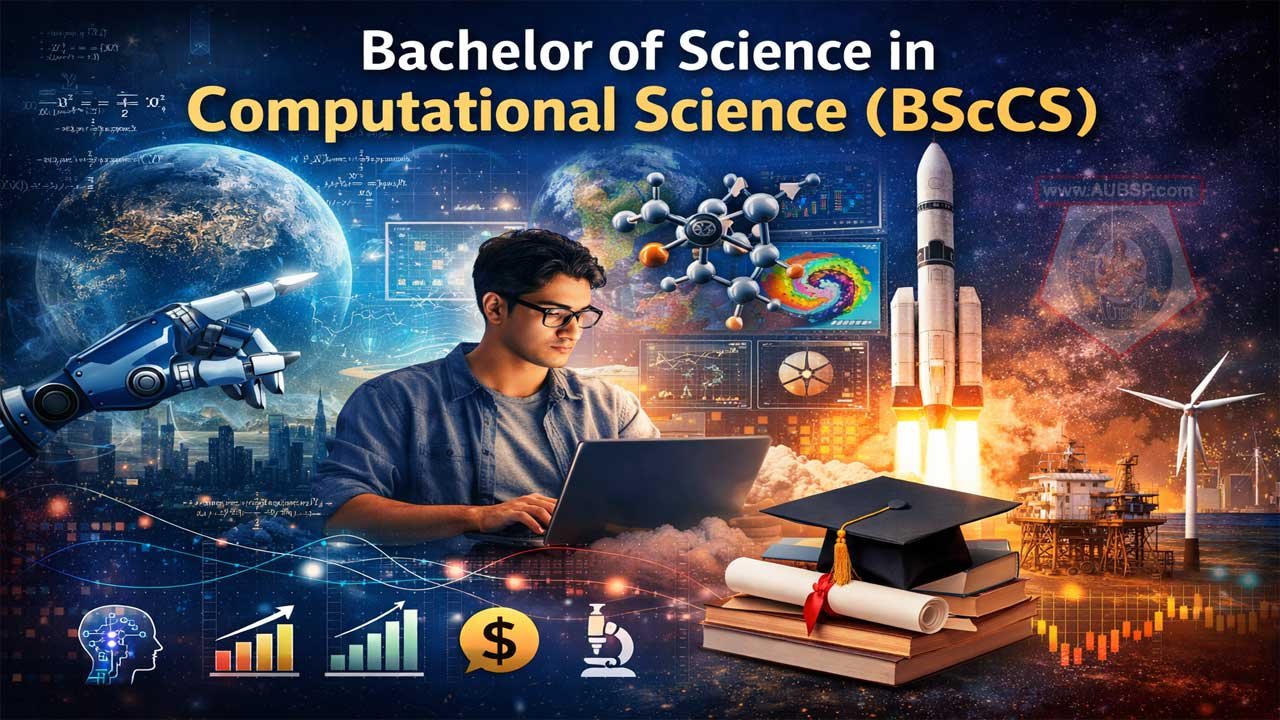
The Bachelor of Science in Computational Science (BScCS) is a multidisciplinary degree that blends advanced mathematics, programming, and domain sciences (such as physics, biology, engineering, and climate science) to solve complex real-world problems using computational methods, positioning graduates at the intersection of science and technology.
It offers strong global demand, high earning potential, and diverse career paths in fields like data science, AI/ML, quantitative finance, scientific research, software engineering, and engineering simulations, with top employers ranging from FAANG companies and financial firms to research institutions and government agencies.
With competitive salaries across the US, Europe, India, and beyond, excellent job growth projections through 2030, options to study on-campus or online, and clear pathways to prestigious master’s programs, BScCS is a high-ROI choice for students who enjoy mathematics, analytical thinking, and applying computing to scientific and industrial challenges.
| Category | Information |
|---|---|
| Degree Name | Bachelor of Science in Computational Science (BScCS) |
| Field Type | Interdisciplinary (Computer Science + Mathematics + Applied Sciences) |
| Duration | 3–4 years (varies by country) |
| Core Focus | Scientific computing, simulations, data analysis, mathematical modeling |
| Key Skills Gained | Programming (Python, C++, MATLAB), numerical methods, algorithms, data science, HPC |
| Popular Specializations | AI & Machine Learning, Data Science, Bioinformatics, Climate Science, Computational Physics |
| Top Career Roles | Computational Scientist, Data Scientist, ML Engineer, Software Engineer, Quant Analyst |
| Top Hiring Industries | Tech, Finance, Research Labs, Pharma & Biotech, Aerospace, Energy, Climate Science |
| Average Entry-Level Salary | USA: $55k–$75k · India: ₹3–5 LPA · UK: £25k–£35k |
| Mid–Senior Salary Range | USA: $150k–$300k+ · India: ₹18–35+ LPA · UK: £65k–£120k+ |
| Top Study Destinations | USA, UK, Germany, Switzerland, Canada, Australia, India |
| Leading Universities | MIT, Stanford, CMU, ETH Zurich, Oxford, IITs |
| Study Mode Options | On-campus, Fully Online, Hybrid |
| Job Outlook (2025–2030) | Very strong (15–30% growth in AI, data science, computational roles) |
| Further Study Options | MS in Computational Science, Computer Science, AI, Data Science |
| Best Fit For | Students strong in math, problem-solving, and scientific applications of computing |
Bachelor of Science in Computational Science (BScCS): Careers, Salaries, Universities & Scope 2026
The Bachelor of Science in Computational Science (BScCS) is an increasingly popular degree that bridges the gap between traditional computer science and scientific problem-solving using advanced computational methods. If you’re interested in combining mathematics, physics, chemistry, biology, or engineering with cutting-edge computing technology, a BScCS degree offers an exceptional career pathway with strong earning potential and global job prospects.
This comprehensive guide covers everything international students need to know about pursuing a BScCS degree, including career outcomes, average salaries across different regions, top universities worldwide, and why computational science is becoming one of the most sought-after fields in 2026-2027.
What is a Bachelor of Science in Computational Science?
Computational Science, also known as Scientific Computing or Technical Computing, is a specialized field that applies advanced computer technology to solve complex problems in physics, chemistry, biology, engineering, environmental science, and economics.
Key Differences: Computational Science vs Computer Science
Unlike Computer Science, which focuses on the theory and design of computers themselves, Computational Science emphasizes the application of computers to solve real-world scientific and engineering challenges.
| Aspect | Computational Science | Computer Science |
|---|---|---|
| Primary Focus | Using computers to solve scientific problems | Theory and design of computer systems |
| Applications | Physics simulations, climate modeling, bioinformatics, drug discovery | Software development, AI, cybersecurity, systems design |
| Core Skills | Programming, mathematics, numerical methods, domain expertise | Algorithms, data structures, software engineering |
| Research Areas | Scientific modeling, simulations, data analysis | Computer architecture, machine learning, databases |
| Career Path | Research institutions, tech companies with scientific focus | Tech industry, startups, financial services |
A BScCS degree typically combines 30-60 credits in mathematics, 30-60 credits in programming and computer science, and 60-90 credits in applied sciences (physics, chemistry, biology, or engineering).
BScCS Curriculum: What You’ll Learn
When pursuing a Bachelor of Science in Computational Science, you’ll develop expertise across multiple domains:
Core Subjects
- Advanced Mathematics: Linear algebra, calculus, differential equations, numerical methods
- Programming Languages: Python, C++, Java, MATLAB, R
- Algorithm Design: Computational complexity, optimization algorithms, data structures
- Scientific Computing: Numerical analysis, finite element methods, Monte Carlo simulations
- Data Science: Data processing, visualization, machine learning applications
- Physics-Based Computing: Computational fluid dynamics (CFD), molecular dynamics
Specialization Areas
Many universities offer BScCS programs with specializations in:
- Computational Physics: Astrophysics simulations, quantum computing
- Bioinformatics: Genetic sequencing, protein structure prediction, drug discovery
- Climate Science: Weather modeling, environmental simulations
- Materials Science: Molecular simulations, materials design
- Engineering Simulations: Structural analysis, aerodynamics
Career Opportunities After BScCS Degree
The Bachelor of Science in Computational Science opens doors to diverse, high-paying career paths globally. Here are the top positions BScCS graduates pursue:
High-Demand Job Roles
| Job Title | Average Salary (USA) | Average Salary (India) | Average Salary (UK) |
|---|---|---|---|
| Computational Scientist | $95,000–$135,000 | ₹8–15 LPA | £45,000–£65,000 |
| Data Scientist | $110,000–$160,000 | ₹10–20 LPA | £50,000–£70,000 |
| Machine Learning Engineer | $120,000–$180,000 | ₹9–26 LPA | £55,000–£75,000 |
| Software Engineer | $100,000–$150,000 | ₹6–20 LPA | £45,000–£65,000 |
| AI Research Engineer | $130,000–$200,000 | ₹10–28 LPA | £60,000–£85,000 |
| Quantitative Analyst | $150,000–$250,000+ | ₹12–30+ LPA | £70,000–£100,000 |
| Scientific Software Developer | $90,000–$130,000 | ₹6–15 LPA | £40,000–£60,000 |
| Financial Modeling Analyst | $100,000–$160,000 | ₹8–20 LPA | £50,000–£70,000 |
Industries Hiring BScCS Graduates
- Technology Companies: Google, Microsoft, Amazon, Apple, IBM, Meta
- Financial Services: Goldman Sachs, JPMorgan, Citadel, Jane Street, Two Sigma
- Research Institutions: NASA, CERN, National Laboratories, universities worldwide
- Pharmaceutical & Biotech: Pfizer, Moderna, Roche, BASF, industry research labs
- Automotive & Aerospace: Tesla, Boeing, SpaceX, Airbus, Rolls-Royce
- Energy Sector: ExxonMobil, Shell, renewable energy companies
- Climate & Environmental: NOAA, Environmental Protection Agency, climate research organizations
- Government Agencies: NSF, DOE, defense contractors
BScCS Salary Expectations: Global Comparison
Entry-Level Salary (0-2 Years Experience)
United States
- Average: $55,000–$75,000
- Range: $50,000–$90,000
- Major tech hubs (Silicon Valley, Seattle, New York): $70,000–$100,000
India
- Average: ₹3–5 LPA ($3,600–$6,000 USD)
- Entry-level with specializations: ₹5–8 LPA ($6,000–$9,600 USD)
- Top tech hubs (Bengaluru, Hyderabad, Pune): ₹6–10 LPA ($7,200–$12,000 USD)
United Kingdom
- Average: £25,000–£35,000 ($31,000–$43,000 USD)
- London: £30,000–£45,000 ($37,000–$55,000 USD)
Canada
- Average: CAD $55,000–$75,000 ($40,000–$55,000 USD)
Australia
- Average: AUD $70,000–$90,000 ($45,000–$58,000 USD)
Mid-Level Salary (3-7 Years Experience)
United States: $85,000–$150,000
India: ₹8–18 LPA ($9,600–$21,600 USD)
United Kingdom: £40,000–£65,000 ($49,000–$80,000 USD)
Senior-Level Salary (8+ Years Experience)
United States: $150,000–$300,000+
India: ₹18–35+ LPA ($21,600–$42,000+ USD)
United Kingdom: £65,000–£120,000+ ($80,000–$150,000 USD)
Factors Affecting Salary:
- Specialization (AI/ML engineers earn 15-20% more)
- Location and cost of living
- Company size (FAANG companies pay 30-40% more)
- Experience and certifications
- Educational prestige
- Skills in high-demand areas
Best Universities for BScCS Degree: Top Global Institutions
Top Universities in the United States
1. Massachusetts Institute of Technology (MIT)
- Program: Bachelor of Science in Computer Science & Engineering
- Location: Cambridge, Massachusetts
- Highlights: World’s leading computational science program, CSAIL lab, robotics research
- Acceptance Rate: ~4%
- Average Starting Salary: $150,000+
- Website: mit.edu
2. Stanford University
- Program: BS in Computer Science
- Location: Stanford, California
- Highlights: Silicon Valley proximity, strong AI/ML focus, top recruiter access
- Acceptance Rate: ~4%
- Average Starting Salary: $145,000+
- Website: stanford.edu
3. Carnegie Mellon University
- Program: BS in Computer Science
- Location: Pittsburgh, Pennsylvania
- Highlights: Robotics Institute, AI research, independent School of Computer Science
- Acceptance Rate: ~7%
- Average Starting Salary: $140,000+
- Website: cmu.edu
4. University of California, Berkeley
- Program: BS in Computer Science
- Location: Berkeley, California
- Highlights: Renowned AI research, strong computational methods focus
- Acceptance Rate: ~8%
- Average Starting Salary: $130,000+
- Website: berkeley.edu
5. University of Pennsylvania
- Program: BS in Computer Science
- Location: Philadelphia, Pennsylvania
- Highlights: Penn Engineering excellence, strong internship networks
- Acceptance Rate: ~6%
- Average Starting Salary: $135,000+
Top Universities in Europe
1. ETH Zurich (Swiss Federal Institute of Technology)
- Program: Bachelor’s in Computer Science
- Location: Zurich, Switzerland
- Highlights: World-class engineering, robotics, strong research focus
- Acceptance Rate: ~12%
- Tuition: CHF 730/semester (~$800 USD)
2. University of Oxford
- Program: Computer Science BA/BSc
- Location: Oxford, United Kingdom
- Highlights: Historic excellence, tutorial system, strong theory foundation
- Acceptance Rate: ~15%
- Tuition: £9,250/year
3. University of Cambridge
- Program: Computer Science (Natural Sciences Tripos)
- Location: Cambridge, United Kingdom
- Highlights: World’s leading CS research, innovative curriculum
- Acceptance Rate: ~4%
- Tuition: £9,250/year
4. Technical University of Munich (TUM)
- Program: Bachelor’s in Informatics
- Location: Munich, Germany
- Highlights: Strong computational focus, industry partnerships
- Acceptance Rate: ~15%
- Tuition: €0 (German public university)
Top Universities in India
1. Indian Institute of Technology (IIT) Delhi
- Program: BTech in Computer Science & Engineering
- Location: Delhi, India
- Highlights: JEE entrance, top employer recognition, strong placements
- Average Starting Salary: ₹15–25 LPA ($18,000–$30,000 USD)
2. Indian Institute of Technology (IIT) Bombay
- Program: BTech in Computer Science
- Location: Mumbai, India
- Highlights: Industry collaborations, strong alumni network
- Average Starting Salary: ₹15–25 LPA ($18,000–$30,000 USD)
3. Indian Institute of Technology (IIT) Madras
- Program: BTech in Computer Science
- Location: Chennai, India
- Highlights: Research-focused, growing AI focus
- Average Starting Salary: ₹12–20 LPA ($14,000–$24,000 USD)
4. Delhi University (DU)
- Program: BSc (Hons) Computer Science
- Location: Delhi, India
- Tuition: ₹50,000–₹1,00,000/year
- Average Starting Salary: ₹3–6 LPA ($3,600–$7,200 USD)
Top Universities in Canada & Australia
University of Toronto (Canada)
- Program: BASc in Engineering Science – Computer Option
- Average Starting Salary: CAD $65,000–$85,000
University of British Columbia (Canada)
- Program: BCS in Computer Science
- Average Starting Salary: CAD $60,000–$80,000
University of Melbourne (Australia)
- Program: Bachelor of Science in Computer Science
- Average Starting Salary: AUD $70,000–$90,000
University of Sydney (Australia)
- Program: Bachelor of Science in Computer Science
- Average Starting Salary: AUD $65,000–$85,000
Online Bachelor of Science in Computational Science Programs
For students seeking flexibility, several institutions offer accredited online BScCS degree programs:
Fully Online Options
| University | Program | Tuition/Year | Duration |
|---|---|---|---|
| Coursera (University Partners) | Online CS Degrees (Various) | $15,000–$40,000 | 4 years |
| UT Austin Online | Master’s in Computer Science | $10,000 | 2 years (Masters) |
| Oregon State University | Online BS in Computer Science | $14,000–$16,000 | 4 years |
| University of Florida | Online BS in Computer Science | $15,000–$18,000 | 4 years |
| Penn State World Campus | Online BS in Computer Science | $15,000–$20,000 | 4 years |
Advantages of Online BScCS Degrees:
- Study from anywhere in the world
- Flexible schedule for working professionals
- Typically 30-40% cheaper than on-campus programs
- Recognized credentials from accredited institutions
- Access to global peer network
Master’s Degree After BScCS: Next Steps
Many BScCS graduates pursue Master’s degrees in Computational Science to specialize further. Popular graduate programs include:
Top Master’s Programs in Computational Science
Lund University (Sweden)
- Program: Master’s in Computational Science
- Duration: 2 years
- Specializations: Scientific Computing, Machine Learning, Bioinformatics
- Tuition: Free for EU students; €8,000–€12,000/year for international students
- Website: lunduniversity.lu.se
University of Texas at Austin (USA)
- Program: Master’s in Computer Science (Online)
- Duration: 2 years
- Specializations: AI, Data Science, Computational Methods
- Tuition: $10,000 total
- Website: utexas.edu
Stanford University (USA)
- Program: Master’s in Computer Science
- Specializations: Computational Methods, Scientific Computing, Machine Learning
- Average Cost: $60,000+
- Average Starting Salary After MS: $160,000–$200,000
University of Cambridge (UK)
- Program: Master’s in Advanced Computer Science
- Duration: 1 year
- Focus: Computational methods, AI, scientific computing
- Tuition: £25,000–£30,000
How to Choose the Right BScCS Program
When selecting your Bachelor of Science in Computational Science degree, consider these factors:
Academic Excellence
- University rankings in computer science and mathematics
- Faculty research publications and citations
- Lab facilities and computational resources
- Industry partnerships and internship opportunities
Cost & Financial Aid
- Tuition and living expenses
- Scholarship opportunities for international students
- Work-study programs and research assistant positions
- Return on investment (graduate salaries vs. costs)
Specialization Opportunities
- Available electives and specialization tracks
- Research projects and thesis options
- Industry certifications (AWS, Google Cloud, Azure)
- Internship and co-op programs
Location & Industry Access
- Proximity to tech hubs (Silicon Valley, Seattle, London, Bengaluru)
- Local job market for entry-level positions
- Networking opportunities with alumni and companies
- Cost of living in the region
Campus Resources
- Computing lab facilities and hardware
- High-performance computing (HPC) access
- Mentorship programs
- Career services and recruitment events
BScCS Admission Requirements
Typical requirements for a Bachelor of Science in Computational Science include:
Academic Prerequisites
- High school diploma or equivalent (or A-levels/IB for international students)
- Strong performance in mathematics (Calculus, Algebra, Geometry)
- Physics or advanced science courses
- English language proficiency (TOEFL/IELTS for international students)
- GPA: 3.5–4.0 (for top universities)
Standardized Test Scores
- SAT: 1450–1570 (for US universities)
- ACT: 33–35 (for US universities)
- IB: 38–42 points (for international schools)
- A-Levels: AAA–AA* in Physics, Mathematics, Further Mathematics
Application Materials
- High school transcripts
- Letters of recommendation (2-3)
- Personal statement/essay
- Resume or CV
- Portfolio (optional, for demonstrating projects)
For International Students
- TOEFL (minimum 100 iBT) or IELTS (minimum 7.0)
- Student visa sponsorship (varies by country)
- Financial proof for tuition and living expenses
BScCS Degree Value: ROI & Career Prospects
Employment Rate
- 6 months after graduation: 94–98% of BScCS graduates employed or in further education
- Job satisfaction: 82–87% report high job satisfaction
- Career advancement: 65% reach mid-level positions within 5 years
Highest-Paying Sectors for BScCS Graduates
- Quantitative Finance: $200,000–$500,000+ (with bonuses)
- Tech Giants (FAANG): $150,000–$250,000+ (base + stock)
- AI/ML Startups: $120,000–$200,000+ (salary + equity)
- Research & Development: $90,000–$150,000+
- Aerospace & Defense: $100,000–$180,000+
Lifetime Earning Potential
- 10-year average earnings: $1.2–1.8 million USD
- 20-year average earnings: $2.5–4.0+ million USD
- With specializations (AI/ML): +30–50% higher earnings
Essential Skills for BScCS Success
Technical Skills
- Programming: Python, C++, Java, MATLAB, R proficiency
- Mathematics: Linear algebra, calculus, differential equations
- Data Science: Python (NumPy, Pandas), machine learning libraries
- High-Performance Computing: Parallel programming (OpenMP, CUDA)
- Version Control: Git, GitHub collaboration
- Scientific Tools: MATLAB, Mathematica, Jupyter Notebooks
Soft Skills
- Problem-solving and analytical thinking
- Research and data analysis
- Technical writing and documentation
- Teamwork and collaboration
- Communication of complex concepts to non-technical audiences
- Project management and time management
Certifications to Enhance Your CV
- Google Cloud Certified Associate Cloud Engineer
- AWS Certified Solutions Architect
- Microsoft Azure Fundamentals
- Python for Data Science (Coursera, edX)
- Machine Learning Specialization
Internship & Co-op Opportunities
BScCS students typically complete 2-3 internships during their degree, which significantly boost career prospects and salary:
Top Companies Offering BScCS Internships
- Google, Meta, Microsoft, Apple, Amazon (average: $8,000–$12,000/month)
- Citadel, Goldman Sachs, JPMorgan (finance internships: $10,000–$15,000/month)
- NASA, CERN, National Laboratories (research positions: $4,000–$8,000/month)
- Tesla, SpaceX, Boeing (engineering internships: $7,000–$11,000/month)
Internship Benefits
- Real-world experience in computational projects
- Networking with industry professionals
- Often converts to full-time offers (60–70% conversion rate)
- Salary boost on graduation (interns receive 15–25% higher starting offers)
FAQs About BScCS Degree
What is a Bachelor of Science in Computational Science (BScCS)?
BScCS is an interdisciplinary undergraduate degree that combines computer science, mathematics, and applied sciences to solve complex real-world problems using computational modeling, simulations, and data analysis.
How is Computational Science different from Computer Science?
Computational Science focuses on applying computing to scientific and engineering problems, while Computer Science focuses more on software systems, algorithms, and computing theory.
Is BScCS a good degree in 2025–2026?
Yes, BScCS is highly relevant due to rising demand in AI, data science, scientific computing, climate modeling, finance, and engineering simulations.
What subjects are taught in a BScCS program?
Core subjects include advanced mathematics, programming, numerical methods, algorithms, scientific computing, data science, and domain-specific sciences.
Which programming languages are used in BScCS?
Common languages include Python, C++, Java, MATLAB, R, and sometimes Fortran for scientific computing.
Does BScCS require strong mathematics skills?
Yes, strong skills in calculus, linear algebra, differential equations, and numerical methods are essential.
Is BScCS harder than Computer Science?
BScCS is more math- and science-intensive, while Computer Science is more software-focused; difficulty depends on individual strengths.
What are the best career options after BScCS?
Popular roles include Computational Scientist, Data Scientist, Machine Learning Engineer, Software Engineer, Quantitative Analyst, and AI Research Engineer.
What is the average salary after a BScCS degree?
Entry-level salaries range from $55,000–$75,000 in the USA, ₹3–5 LPA in India, and £25,000–£35,000 in the UK.
Can BScCS graduates work in AI and Machine Learning?
Yes, BScCS graduates are well-suited for AI and ML roles due to strong foundations in mathematics, algorithms, and data science.
Which industries hire BScCS graduates?
Industries include technology, finance, research institutions, aerospace, pharmaceuticals, energy, climate science, and government agencies.
Is BScCS suitable for research careers?
Yes, it is one of the best undergraduate degrees for research in scientific computing, physics, biology, and engineering.
Can I pursue a master’s degree after BScCS?
Yes, graduates commonly pursue MS degrees in Computational Science, Computer Science, AI, Data Science, or related fields.
Does BScCS have good global job opportunities?
Yes, the degree is globally recognized with strong demand in the US, UK, Europe, Canada, Australia, and Asia.
Is BScCS better than BTech or BE?
BScCS is more research- and application-focused, while BTech/BE emphasizes engineering design; both can lead to similar tech roles.
Can I get a job in the USA with a BScCS degree?
Yes, many BScCS graduates work in the USA with employer-sponsored visas such as H-1B.
What is the job outlook for BScCS graduates?
Job growth is strong, especially in AI, data science, and computational modeling, with projected growth of 15–30% through 2030.
Are internships important during BScCS?
Yes, internships significantly improve job prospects, salaries, and chances of converting to full-time roles.
Which universities are best for BScCS?
Top institutions include MIT, Stanford, Carnegie Mellon, ETH Zurich, Oxford, Cambridge, and IITs in India.
Can I study BScCS online?
Yes, several accredited universities offer online or hybrid computational science or computer science programs.
Do online BScCS degrees have value?
Yes, degrees from accredited institutions are recognized, though networking may require extra effort.
What skills do employers look for in BScCS graduates?
Employers value programming skills, mathematical modeling, data analysis, problem-solving, and research ability.
Is BScCS suitable for students interested in climate science?
Yes, computational science is widely used in climate modeling, weather prediction, and environmental simulations.
Can BScCS graduates work in finance?
Yes, many work as quantitative analysts, financial modelers, and data scientists in banks and hedge funds.
Does BScCS include physics or biology?
Yes, students usually choose applied science tracks such as physics, biology, chemistry, or engineering.
What certifications help BScCS graduates?
Cloud certifications, data science courses, and machine learning specializations enhance employability.
Is BScCS future-proof?
Yes, its strong foundation in math, computing, and problem-solving makes it adaptable to emerging technologies.
What type of students should choose BScCS?
Students who enjoy mathematics, logical thinking, coding, and applying technology to scientific problems are a great fit.
Can BScCS graduates become software engineers?
Yes, many graduates work successfully as software engineers in tech companies.
Does BScCS involve high-performance computing?
Yes, many programs include parallel computing, simulations, and high-performance computing concepts.
Is BScCS recognized by employers worldwide?
Yes, especially when earned from accredited and well-ranked universities.
What is the return on investment for BScCS?
The degree offers high ROI due to strong salaries, high employment rates, and long-term career growth.
Can BScCS lead to entrepreneurship or startups?
Yes, graduates often found or join startups in AI, data science, biotech, and climate tech sectors.
Is BScCS good for students planning a PhD?
Yes, it provides an excellent foundation for doctoral research in computational and scientific fields.
Conclusion
A Bachelor of Science in Computational Science is an excellent investment for your future, offering competitive salaries, diverse career paths, and global opportunities. Whether you pursue this degree at top universities like MIT and Stanford, affordable programs in India, or flexible online options, the skills you develop will position you for success in one of the world’s fastest-growing industries.
The field of computational science combines the flexibility of computer science with the problem-solving depth of scientific research, making BScCS graduates uniquely valuable to employers across technology, finance, research, healthcare, and engineering sectors.
Key Takeaways:
- ✓ Competitive entry-level salary: $55,000–$75,000 (USA), ₹3–5 LPA (India)
- ✓ Strong job growth: 15%+ annually through 2030
- ✓ Global opportunities: US, UK, Canada, Singapore, Australia, India
- ✓ Specialization potential: AI/ML, Bioinformatics, Climate Science, Robotics
- ✓ Advanced degree options: Master’s programs at top universities worldwide
Start your computational science journey today and unlock a future of innovation, impact, and excellent earning potential.


Leave a Reply
You must be logged in to post a comment.