
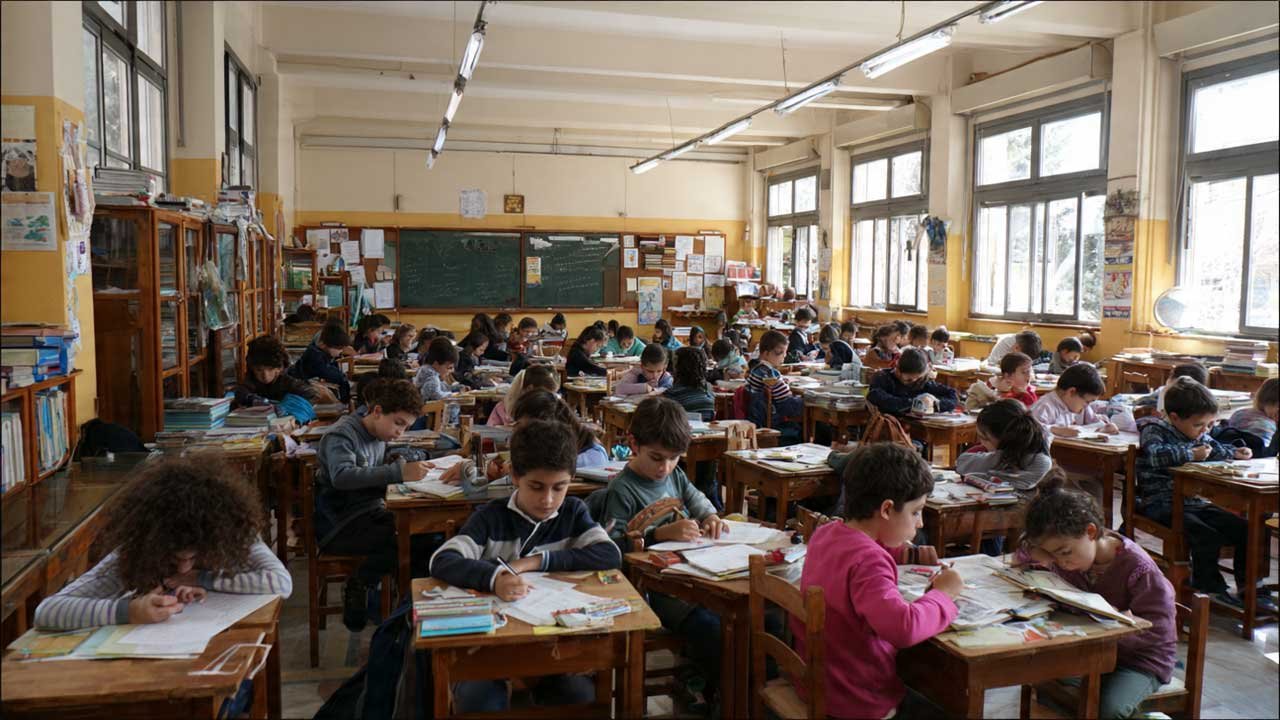
The Greek education system, managed by the Ministry of Education and Religious Affairs, is a highly centralized, inclusive, and free framework that guarantees 11 years of compulsory schooling from ages 4 to 15.
It begins with Early Childhood Education (Nipiagogeio), focusing on play-based learning, followed by Primary Education (Dimotiko Scholeio), which builds literacy and numeracy foundations. Secondary Education comprises the Lower Secondary (Gymnasio) — completing compulsory education — and the Upper Secondary (Lykeio), offering academic or vocational tracks leading to the competitive Panhellenic Examinations for university entry.
Tertiary Education includes public universities and vocational schools, ensuring merit-based, tuition-free access. Greece also supports lifelong learning through adult education and vocational training, reinforcing its commitment to inclusive, continuous personal and professional development.
| Category | Key Information |
|---|---|
| Governing Body | Ministry of Education and Religious Affairs |
| Structure | Primary, Secondary, and Tertiary Education |
| Compulsory Education Duration | 11 years (ages 4–15) |
| Early Childhood Education | Optional daycare (up to 4 years) and compulsory Pre-Primary (Nipiagogeio, ages 4–6) |
| Primary Education | Dimotiko Scholeio (Grades 1–6, ages 6–12) |
| Lower Secondary Education | Gymnasio (Grades 7–9, ages 12–15, compulsory) |
| Upper Secondary Education | Lykeio (General or Vocational, ages 15–18, optional) |
| University Entrance Exams | Panhellenic Examinations (Panelladikes Exetaseis) |
| Tertiary Institutions | Universities (Panepistimia) and Vocational Schools (SAEK) |
| Tuition Policy | Free for Greek and EU students at public universities |
| Adult Learning Options | Second Chance Schools and Vocational Training Centers (KEK) |
| System Nature | Centralized, egalitarian, and state-controlled |
| Language of Instruction | Greek (English introduced early) |
🇬🇷 The Age-Wise Trajectory of Education in Greece: A Structured System
Education in Greece reflects a centuries-old respect for wisdom, philosophy, and structured learning. Rooted in democratic ideals and guided by the Ministry of Education and Religious Affairs, the Greek system ensures equal and free access to quality education from early childhood through secondary school. Its centralized framework maintains consistency nationwide, supporting both academic excellence and inclusivity.
In this comprehensive AUBSP guide, we explore how Greece nurtures learners across all age groups — from their first steps in pre-primary education to their professional and academic maturity at the tertiary level. Let’s uncover how each stage contributes to shaping the next generation of scholars and innovators.
1. Early Childhood Education and Care (E.C.E.C.)
Early childhood education is the cornerstone of Greece’s educational philosophy. At this foundational level, learning is more about curiosity, exploration, and social interaction than structured academics. The government’s commitment to early education ensures that children begin developing essential emotional, cognitive, and social skills before they step into primary school.
Since 2018, attendance in Pre-Primary Education (Nipiagogeio) has become compulsory for all children aged four and above. This policy emphasizes holistic development through play-based learning, creativity, and hands-on activities that introduce children to numbers, shapes, language, and art. Public kindergartens, often located alongside primary schools, provide a seamless transition into formal education, nurturing confidence and curiosity from the very beginning.
Age Division:
- Up to 4 years: Daycare/Nursery (Vrefonipiakoi Stathmoi) – optional early socialization.
- Ages 4–6: Pre-Primary (Nipiagogeio) – compulsory two-year foundation program.
2. Primary Education (Dimotiko Scholeio)
Primary education in Greece, known as Dimotiko Scholeio, represents the start of formal academic instruction. It spans six critical years, from ages 6 to 12, and establishes the bedrock of literacy, numeracy, and civic understanding. This level aims to shape not only academically capable students but also responsible young citizens grounded in cultural and ethical awareness.
The curriculum blends Greek language, mathematics, environmental studies, history, and physical education with early foreign language learning — English often introduced as early as Grade 1 or 3. Teachers assess students continuously rather than through formal examinations, ensuring consistent development without exam-related stress. Upon completing Grade 6, students seamlessly progress to Lower Secondary Education (Gymnasio), marking the continuation of their academic journey without entrance exams.
Key Highlights:
- Duration: 6 years (Grades 1–6)
- Focus: Foundational skills, moral development, and creativity
- Outcome: Automatic transition to secondary school
3. Secondary Education in Greece: Expanding Horizons
Secondary education in Greece broadens intellectual perspectives and prepares students for specialized learning paths. It consists of two sequential stages — the Lower Secondary (Gymnasio) and the Upper Secondary (Lykeio) — each designed with distinct academic goals. This phase marks the shift from general education to career or university-oriented specialization, shaping future scholars and professionals.
While Lower Secondary remains compulsory, the Upper Secondary cycle becomes optional yet crucial for those pursuing higher studies. This dual structure ensures every student, regardless of ambition, finds a path that aligns with their potential — whether academic, technical, or vocational.
A. Lower Secondary Education (Gymnasio)
The Gymnasio phase, covering ages 12 to 15 (Grades 7–9), concludes the mandatory education period in Greece. At this stage, students explore a comprehensive curriculum that deepens their knowledge across sciences, humanities, and languages. Subjects such as Physics, Chemistry, Ancient Greek, Technology, and a second foreign language enrich their intellectual development.
Evaluation remains continuous and descriptive, fostering motivation rather than competition. Successful completion earns the Apolytirio Gymnasiou, a certificate that allows students to enroll in Upper Secondary Education. The Gymnasio thus serves as a bridge — transforming foundational learning into subject-specific understanding and preparing learners for either academic or vocational advancement.
Core Details:
- Duration: 3 years
- Compulsory: Yes
- Goal: General education and readiness for specialization
B. Upper Secondary Education: Pathways to Higher Learning
The Upper Secondary (Lykeio) years — ages 15 to 18 — represent a transformative academic period. Students select between two primary tracks: General Lyceum (Geniko Lykeio – GEL) or Vocational Lyceum (Epangelmatiko Lykeio – EPAL). Both offer distinct yet equally respected paths toward either higher education or direct professional entry.
The General Lyceum emphasizes academic preparation for the Panhellenic Exams, the national university entrance tests that determine placement in public universities. Meanwhile, the Vocational Lyceum focuses on technical education and applied skills, equipping students for employment or specialized tertiary studies. This bifurcated system ensures that every learner, whether aspiring to academia or skilled trades, finds a meaningful and rewarding route.
The Decisive Factor: The Panhellenic Examinations
For General Lyceum students, the Panhellenic Examinations (Panelladikes Exetaseis) define the culmination of their secondary education journey. Conducted at the national level, these rigorous exams test mastery across chosen scientific or humanities fields, serving as the exclusive gateway to Greece’s public universities.
In the final years, students specialize in one of several academic fields such as Health Sciences, Humanities, Technology, or Economics. Performance in these exams directly determines university admission — making these years intensely focused and competitive. Similarly, Vocational Lyceum graduates may opt to take a specialized version of these exams, allowing entry into technical or applied science institutions, reinforcing Greece’s commitment to educational equity.
4. Tertiary Education: Higher Learning in Greece
Greece’s tertiary education system continues its legacy of academic rigor and cultural depth. Governed by constitutional mandates, all public universities and higher institutions operate as non-profit entities, ensuring that education remains accessible and merit-based. Students enter through the Panhellenic Exam process, and Greek and EU nationals benefit from tuition-free undergraduate programs.
There are two primary streams:
- Universities (Panepistimia): Offering 4–6-year degree programs in diverse fields, from humanities and medicine to engineering and law.
- Higher Vocational Training Schools (SAEK): Providing 2–2.5-year specialized training designed to meet industry demands.
Greece also offers postgraduate (Master’s) and doctoral (Ph.D.) programs, reinforcing its reputation for research and intellectual advancement. Notably, private universities are not recognized for awarding degrees, ensuring consistent national quality standards.
Lifelong Learning and Continuing Education in Greece
Education in Greece doesn’t end with university graduation. The country promotes lifelong learning through various adult education and professional development programs, helping citizens adapt to evolving economic and technological landscapes.
Second Chance Schools (Scholeia Defteris Efkerias) enable adults (18+) to complete their compulsory education, while Vocational Training Centers (Kentra Epangelmatikis Katartisis – KEK) provide professional upskilling and retraining opportunities. This commitment to lifelong learning underscores Greece’s belief that education is not merely a stage of life but a continuous journey toward empowerment, employability, and self-fulfillment.
Final Thoughts: Greece’s Educational Legacy and Modern Vision | AUBSP Perspective
From nurturing toddlers in playful nurseries to mentoring doctoral scholars, the Greek education system remains one of Europe’s most structured and inclusive. It successfully blends classical values with modern pedagogy, ensuring that every learner — regardless of background — receives equal opportunity to grow.
We celebrate systems like Greece’s that champion accessibility, cultural depth, and lifelong learning. Whether you’re exploring comparative education systems, planning studies abroad, or pursuing continuous professional growth, AUBSP remains your trusted partner for accurate insights, global education updates, and exam-ready resources.
FAQs about Greek education system
What is the structure of the Greek education system?
The Greek education system is divided into three main levels: Primary, Secondary, and Tertiary education, all supervised by the Ministry of Education and Religious Affairs.
How long is compulsory education in Greece?
Compulsory education lasts for 11 years, covering children aged 4 to 15, from pre-primary through lower secondary school.
When does formal education start in Greece?
Formal education begins at age 4 with compulsory pre-primary education known as Nipiagogeio (Kindergarten).
Is education free in Greece?
Yes, all public education—from kindergarten to university—is free for Greek and EU citizens, including textbooks and materials.
What is the role of the Ministry of Education in Greece?
The Ministry of Education and Religious Affairs oversees curriculum design, teacher recruitment, school administration, and educational policy implementation nationwide.
What is Early Childhood Education and Care (E.C.E.C.) in Greece?
E.C.E.C. covers the period before age 6, including optional nurseries and compulsory pre-primary schools that promote social, emotional, and cognitive development through play-based learning.
At what age do Greek children enter primary school?
Children start primary school, called Dimotiko Scholeio, at age 6 and continue until age 12.
What subjects are taught in primary education?
Primary education includes Greek Language, Mathematics, History, Environmental Studies, English, Physical Education, and Arts.
How are students assessed in Greek primary schools?
Assessment is continuous and descriptive, focusing on progress rather than exams or grades.
What is Gymnasio in the Greek education system?
Gymnasio is the lower secondary level for ages 12 to 15 and marks the final stage of compulsory education.
What subjects are studied in Gymnasio?
Students learn a broad curriculum including sciences, languages, technology, ancient Greek, and humanities to build a strong academic foundation.
What certificate do students receive after Gymnasio?
Graduates receive the Apolytirio Gymnasiou, a certificate required for admission to upper secondary education.
What is Lykeio in Greece?
Lykeio is the upper secondary education level, offering academic and vocational tracks for students aged 15 to 18.
What is the difference between General Lyceum and Vocational Lyceum?
General Lyceum (GEL) prepares students for university through the Panhellenic Exams, while Vocational Lyceum (EPAL) focuses on technical and professional skills for direct employment or further studies.
Are Panhellenic Examinations mandatory for all students?
No, they are required only for students aiming to enter public universities after completing General or Vocational Lyceum.
What are the Panhellenic Examinations?
They are nationwide exams held at the end of upper secondary school that determine university placement based on student performance.
Can vocational students enter higher education in Greece?
Yes, EPAL graduates can take specialized Panhellenic Exams to access technical universities and vocational colleges.
What types of institutions provide higher education in Greece?
Higher education is offered by public universities (Panepistimia) and Higher Vocational Training Schools (SAEK).
How long are university programs in Greece?
Undergraduate programs usually last between 4 to 6 years, depending on the field of study.
Is tuition required at Greek universities?
No, undergraduate education is tuition-free for Greek and EU citizens at all public universities.
Are private universities recognized in Greece?
Private universities are not legally recognized as degree-awarding institutions in Greece, ensuring consistent public education standards.
Are postgraduate programs available in Greece?
Yes, Greek universities offer Master’s programs (1–2 years) and Doctoral programs (at least 3 years).
What is lifelong learning in Greece?
Lifelong learning includes adult education, vocational training, and professional development programs that support continuous skill enhancement.
What are Second Chance Schools?
These schools offer adults (18+) who did not complete Gymnasio a second opportunity to obtain an equivalent qualification.
What are Vocational Training Centers (KEK)?
KEK centers provide adults with specialized professional training to enhance career prospects and adaptability.
What is the main language of instruction in Greece?
Greek is the primary language of instruction, with English introduced early in primary education.
Is religious education part of the Greek curriculum?
Yes, religious education is included as a subject throughout primary and secondary schooling, reflecting Greece’s cultural heritage.
How are Greek schools funded?
Public schools are fully funded by the state, ensuring free access to education and learning resources.
Are textbooks free in Greece?
Yes, all students in public schools receive textbooks and educational materials free of charge.
Does Greece offer inclusive education for all learners?
Yes, the system promotes equality and includes special education programs to support students with learning differences or disabilities.
What are the main goals of Greek education?
The primary goals are to foster critical thinking, civic responsibility, cultural awareness, and lifelong learning skills among students.
Is the Greek education system centralized or decentralized?
It is highly centralized, with national oversight ensuring uniform quality and standards across all regions.
Are there exams between primary grades?
No formal exams exist between grades in primary school; promotion is based on continuous assessment and teacher evaluation.
When do Greek students choose specialization fields?
Students select their field of study during the final years of Lyceum, based on interests and university goals.
Do Greek universities accept international students?
Yes, many Greek universities welcome international students, offering select programs in English.
How does Greece support student progression between levels?
Transitions between levels are automatic up to lower secondary; later stages depend on exams or performance in national assessments.
What makes the Greek education system unique?
Its blend of classical heritage, state regulation, and commitment to free education creates a distinctive, equitable learning environment.
Does Greece promote digital learning?
Yes, modern reforms emphasize digital literacy, online learning tools, and technology integration in classrooms.
What age marks the end of compulsory schooling in Greece?
Students complete compulsory schooling at age 15, upon finishing Gymnasio.
Can adults return to formal education in Greece?
Yes, adults can rejoin education through Second Chance Schools or vocational programs designed for flexible learning.
What role does AUBSP play in education insights?
AUBSP provides detailed, research-backed educational content, comparative system analyses, and learning resources to help students and educators stay informed.


Leave a Reply
You must be logged in to post a comment.