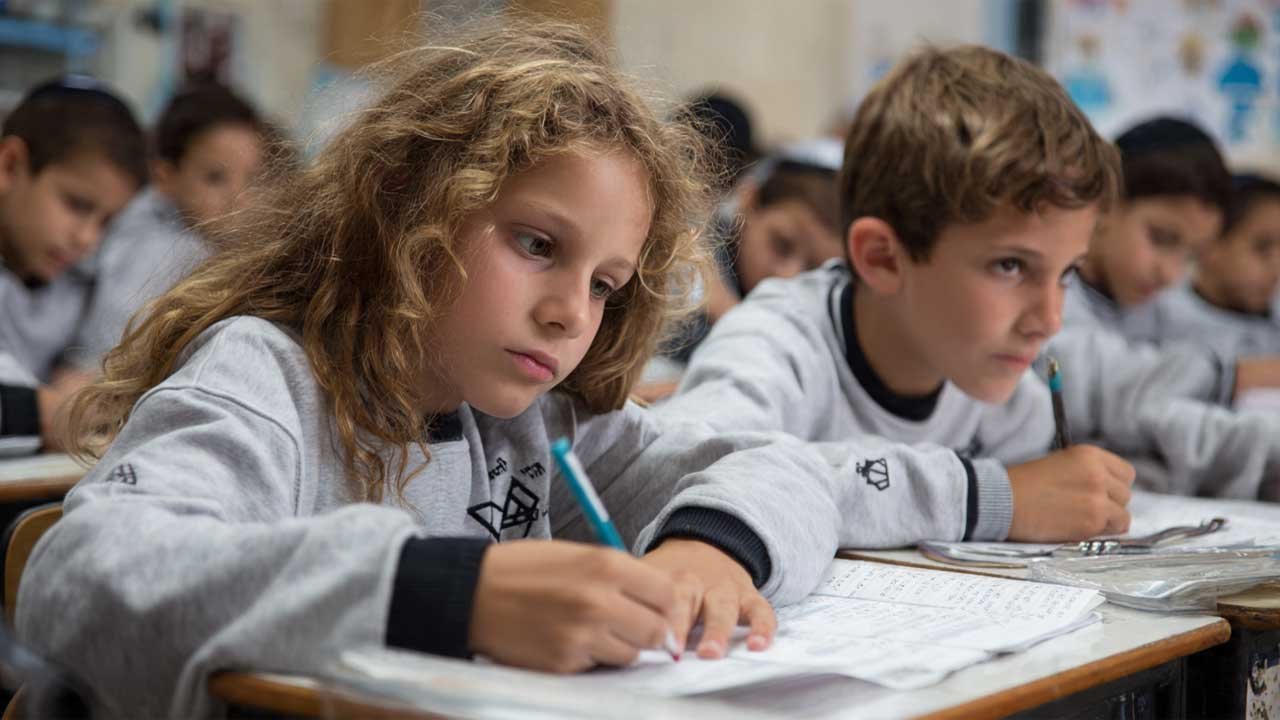
Israel’s education system, administered by the Ministry of Education, is a structured and inclusive model that ensures free and compulsory schooling from ages 3 to 18. It begins with strong early childhood programs that nurture curiosity and social development, followed by a rigorous primary phase emphasizing literacy, numeracy, and cultural understanding.
Secondary education fosters specialization through academic or vocational tracks culminating in the Bagrut matriculation exams, which determine university eligibility. Afterward, students typically complete mandatory military or national service before pursuing higher education in Israel’s world-class universities. This age-wise framework reflects Israel’s commitment to intellectual growth, civic responsibility, and lifelong learning.
| Stage / Category | Key Information |
|---|---|
| Governing Body | Ministry of Education (Centralized management) |
| Compulsory Education Age | 3 to 18 years (Grade 1–12) |
| Legal Framework | Compulsory Education Law |
| Pre-Primary Education | Ages 3–6; includes Ma’on Yom (Daycare), Gan Trom-Chova (Pre-K), and Gan Chova (Kindergarten) |
| Primary Education | Ages 6–12; Grades 1–6; Core subjects: Hebrew, Math, Science, English, Jewish Heritage |
| Lower Secondary (Middle School) | Ages 12–15; Grades 7–9; Increased subject specialization and critical thinking |
| Upper Secondary (High School) | Ages 15–18; Grades 10–12; Specialized tracks (Sciences, Humanities, Vocational) |
| Matriculation Certificate | Bagrut Exams; Required for university admission |
| Post-Secondary Path | Compulsory Military/National Service (18+), followed by Higher Education (21+) |
| Higher Education | Universities & Colleges; Degrees: Bachelor’s, Master’s, Doctorate |
| Educational Streams | State-Secular, State-Religious, Independent Religious (Haredi), Arab Schools |
| Language of Instruction | Primarily Hebrew; Arabic in Arab Schools |
| Goal | Promote intellectual growth, civic responsibility, and cultural identity |
The Stages of Learning: An Age-Wise Expansion of Israel’s Education System 🇮🇱
Israel’s education system stands as a global model for structured, inclusive, and intellectually driven learning. Administered by the Ministry of Education, it reflects Israel’s dedication to knowledge, innovation, and cultural preservation. Governed by the Compulsory Education Law, schooling is free and mandatory from age three to the completion of Grade 12, ensuring equal opportunity for all children.
The framework is strategically divided into distinct educational stages, nurturing the child’s development from early childhood through to higher education. In this comprehensive AUBSP analysis, we explore each phase of Israel’s education journey — from foundational learning to post-secondary pathways — and reveal how this dynamic system builds a nation of lifelong learners.
I. Pre-Primary Education: The Foundation (Ages 3–6)
Early education in Israel lays the groundwork for cognitive and emotional growth, and its universal access is a testament to the country’s progressive approach. With one of the world’s highest participation rates in early childhood programs, Israel ensures that children receive structured developmental guidance from infancy.
The pre-primary years nurture curiosity, social skills, and communication — preparing children for a seamless transition into formal education. Managed under national supervision, this foundational tier is characterized by quality care, professional educators, and a curriculum designed to ignite a lifelong love of learning.
Infant and Toddler Care (Infants – 3 Years): Ma’on Yom
Infant care, known as Ma’on Yom, caters to children under three. Though non-compulsory, these daycare centers — often private or partially subsidized — emphasize early sensory experiences, emotional bonding, and social play.
The focus is on fostering trust, basic motor development, and language responsiveness, which form the earliest building blocks of learning. Educators in this stage encourage curiosity through music, movement, and tactile interaction, helping children explore their environment safely and confidently.
Pre-Kindergarten (Ages 3–4): Gan Trom-Chova
The Gan Trom-Chova marks the first compulsory stage of education in Israel. Offered free of charge from age three, these preschools create a vibrant environment where play meets structured learning. Lessons focus on language enrichment, motor coordination, early numeracy, and creative exploration.
Teachers use songs, stories, and group projects to encourage teamwork and self-expression. This stage plays a vital role in equalizing opportunities for children across socioeconomic backgrounds, ensuring every child starts formal schooling with a solid base.
Compulsory Kindergarten (Ages 5–6): Gan Chova
At age five, children enter Gan Chova, the final stage of pre-primary education. It acts as a bridge to primary school, introducing structured routines and foundational academics. Core activities include alphabet recognition, number familiarity, and collaborative projects that develop problem-solving and empathy.
Educators emphasize readiness for Grade 1 by blending guided learning with imaginative play. This phase instills discipline, curiosity, and resilience — essential traits for the academic journey ahead.
II. Primary Education: Building Core Skills (Ages 6–12)
Primary education in Israel, known as Beit Sefer Yesodi, represents the cornerstone of intellectual development. Spanning Grades 1 to 6, this stage equips children with literacy, numeracy, and scientific reasoning skills while nurturing creativity and ethical understanding.
The curriculum integrates Hebrew language, mathematics, environmental studies, arts, and Jewish heritage. English is generally introduced by Grade 3 or 4, broadening global communication competencies. The emphasis here is on academic foundation and self-discipline — qualities that prepare students for advanced learning and civic engagement.
Curriculum and Pedagogical Approach
Teachers employ interactive methods such as project-based learning, storytelling, and problem-solving exercises to make education engaging. Students are encouraged to question, explore, and apply concepts in real-life contexts.
National assessments ensure academic consistency across all institutions, while enrichment programs support gifted learners and those requiring additional help. A small number of schools still follow the traditional 8+4 model (eight years of elementary followed by four years of high school), demonstrating flexibility within Israel’s educational framework.
III. Secondary Education: Specialization and Maturation (Ages 12–18)
Secondary education in Israel marks a period of self-discovery and intellectual deepening. Divided into Lower Secondary (Middle School) and Upper Secondary (High School), this phase prepares students for adulthood, higher education, and national service.
It’s during these years that students begin to specialize academically, explore career interests, and cultivate analytical thinking. The system fosters balance — nurturing individuality while maintaining national educational standards through the Bagrut matriculation process.
A. Lower Secondary: Middle School (Ages 12–15)
The middle school stage (Grades 7–9) bridges foundational education and academic specialization. Students encounter a diverse range of subjects taught by different teachers — a shift that encourages independence and adaptability.
The curriculum intensifies, expanding into disciplines such as literature, biology, physics, and civics. Schools also emphasize ethics, teamwork, and leadership through extracurricular clubs and community projects. This transitional stage shapes students into critical thinkers ready for high school rigor and societal participation.
B. Upper Secondary: High School (Ages 15–18)
High school education (Grades 10–12) is a defining phase where students pursue tailored academic tracks known as Megamot. Choices range from sciences, technology, and humanities to vocational and arts programs. The curriculum aligns with preparation for the Bagrut Exams — standardized national assessments determining eligibility for higher education.
Students study both compulsory and elective subjects, with performance measured in Study Units (Yechidot Limud) from 1 to 5. Achieving higher Bagrut scores opens pathways to elite universities and scholarships. Beyond academics, high schools promote social responsibility, innovation, and national pride, forming well-rounded graduates ready for global challenges.
IV. Post-Secondary Transition and Higher Education
After completing secondary school, Israeli youth enter a transformative stage that combines civic duty with academic ambition. Mandatory military or national service instills discipline, leadership, and a sense of responsibility.
Following this service, many students pursue higher education in Israel’s world-renowned universities and colleges. The nation’s academic institutions — known for research excellence and innovation — attract scholars globally, reinforcing Israel’s identity as the “Start-Up Nation.”
Compulsory Service: Building Character and Citizenship
At around age 18, students embark on Military Service (Tzahal) or National Civilian Service (Sherut Leumi). This formative experience strengthens personal development, teamwork, and patriotism.
Participants acquire skills in technology, logistics, healthcare, and management — often shaping future career directions. The transition from school to service fosters resilience and unity, connecting education with real-world purpose.
Higher Education: Expanding Intellectual Horizons
After service, typically by age 21, many students enroll in universities or colleges. Admission is based on Bagrut scores and the Psychometric Entrance Exam, which evaluates verbal, quantitative, and English proficiency. Degree programs span Bachelor’s (3–5 years), Master’s (2 years), and Doctorate (2–5 years).
Israel’s higher education emphasizes innovation, research, and global collaboration, producing leaders in science, technology, and humanities. This stage transforms students into innovators and critical thinkers who drive the nation’s progress.
V. Educational Streams: Reflecting Israel’s Diversity
Israel’s education system thrives on inclusivity, catering to its diverse religious, linguistic, and cultural communities. While centralized under the Ministry of Education, the curriculum is tailored through multiple educational streams that reflect the nation’s multicultural identity.
Each stream upholds distinct values, traditions, and teaching philosophies, ensuring that all communities receive relevant and meaningful education.
1. State-Secular (Mamlachti)
The Mamlachti stream is the largest, providing a balanced and secular education. It focuses on academics, civic responsibility, and social equality. Students are encouraged to engage in creative arts, science, and humanities, developing well-rounded perspectives aligned with modern Israeli society.
2. State-Religious (Mamlachti Dati)
This stream integrates traditional Jewish teachings with the national curriculum. Students receive additional instruction in Torah, prayer, and Jewish law while excelling in science and general studies. The Mamlachti Dati schools embody the harmonious coexistence of faith and modernity.
3. Independent Religious (Haredi/Hinuch Atzmai)
The Haredi or Hinuch Atzmai schools focus heavily on religious study, particularly Torah and Talmud, with limited emphasis on secular subjects. Despite partial state funding, they operate autonomously, preserving the traditions and lifestyle of the Ultra-Orthodox community.
4. Arab Schools
Arab schools in Israel teach the national curriculum in Arabic and incorporate Arab history, culture, and religion (Muslim, Christian, or Druze). These institutions play a vital role in promoting linguistic diversity and mutual understanding within Israel’s multicultural framework.
Final Thoughts: A Blueprint for Lifelong Learning
Israel’s education system exemplifies how a nation can blend tradition, innovation, and inclusivity to nurture generations of thinkers and leaders. Its structured approach — from early childhood care to higher education — creates an ecosystem where knowledge thrives. For educators, policymakers, and parents worldwide, Israel’s age-wise education model offers valuable insights into building adaptable and equitable learning systems.
We believe that understanding global education structures empowers individuals to innovate locally. Stay connected with AUBSP for in-depth insights, professional resources, and global learning perspectives that shape the future of education and leadership.
FAQs on Israel’s education system
What is the structure of Israel’s education system?
Israel’s education system is divided into pre-primary, primary, secondary, and post-secondary levels. Each stage builds on the previous one, ensuring continuous intellectual, emotional, and social development from early childhood through higher education.
At what age does compulsory education begin in Israel?
Compulsory education begins at age 3 and continues through age 18, covering the entire range from kindergarten to Grade 12 under the Compulsory Education Law.
Who oversees education in Israel?
The Ministry of Education is the central authority managing Israel’s education system, setting national curricula, policies, and standards across all educational streams.
What is pre-primary education in Israel?
Pre-primary education (ages 3–6) focuses on foundational learning through daycare (Ma’on Yom), pre-kindergarten (Gan Trom-Chova), and compulsory kindergarten (Gan Chova). It emphasizes early socialization, creativity, and cognitive skills.
Is early childhood education compulsory in Israel?
Yes, education becomes compulsory and free from age 3, making Israel one of the few countries globally to guarantee universal early childhood education.
What subjects are taught in primary schools?
Primary education (Grades 1–6) includes Hebrew, mathematics, science, history, arts, English, and Jewish heritage. It focuses on building literacy, numeracy, and general knowledge skills.
When do Israeli students begin learning English?
English is usually introduced around Grade 3 or 4 (ages 9–10) to promote bilingual competence and international communication skills.
What is the duration of primary education in Israel?
Primary education lasts six years, from age 6 to 12, and serves as the foundation for secondary education.
What is the purpose of middle school in Israel?
Middle school (Grades 7–9) bridges elementary and high school education. It enhances critical thinking, analytical ability, and independence through specialized subject learning.
How is high school education structured in Israel?
High school (Grades 10–12) allows students to choose academic or vocational tracks known as Megamot. The curriculum prepares students for the Bagrut (matriculation) exams.
What are Megamot in Israeli high schools?
Megamot are specialization tracks in high school. Students select focus areas such as science, humanities, technology, or vocational studies according to their interests and career goals.
What are Bagrut exams?
The Bagrut exams are national matriculation tests assessing proficiency in core and elective subjects. Passing these exams is required for university admission in Israel.
How are Bagrut exam results measured?
Bagrut results are calculated in study units (Yechidot Limud), typically from 1 to 5 units. Higher unit levels indicate advanced understanding and carry greater academic weight.
Is military service mandatory after high school?
Yes, most Israeli students serve in the Israel Defense Forces (Tzahal) or participate in National Civil Service (Sherut Leumi) after high school, usually beginning at age 18.
What purpose does national service serve?
National or military service builds discipline, teamwork, leadership, and civic responsibility, helping young adults mature before pursuing higher education or professional careers.
When do students typically enter higher education in Israel?
After completing their service, most students enroll in universities or colleges at around age 21, equipped with practical experience and maturity.
What are the main higher education degrees in Israel?
Israel offers Bachelor’s (3–5 years), Master’s (2 years), and Doctorate (2–5 years) degrees across universities and specialized colleges, emphasizing research and innovation.
What is the Psychometric Entrance Exam?
The Psychometric Entrance Exam is a standardized test evaluating verbal, quantitative, and English skills. It is used alongside Bagrut results for university admissions.
What are the different education streams in Israel?
Israel’s education system includes State-Secular, State-Religious, Independent Religious (Haredi), and Arab Schools, each serving distinct cultural and religious communities.
What is the State-Secular (Mamlachti) stream?
The State-Secular stream provides a standard education emphasizing civic values, science, and modern studies with minimal religious instruction.
What is the State-Religious (Mamlachti Dati) stream?
This stream integrates general studies with religious teachings such as Torah, prayer, and Jewish law, promoting both faith and academic excellence.
What are Haredi schools in Israel?
Haredi or Hinuch Atzmai schools prioritize intensive religious study, particularly Torah and Talmud, while offering limited secular education, maintaining autonomy from state curricula.
How do Arab schools differ from Jewish schools?
Arab schools teach the national curriculum in Arabic and replace Jewish heritage subjects with Arab history, culture, and religious studies (Muslim, Christian, or Druze).
What language is used for instruction in Israeli schools?
Hebrew is the primary language of instruction in Jewish schools, while Arab schools use Arabic for most subjects, promoting bilingualism at the national level.
Are Israeli schools inclusive of diverse cultures?
Yes, Israel’s education framework promotes inclusivity by accommodating diverse religious, linguistic, and cultural backgrounds through tailored educational streams.
What is unique about Israel’s education model?
Israel’s education model blends tradition, innovation, and inclusivity, emphasizing intellectual growth, creativity, and civic duty, ensuring all students thrive in a globalized world.
How does Israel ensure equal access to education?
Through free and compulsory schooling from age 3 to 18, state funding, and diverse educational streams, Israel guarantees access to quality education for all citizens.
What role does technology play in Israel’s education system?
Technology is deeply integrated, especially in secondary and higher education, fostering innovation, digital literacy, and global competitiveness.
How does Israel support gifted students?
Special programs, enrichment classes, and accelerated learning opportunities are available to gifted and talented students across all education levels.
What values does the Israeli education system promote?
The system promotes curiosity, social responsibility, cultural awareness, and national identity while encouraging independent thought and problem-solving.
What is the significance of education in Israeli society?
Education is viewed as the cornerstone of national progress, economic strength, and cultural continuity, deeply embedded in Israel’s identity as the “Start-Up Nation.”
How does AUBSP relate to this educational overview?
AUBSP highlights global education frameworks like Israel’s to inspire academic excellence, professional growth, and informed policy development for learners worldwide.


Leave a Reply
You must be logged in to post a comment.