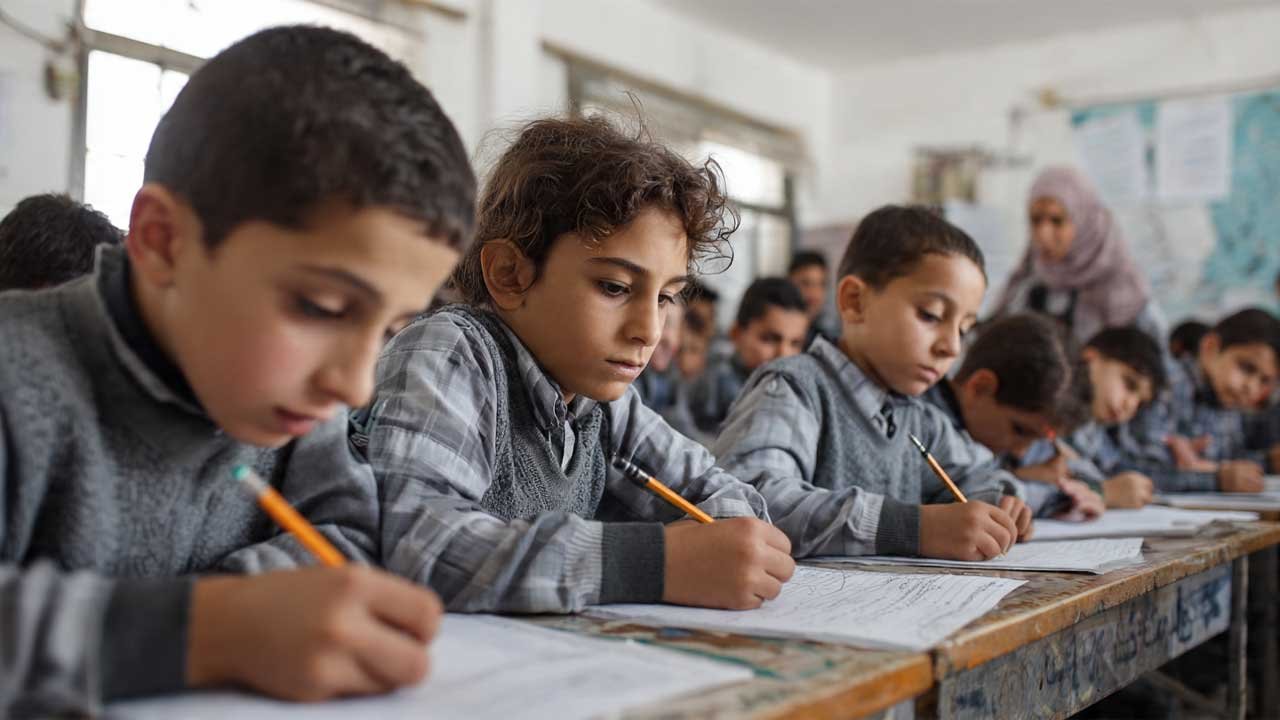
Jordan’s education system, often hailed as one of the most structured in the Middle East, offers a seamless age-wise learning journey from early childhood to advanced university studies.
Managed by the Ministry of Education and the Ministry of Higher Education, the system emphasizes cognitive growth, moral values, and practical skills. Beginning with nurturing nursery and kindergarten programs, it progresses through ten years of compulsory basic education, two years of specialized secondary schooling, and a wide array of higher education opportunities.
With ongoing reforms focusing on quality, equity, and digital transformation, Jordan continues to invest in human capital—ensuring every learner is equipped for academic success, employability, and lifelong growth.
| Aspect | Details |
|---|---|
| Governing Bodies | Ministry of Education (MOE) and Ministry of Higher Education and Scientific Research |
| Education Stages | Early Childhood, Basic Education, Secondary Education, Higher Education |
| Compulsory Education Age | 6 to 15 years (Grades 1–10) |
| Early Childhood (Ages 1–5) | Nursery (1–3 years) and Kindergarten KG1–KG2 (4–5 years) |
| Primary Cycle | Grades 1–6 (Ages 6–11); foundation in literacy, numeracy, and moral values |
| Lower Secondary Cycle | Grades 7–10 (Ages 12–15); subject depth and skill development |
| Secondary Education (Ages 16–17) | Academic and Vocational tracks leading to the Tawjihi exam |
| Tawjihi Examination | National exam determining university eligibility and field of study |
| Higher Education | Community Colleges, Universities (Bachelor’s, Master’s, PhD programs) |
| Core Curriculum Subjects | Arabic, English, Mathematics, Science, Social Studies, Religion |
| Key Reforms | Curriculum modernization, digital learning, teacher training, labor-market alignment |
| Challenges | Quality gaps, rural-urban disparities, refugee integration, unemployment mismatch |
Jordan’s Ladder of Learning: A Comprehensive Look at Age-Wise Education
Jordan’s education system stands as a beacon of structured learning in the Middle East, emphasizing that human development is the cornerstone of national progress. From playful nursery stages to competitive university corridors, Jordan’s approach ensures that every learner experiences a balanced mix of knowledge, discipline, and innovation.
Governed primarily by the Ministry of Education (MOE) and the Ministry of Higher Education and Scientific Research, the nation’s framework creates a seamless transition from early learning to advanced studies.
In this detailed AUBSP feature, we decode every rung of Jordan’s Ladder of Learning, highlighting how age-wise education fosters excellence, equity, and employability across generations.
I. Foundational Stage: Early Childhood Education
Early childhood education in Jordan sets the tone for lifelong learning by nurturing emotional intelligence, curiosity, and social adaptability. At this stage, the emphasis is less on formal academics and more on developing the whole child—focusing on motor skills, communication, and early cognitive abilities.
Jordan’s policy-makers understand that these formative years are critical to shaping behavior and learning potential. While the nursery and kindergarten (KG) systems vary in structure, both stages collectively prepare children for the academic and social demands of basic education.
Nursery Stage (Ages 1–3): The First Step into Structured Care
The nursery phase in Jordan is often seen as a preparatory environment where children take their first steps into group interaction and self-expression. Mostly privately operated, these centers focus on health, play, and socialization rather than formal education. Activities include storytelling, music, sensory play, and guided movement—all contributing to emotional confidence and early communication.
Though not part of the formal education system, nurseries form a bridge between home comfort and future schooling. The government encourages quality regulation, ensuring that every child receives safe and stimulating care that builds the foundation for intellectual curiosity and positive behavioral development.
Kindergarten (KG) Stage (Ages 4–5): Shaping Readiness for School
Kindergarten in Jordan represents a structured entry into learning through play. Divided into KG1 (age 4) and KG2 (age 5), this stage introduces essential skills like pre-reading, counting, and teamwork. The MOE places particular emphasis on expanding KG2 access, acknowledging its impact on primary school readiness.
Here, children develop early numeracy and literacy through storytelling, music, art, and cooperative games. Teachers encourage curiosity, empathy, and problem-solving—skills that form the cognitive backbone for later academic success. As reforms progress, Jordan aims to universalize KG2 access, aligning early childhood education with global best practices.
II. Compulsory Basic Education (Ages 6–15)
Spanning ten formative years, Jordan’s compulsory basic education builds the intellectual and ethical framework for young citizens. Covering Grades 1 through 10, this phase ensures that every child—regardless of background—receives equal access to quality education.
The government provides this level free of charge, reinforcing the nation’s commitment to equity and literacy. Students progress from foundational knowledge to analytical understanding, with a curriculum balancing national identity and global competencies.
This critical decade lays the groundwork for advanced learning, preparing students to navigate both academic and vocational opportunities confidently.
A. Primary Cycle (Ages 6–11): Building the Core of Learning
In the primary cycle, children experience formal education’s first structured environment. With a starting age of six, this six-year cycle emphasizes core literacy, numeracy, and character formation. Arabic language, mathematics, science, and social studies dominate the curriculum, while English language instruction begins early—reflecting Jordan’s global academic orientation.
Beyond academics, students engage in arts, sports, and moral education, nurturing a balanced sense of self. By the end of Grade 6, learners not only master fundamental academic skills but also cultivate discipline, curiosity, and resilience—qualities essential for the next academic phase.
B. Lower Secondary Cycle (Ages 12–15): Developing Depth and Direction
The lower secondary cycle expands the intellectual boundaries established in primary school. Students refine their analytical and creative thinking, engage in project-based learning, and explore subjects more deeply. This is the stage where learners begin identifying interests that influence future academic or vocational pathways.
The curriculum becomes more differentiated, including subjects like IT, environmental studies, and economics. Completion of Grade 10 marks the end of compulsory education, typically at age 15 or 16. By this point, students possess a solid foundation in reasoning, collaboration, and communication—ready to choose between academic and applied secondary tracks.
III. Optional Secondary Education (Ages 16–17): The Pivotal Decision Stage
Secondary education in Jordan is the bridge between schooling and future careers. Spanning Grades 11 and 12, this two-year journey helps students refine specialization through academic or vocational tracks. Success at this stage defines eligibility for higher education or direct employment. The government continually updates curricula to match evolving industry demands, ensuring that graduates remain globally competitive.
Comprehensive Secondary Education: Academic & Vocational Excellence
Students pursuing Comprehensive Secondary Education prepare for the Tawjihi, Jordan’s renowned General Secondary Education Certificate Examination. The academic stream includes scientific and literary paths—training students for university programs such as medicine, engineering, or humanities.
Alternatively, the vocational stream blends technical training in industrial, agricultural, or commercial disciplines with academic learning, offering pathways into both the labor market and community colleges. The comprehensive model exemplifies Jordan’s commitment to producing adaptable graduates equipped for both innovation and employment.
Applied Secondary Education: Empowering Skilled Professionals
The Applied Secondary Education track serves students aiming for immediate entry into the workforce. Through specialized vocational training centers, learners gain hands-on experience in technical, mechanical, and service-oriented professions.
These programs emphasize employability, entrepreneurship, and craftsmanship—responding directly to Jordan’s economic needs. Graduates receive a Completion Certificate instead of Tawjihi but may later pursue diploma or bridging programs for higher qualifications. This flexible model underlines Jordan’s vision of lifelong learning, where education remains an evolving journey rather than a fixed endpoint.
The Tawjihi: Jordan’s Ultimate Academic Gateway
No discussion of Jordan’s education system is complete without the Tawjihi, a national examination that determines university eligibility. Beyond being a test, it symbolizes academic achievement and societal aspiration. High scores unlock access to competitive majors like medicine or law.
To modernize the process, reforms now incorporate continuous assessment in Grade 11, reducing the weight of a single final exam. This evolution reflects Jordan’s commitment to fairness, mental health, and holistic evaluation. The Tawjihi remains a rite of passage—one that continues to inspire academic rigor and national pride.
IV. Higher Education (Ages 18+): A Regional Hub of Excellence
Jordan’s higher education landscape is a blend of tradition, innovation, and global collaboration. With a reputation for academic rigor and regional influence, the country hosts a mix of public universities, private institutions, and community colleges.
The system’s flexibility accommodates diverse career goals—from technical proficiency to advanced research. Degrees are structured to ensure smooth transitions between diploma, bachelor’s, and postgraduate levels, empowering students to continue learning throughout their careers.
Community Colleges: Bridging Skills and Opportunities
Community colleges play a strategic role by offering two-year diplomas in administrative, health, and technical fields. Graduates can either enter the workforce directly or sit for a bridging exam that enables university progression.
This dual-path system reflects Jordan’s emphasis on practical education aligned with industry needs. Community colleges also strengthen rural access to education, helping local economies thrive by producing job-ready professionals.
Universities: Undergraduate and Postgraduate Horizons
Bachelor’s degrees typically span four to six years, depending on specialization—ranging from Arts and Business to Medicine and Engineering. Postgraduate pathways, including Master’s (1–2 years) and Doctorate (PhD) (3–5 years), focus on research, innovation, and regional development.
Jordan’s universities are renowned for attracting international students, making the nation an education hub in the Arab world. Strong academic governance, digital learning platforms, and partnerships with global institutions continue to enhance the sector’s quality and competitiveness.
V. Key Challenges and Ongoing Reforms
While Jordan’s education model boasts remarkable achievements—universal literacy, gender equality, and global recognition—it continues to evolve amid new challenges. The nation faces the dual task of maintaining quality while expanding access. Rapid population growth, refugee influxes, and shifting economic demands require adaptive strategies.
The government’s Education Strategic Plan (ESP) focuses on:
- Modernizing curricula to strengthen problem-solving and innovation.
- Improving teacher training and digital integration.
- Reducing urban-rural disparities through targeted investments.
- Aligning university programs with labor market realities to combat youth unemployment.
Jordan’s continued reform journey reflects a forward-thinking approach—anchored in equity, excellence, and sustainable development.
Conclusion: AUBSP Insights on Jordan’s Vision for Learning
Jordan’s age-wise education system demonstrates how structured, inclusive, and purpose-driven learning transforms a nation’s destiny. From nurturing toddlers in KG2 to empowering researchers in PhD programs, every stage embodies the country’s belief in education as the ultimate equalizer. The system’s resilience amid challenges showcases Jordan’s dedication to human development and regional leadership in education.
We celebrate such systems that inspire lifelong learning and innovation. Stay informed with AUBSP Education Insights for more deep dives into global education frameworks, policy reforms, and academic excellence stories shaping tomorrow’s world.
FAQs about Jordan education system
What is the structure of Jordan’s education system?
Jordan’s education system is divided into four main stages: Early Childhood Education, Compulsory Basic Education, Secondary Education, and Higher Education. Each stage is age-specific and designed to ensure progressive learning and skill development from nursery to university.
Who oversees education in Jordan?
Education in Jordan is managed primarily by the Ministry of Education (MOE) and the Ministry of Higher Education and Scientific Research, ensuring cohesive policies and quality standards across all levels.
At what age does compulsory education start in Jordan?
Compulsory education in Jordan begins at age six and continues through age fifteen, covering Grades 1 to 10 under the Basic Education stage.
Is early childhood education mandatory in Jordan?
No, early childhood education (nursery and kindergarten) is not mandatory, but the government strongly promotes universal access to KG2 as part of its national education strategy.
What subjects are taught in Jordanian primary schools?
Primary schools teach Arabic, English, Mathematics, Science, Social Studies, and Religion. Students also engage in arts, physical education, and life skills programs to support holistic development.
When do students take the Tawjihi exam?
Students take the Tawjihi exam at the end of Grade 12, typically around age 17. The exam determines university eligibility and influences future career paths.
What are the main tracks in Jordan’s secondary education?
Secondary education offers two main tracks: the Academic Stream (Scientific or Literary) and the Vocational Stream (Industrial, Agricultural, or Commercial). Both lead to the Tawjihi qualification.
What is the applied secondary education program in Jordan?
Applied secondary education provides intensive vocational and technical training for students seeking direct entry into the workforce rather than pursuing a university degree.
What is the importance of the Tawjihi exam?
The Tawjihi is Jordan’s national secondary school examination and a gateway to higher education. Scores determine eligibility for specific university majors and scholarship opportunities.
How long does it take to complete a bachelor’s degree in Jordan?
A bachelor’s degree typically takes four years to complete, though specialized programs like engineering or pharmacy may take five, and medicine takes six years plus internship training.
What higher education options are available in Jordan?
Jordan offers a mix of community colleges, public and private universities, and postgraduate institutions, catering to diverse academic and professional interests.
Can community college graduates continue to university?
Yes, community college graduates can pursue higher studies by passing a bridging exam that allows them to transfer credits toward a university bachelor’s program.
What languages are used in Jordanian schools?
Arabic is the primary language of instruction, while English is introduced early and emphasized as a key subject due to its importance in higher education and global employment.
How does Jordan ensure education quality?
Jordan maintains education quality through national standards, teacher training programs, digital learning initiatives, and periodic curriculum reviews to align with global benchmarks.
What challenges does the Jordanian education system face?
Major challenges include overcrowded classrooms, disparities between urban and rural schools, resource constraints, and the integration of refugee students into the public system.
What reforms are being implemented in Jordan’s education sector?
Reforms focus on modernizing curricula, enhancing teacher skills, integrating technology, improving infrastructure, and aligning higher education with labor market needs.
Is education free in Jordan?
Yes, basic education (Grades 1–10) is free and compulsory for all children. However, preschool and higher education usually involve tuition fees, especially in private institutions.
How does Jordan promote gender equality in education?
Jordan has achieved near gender parity in basic education by ensuring equal access, safe learning environments, and targeted programs encouraging girls’ participation in STEM fields.
What role does digital learning play in Jordan’s education system?
Digital learning is expanding rapidly through e-learning platforms, smart classrooms, and national initiatives promoting ICT literacy to prepare students for a digital economy.
How does Jordan’s education system compare regionally?
Jordan is considered a regional leader in education, recognized for its literacy rates, quality teachers, and higher education institutions that attract students from across the Middle East.
What is the goal of Jordan’s Education Strategic Plan (ESP)?
The ESP aims to enhance learning outcomes, promote inclusivity, improve governance, and leverage technology to make education more responsive to modern challenges.
How does the refugee population affect education in Jordan?
The influx of refugees has increased enrollment pressures, leading to overcrowding and double-shift schools. The government collaborates with international partners to maintain access for all.
Are private schools common in Jordan?
Yes, private schools play a significant role, especially at the nursery, kindergarten, and secondary levels, often offering international curricula alongside the national framework.
What are Jordan’s main educational achievements?
Jordan has achieved near-universal primary education, gender equality, widespread English proficiency, and strong higher education institutions recognized regionally for academic excellence.
How is Jordan aligning education with the labor market?
By integrating vocational training, entrepreneurship programs, and career counseling into schools and universities, Jordan seeks to reduce unemployment and meet workforce demands.
What future trends are shaping Jordan’s education system?
Future trends include greater digitalization, competency-based learning, AI-driven education analytics, and expanded public-private partnerships to enhance innovation and global competitiveness.


Leave a Reply
You must be logged in to post a comment.