
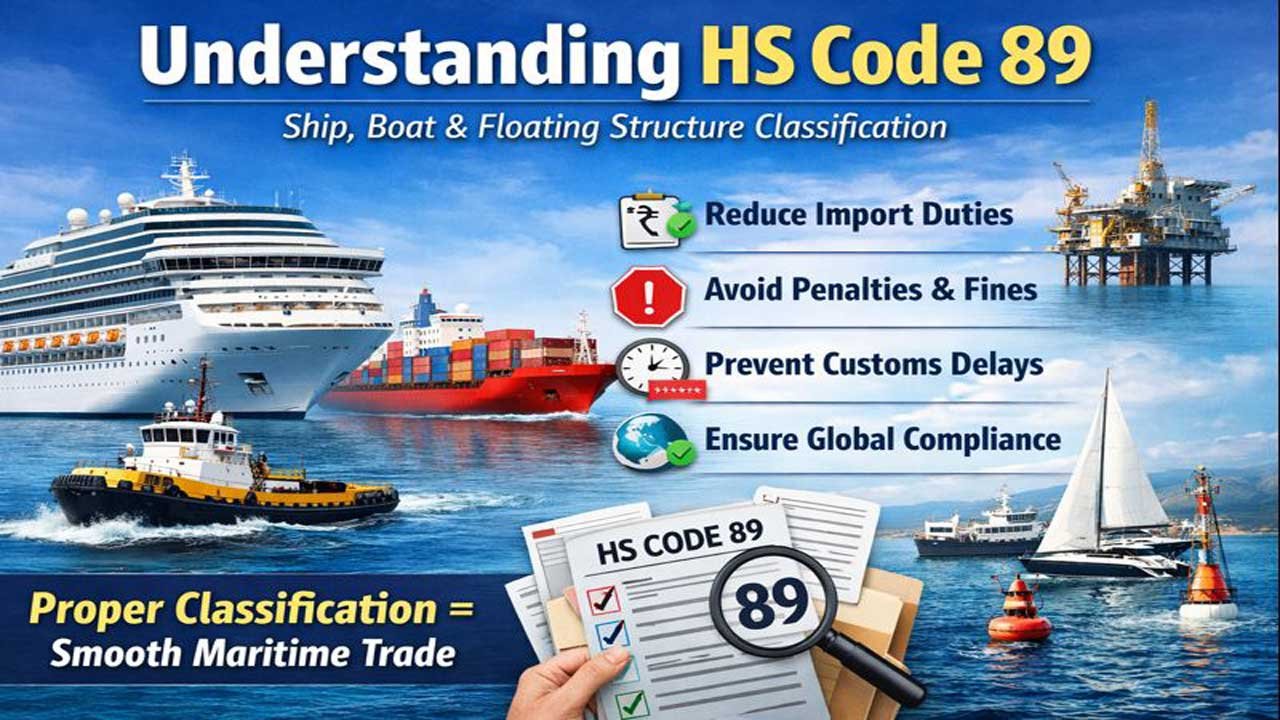
HS Code 89 covers ships. It covers boats. It covers floating structures. This is a crucial code. It applies to maritime trade. Understanding it saves money. It prevents customs delays.
HS code chapter 89 is part of Section 17. Section 17 is for vehicles and transport equipment. HS codes are international. They are used worldwide. Every country recognizes them. They determine import duties. They determine export taxes.
Why HS Code 89 Matters for Your Business
Getting the classification wrong costs money. Incorrect codes trigger penalties. They cause shipment delays. Importers pay extra fees. Exporters face compliance issues.
The tariff classification process protects your bottom line. Proper classification reduces your landed costs. It speeds up customs clearance. It prevents future audits. Business owners need this knowledge.
The 8 Main HS Code 89 Classifications
8901: Cruise Ships and Cargo Vessels
This code covers cruise ships. It includes excursion boats. It includes ferry-boats. It covers cargo ships. It includes barges.
8901 focuses on transport vessels. These carry persons or goods. They are specifically designed for this. The vessel’s primary purpose matters. Classification depends on main function.
Subheadings include:
- 890110: Cruise ships for passenger transport
- 890120: Tankers (vessels designed for liquid cargo)
- 890130: Refrigerated vessels (not tankers)
- 890190: Other cargo transport vessels
8902: Fishing Vessels and Factory Ships
Fishing vessels are classified here. Factory ships belong here too. Processing vessels are included.
This code is for specialized work vessels. They process seafood. They preserve fishery products. The vessel must be designed for this work. Recreational fishing boats don’t apply here.
8903: Yachts and Pleasure Boats
Yachts fall under this code. Pleasure vessels use this code. Rowing boats are included. Canoes are classified here.
Sport and recreation define this category. The vessel’s purpose is leisure. Commercial operation excludes it. Motorboats with motors use this. Sailboats use this code.
Subheadings include:
- 890310: Inflatable pleasure vessels
- 890391: Sailboats for pleasure or sports
- 890392: Motorboats (excluding outboard)
- 890399: Other pleasure vessels
8904: Tugs and Pusher Craft
Tugboats are classified here. Pusher boats are included. These vessels assist larger ships.
Their function is propulsion and movement. They push or pull other vessels. They operate in ports. They assist in maneuvering. This specialized function defines them.
8905: Dredgers and Floating Cranes
Dredgers use this code. Floating cranes use this code. Light-vessels are included. Fire-floats belong here. Drilling platforms use this code.
These vessels perform specific work functions. Their main purpose isn’t navigation. Navigation is secondary. The vessel’s primary function matters most. This category includes specialized equipment vessels.
8906: Warships and Other Vessels
Warships use this code. Lifeboats are included here. Other unclassified vessels fit here.
This is a catch-all category. If vessels don’t fit elsewhere, use 8906. Military vessels belong here. Emergency rescue vessels fit here.
8907: Floating Structures
Rafts use this code. Tanks are included. Coffer-dams belong here. Landing stages use this. Buoys are classified here. Beacons belong here.
These items aren’t vessels. They don’t navigate independently. They float but don’t move. They serve specific purposes. They’re auxiliary maritime equipment.
Subheadings include:
- 890710: Inflatable rafts
- 890790: Other floating structures
8908: Vessels for Breaking Up
Decommissioned vessels use this code. Old ships fit here. Vessels for scrapping use this.
End-of-life vessels are different. Ships no longer seaworthy use this. They’re sent to ship-breaking facilities. Breaking up is their final purpose.
Understanding Tariff Classification for Ships
Classification determines your import duty. This applies worldwide. India uses this system. The European Union uses this. The United States uses this.
HS codes consist of six digits. The first two digits are the chapter. The next two digits are the heading. The final two digits are the subheading. Many countries add additional digits.
How Tariff Rates Work
India charges customs duty. The duty rate depends on the code. Basic Customs Duty (BCD) applies. The average rate is 5-10%. Some vessels attract 5% duty.
Floating structures have different rates. Most floating equipment is 5% duty. Vessels for breaking have 18% duty. This creates significant cost differences. Correct classification matters financially.
The duty calculation is simple:
- Determine the goods’ value
- Multiply by the BCD percentage
- Add Social Welfare Surcharge (10% of BCD)
- Calculate Integrated GST (IGST at 18%)
- Sum all amounts for total duty
Example: Import Duty Calculation
Let’s say you import a yacht. The CIF value is ₹1,00,000 (cost, insurance, freight). The BCD for yachts is 5%.
Calculation breakdown:
- Basic Customs Duty: ₹1,00,000 × 5% = ₹5,000
- Social Welfare Surcharge: ₹5,000 × 10% = ₹500
- Taxable Value for IGST: ₹1,00,000 + ₹5,000 + ₹500 = ₹1,05,500
- Integrated GST: ₹1,05,500 × 18% = ₹18,990
- Total Duty and Tax: ₹24,490
This example shows real-world impact. Correct classification prevents overpaying. Professional importers verify codes beforehand.
How To Classify Your Vessel Correctly
Step 1: Identify the vessel’s primary function. Is it for transport? Is it for work? Is it for recreation? The main purpose determines the code.
Step 2: Check the detailed definitions. Each code has specific criteria. Read the notes carefully. Borderline cases need expert review.
Step 3: Verify with examples. Look at similar vessels. Check what code they use. Confirm with customs brokers.
Step 4: Get professional confirmation. Customs brokers know the codes. They verify classifications. They file advance rulings if needed. This protects your shipment.
Step 5: Document everything. Keep classification records. File these with customs. Documentation prevents future disputes.
Common Vessel Classification Mistakes
Mistake 1: Confusing Pleasure Boats With Commercial Vessels
Many boats are multi-purpose. They could be passenger vessels. They could be work vessels. A converted fishing boat creates confusion.
The primary use determines the code. Current use matters more than design. If primarily commercial now, use 8901. If primarily recreational now, use 8903. Document the intended use clearly.
Mistake 2: Misclassifying Specialized Equipment Vessels
Floating cranes aren’t simple vessels. They perform specific work. Some importers misclassify them.
Code 8905 is for specialized work. The vessel’s main purpose must be the specialized function. Navigation is secondary. This distinction prevents costly errors.
Mistake 3: Ignoring Structural Differences
Inflatable vessels differ from rigid vessels. Each has its own subheading. Using the wrong subheading causes reclassification.
The vessel’s construction matters. Inflatable rafts are 890710. Other structures are 890790. This difference affects duty rates. Precision prevents costly mistakes.
How to Get Binding Tariff Advice
Advance Rulings protect your interests. These are official government decisions. They confirm your classification. They’re legally binding. Customs must honor them.
The process in India involves:
- File Form ATR with Customs
- Provide complete product details
- Include technical specifications
- Submit commercial documentation
- Customs investigates and rules
Getting advance rulings takes time. It typically requires 60-90 days. However, it provides certainty. It prevents future disputes. It protects your shipment.
Customs Duty Rates: Quick Reference Table
| Vessel Type | HS Code | India Duty | Purpose |
|---|---|---|---|
| Cruise ships | 8901 | 5% BCD | Passenger transport |
| Cargo vessels | 8901 | 5% BCD | Goods transport |
| Fishing vessels | 8902 | 5% BCD | Fish processing |
| Yachts/pleasure boats | 8903 | 5% BCD | Recreation/sports |
| Tugs | 8904 | 5% BCD | Vessel assistance |
| Dredgers | 8905 | 5% BCD | Dredging operations |
| Floating cranes | 8905 | 5% BCD | Lifting operations |
| Warships | 8906 | 5% BCD | Military use |
| Floating structures | 8907 | 5% BCD | Maritime support |
| Vessels for breaking | 8908 | 18% BCD | Ship scrapping |
Note: This is current as of 2026. Rates may change. Always verify with customs authorities.
Key Differences Between Global Tariff Systems
United States Tariff System
The U.S. uses Harmonized Tariff Schedule (HTS). The first six digits match HS codes globally. The U.S. adds additional digits for specificity.
U.S. duty rates vary by vessel type. Most vessels face 5-10% duties. Some specialized vessels have higher rates. Accurate classification saves significant money.
European Union Tariff System
The EU uses the Combined Nomenclature (CN). The first eight digits match HS codes. The EU updated codes effective January 1, 2026.
27 new codes were introduced in 2026. Approximately 13 older codes became invalid. Importers must verify current classifications. The CBAM (Carbon Border Adjustment Mechanism) affects emissions-intensive goods.
India’s GST and Import Structure
India’s GST system is integrated. Import duty is separate from GST. GST is levied on the assessable value plus duties.
Indian customs duty averages 5-10%. GST adds 18% to most goods. The total landed cost includes both. Proper classification reduces total cost impact.
Top Questions About HS Code 89
What if my vessel doesn’t fit perfectly?
Use the most specific applicable code. If borderline, follow the rules of interpretation. Notes for each chapter provide guidance. When in doubt, consult customs brokers.
Can I reclassify my vessel later?
Reclassification is difficult after import. Request in writing from customs. Provide additional evidence. The process involves bureaucratic delays. Prevention is easier than correction.
Do second-hand vessels use different codes?
No, used vessels use the same codes. Age doesn’t change the classification. Condition doesn’t matter either. The vessel type and purpose determine the code.
Are there any vessels that avoid tariffs?
Yes, some vessels qualify for duty-free entry. Government-owned vessels may qualify. Military vessels often receive exemptions. Official regulations specify these exceptions.
What happens if customs disagrees with my classification?
Customs can reclassify your vessel. They assess additional duties if needed. You can appeal the decision. Professional help improves your appeal chances.
FAQ: HS Code 89 Frequently Asked Questions
Q: Do floating docks use code 8905 or 8907?
A: Floating docks use code 8905. Their navigability is secondary. Their main function is dock operations. This puts them in the specialized equipment category.
Q: Are luxury yachts classified differently?
A: Luxury yachts use the same codes. Price doesn’t change classification. Purpose and design determine the code. A \$1 million yacht and \$10 million yacht both use code 8903.
Q: Can I import vessel components under this chapter?
A: No, vessel parts are different. They use different chapters. Engine parts use Chapter 84. Electronic equipment uses Chapter 85. Hull sections are classified separately.
Q: How often do HS codes change?
A: HS codes update annually on January 1. Major updates occur regularly. The global system is stable though. Most maritime codes remain consistent.
Q: What if I import a houseboat?
A: Houseboats typically use code 8903. They’re vessels for recreation. The fact that people live aboard doesn’t change this. Purpose determines classification.
Common Import-Export Compliance Issues
Issue 1: Incorrect Documentation
Many vessels are misclassified in paperwork. Shipping companies make mistakes. Freight forwarders sometimes guess. This causes customs delays.
Always verify before shipping. Get written confirmation. Include this in your bill of lading. Correct documentation prevents problems.
Issue 2: Missing Technical Specifications
Customs needs detailed descriptions. Vague descriptions cause problems. “Vessel” isn’t specific enough. “35-meter passenger ferry-boat” is specific.
Detailed specs prevent reclassification. Include length, beam, depth. Specify hull material. Detail the power and propulsion. Comprehensive information protects your shipment.
Issue 3: Mixing Vessel Types
Some vessels serve multiple purposes. A fishing vessel with passenger capacity creates confusion. The primary purpose determines classification. Secondary uses don’t matter for HS codes.
International Trade Regulations for Ships
Shipping regulations exceed HS codes. Maritime law is complex. International conventions apply. National regulations also apply.
IMO Requirements
The International Maritime Organization (IMO) sets standards. These apply to most vessels. They cover safety equipment. They mandate crew certifications. These requirements operate independently of tariff classification.
SOLAS Convention
The Safety of Life at Sea (SOLAS) convention applies. Large vessels must comply. This includes fire safety. This includes life-saving equipment. SOLAS requirements apply regardless of HS code.
Flag State Regulations
The flag state (country of registration) controls the vessel. Its laws apply aboard ship. Its regulations govern operations. Flag state choice affects compliance requirements.
How to Stay Compliant With Customs
Keep detailed records of everything. Document all vessel specifications. Maintain import permits. File all customs paperwork. Store these for seven years minimum.
Have an expert review your records. A customs broker can help. They identify compliance gaps. They suggest improvements. Prevention is far cheaper than penalties.
Consider professional classification services. Customs brokers provide written advice. This protects your business. It documents your good faith effort. If issues arise, this protects you legally.
Latest 2026 Customs Updates for Maritime Trade
January 1, 2026 brought significant changes. Multiple countries updated tariff schedules. The EU implemented new Combined Nomenclature codes. China adjusted 935 product categories.
Canada’s tariff schedule was restructured. Many HS classifications shifted subtly. The changes affect marine equipment. Always verify current rates and codes.
The CBAM mechanism affects some vessels. Carbon Border Adjustment Mechanism covers certain metals. Steel and aluminum vessels may qualify. Emissions data is now required. This represents a new compliance obligation.
Getting Professional Help
Complex classifications benefit from expert review. Customs brokers specialize in this. They verify classifications. They file advance rulings. They represent you at customs.
Licensed customs brokers in India include:
- Regional customs offices maintain broker lists
- Professional associations verify credentials
- FIEOS (Federation of Indian Export Organisations) provides referrals
- Check the Directorate of Revenue Intelligence website
Cost comparison: Professional advice seems expensive. However, preventing errors saves thousands. A single misclassification costs heavily. Expert verification pays for itself many times over.
Conclusion
HS Code 89 is essential maritime knowledge. Proper classification saves money. It prevents customs delays. It ensures legal compliance.
Understanding Chapter 89’s eight sections helps. Each category has specific criteria. Correctly identifying your vessel’s purpose matters. Professional verification protects your interests.
Take action today:
- Review your vessel classifications
- Get written confirmation from customs
- File advance rulings for complex cases
- Maintain detailed documentation
- Consult customs brokers when uncertain
Proper classification is worth the effort. It protects your business. It ensures smooth imports. It maintains good customs relations. Make HS Code 89 compliance a priority.


