
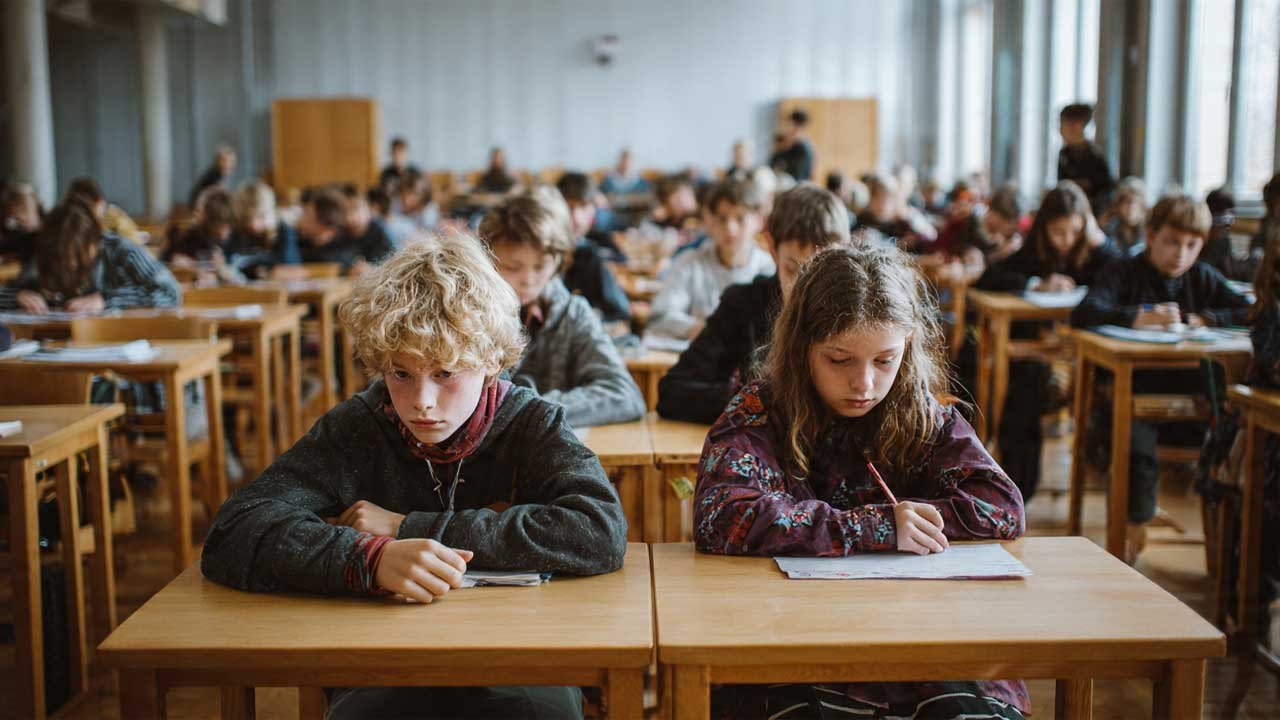
The Czech education system, governed by the Ministry of Education, Youth and Sports, offers a well-structured, largely free pathway from early childhood to university. It begins with pre-primary education (ages 3–6) in kindergartens, followed by nine years of compulsory basic education (ages 6–15) divided into primary and lower secondary stages.
Afterward, students progress to secondary education—choosing between academic gymnázia, technical schools, vocational programs, or conservatories—each leading to distinct qualifications such as the Maturita exam or vocational certificates. Finally, tertiary education includes universities and professional colleges, offering bachelor’s, master’s, and doctoral degrees.
Renowned for academic rigor, free public access, and diverse specialization paths, Czechia’s system emphasizes inclusivity, lifelong learning, and workforce readiness.
| Stage / Level | Key Information |
|---|---|
| Pre-Primary Education (Ages 3–6) | Provided by mateřská škola (kindergarten); focuses on balanced child development through play. Attendance is compulsory at age 5 and free in public schools. Early years (ages 3–4) are optional but highly encouraged. |
| Basic Education (Ages 6–15) | Nine years compulsory; divided into two stages — Primary (Grades 1–5) and Lower Secondary (Grades 6–9). Emphasizes literacy, numeracy, sciences, and foreign languages. Completion leads to the Basic School Leaving Certificate. |
| Multi-Year Gymnázia (Academic Alternative) | Early-entry programs for gifted students after Grade 5 (eight-year) or Grade 7 (six-year). Offers advanced academic preparation leading toward university admission. |
| Secondary Education (Ages 15–19) | Students select between Gymnázium (academic), Technical Schools (SOŠ), Vocational Schools (SOU), or Conservatories. End qualification is usually the Maturita exam or a Vocational Certificate. |
| Tertiary Professional Schools (VOŠ) | Three-year vocational programs offering practical, career-oriented education. Graduates earn the DiS. (Certified Specialist) title after passing the Absolutorium exam. |
| Higher Education (Universities) | Includes public, state, and private universities. Offers Bachelor’s (3–4 years), Master’s (1–3 years or 5–6 unstructured), and Doctoral (3–4 years) degrees. Public universities are tuition-free for Czech-taught programs. |
| System Highlights | Education is free and compulsory for nine years; emphasizes early literacy, practical skills, and flexible academic or vocational progression. Czechia’s system ensures equal opportunity and international competitiveness. |
🇨🇿 The Age-Wise Education System in Czechia: A Detailed Overview
Education in Czechia (Czech Republic) is one of the most structured and respected systems in Central Europe, ensuring that every child receives quality learning opportunities from early childhood to university. Overseen by the Ministry of Education, Youth and Sports, the Czech system emphasizes balanced development, inclusivity, and academic excellence. With nine years of compulsory education and a wide range of post-compulsory options, students are guided toward both academic and vocational success.
In this detailed AUBSP guide, we’ll walk you through every stage — from pre-primary education to tertiary studies — explaining how Czechia’s system nurtures lifelong learners. Whether you’re a parent, student, or education professional, understanding this structure offers valuable insights into one of Europe’s most efficient education models.
👶 1. Pre-Primary Education (Předškolní Vzdělávání)
Pre-primary education in Czechia lays the foundation for every child’s intellectual and emotional growth. It is designed to prepare children for school readiness while nurturing creativity, communication, and confidence. Known locally as mateřská škola (nursery school or kindergarten), these institutions are community-driven spaces where play-based learning fosters social harmony and curiosity.
Children typically attend between the ages of 3 to 6, though attendance is compulsory for the final pre-primary year (age 5). Parents are encouraged to enroll early, as older children and those within the local catchment area receive priority. The last year before formal schooling is free in public institutions, ensuring equal opportunity. For children under three, nursery care (jesle) offers early childcare support, though it falls outside the formal education system.
AUBSP Insight: Investing in quality early education helps shape resilient learners. Czechia’s model exemplifies how structured play can translate into lifelong academic and emotional success.
🎒 2. Basic Education (Základní Škola)
Basic education in Czechia is the heart of its national schooling framework, spanning nine compulsory years (ages 6 to 15). This stage equips children with essential academic and life skills, ensuring a strong foundation for higher studies or vocational training. Schools combine modern pedagogy with traditional values, creating balanced learners ready for both personal and professional challenges.
Stage 1: Primary Level (1. Stupeň) – Ages 6–10
At this level, children study in a nurturing environment led primarily by a class teacher (třídní učitel) who guides most subjects. The curriculum emphasizes Czech language, mathematics, environmental studies, and foreign language introduction. Students are assessed continuously, with grades ranging from 1 (best) to 5 (lowest), and receive formal report cards twice a year.
AUBSP Tip: Parents can collaborate closely with teachers to monitor steady progress — consistency during these years builds academic confidence.
Stage 2: Lower Secondary Level (2. Stupeň) – Ages 11–15
This stage introduces subject-specialized teachers and focuses on deeper academic exploration. Core subjects include Physics, Chemistry, Biology, History, Geography, and a second foreign language. Completion of the 9th grade marks the end of compulsory education, with students earning the Basic School Leaving Certificate — their gateway to secondary education.
Multi-Year Gymnázia: The Academic Alternative
High-performing students can transition early to a gymnázium (grammar school) for an enriched academic track. These programs come in six-year (age 13) or eight-year (age 11) variants and prepare students primarily for university education through advanced, interdisciplinary learning.
AUBSP Note: The Czech system’s early tracking promotes customized education, allowing motivated learners to progress toward higher academic excellence efficiently.
🎓 3. Secondary Education (Střední Vzdělávání)
Secondary education marks the transition from general learning to specialization. Starting around age 15, students select educational pathways that align with their talents and career goals. Entry is competitive, often based on national standardized exams, ensuring academic integrity and merit-based advancement.
Gymnázium (General Academic Schools)
These four-year institutions prepare students for university-level study. The curriculum balances languages, sciences, and humanities, culminating in the Maturita Exam, which serves as the entrance qualification for higher education.
Secondary Technical Schools (Střední Odborná Škola – SOŠ)
Students here pursue a blend of academic and technical education, often specializing in fields like engineering, economics, or healthcare. Upon completing their four-year course and passing the Maturita, graduates can pursue university degrees or enter skilled employment.
Secondary Vocational Schools (Střední Odborné Učiliště – SOU)
These programs are ideal for students seeking practical, trade-oriented training. Over 2–3 years, learners acquire hands-on skills in trades such as carpentry, culinary arts, or mechanics, finishing with a Vocational Certificate (Výuční list). They can later extend their studies for a Maturita qualification.
Conservatories (Konzervatoř)
For artistically gifted students, conservatories offer 6 to 8 years of specialized arts education in music, dance, and theater. Graduates earn both a Diploma and a Maturita Exam, paving the way for advanced artistic careers.
AUBSP Takeaway: The Czech secondary framework champions flexibility — empowering students to choose between academic ambition and professional expertise, both equally respected paths.
🧠 4. Tertiary Education (Terciární Vzdělávání)
Higher education in Czechia is a hallmark of academic excellence. With institutions like Charles University in Prague — one of Europe’s oldest — the country offers globally recognized programs across disciplines. Education at public universities is free when taught in Czech, making it accessible and inclusive.
Higher Education Institutions (Vysoké Školy – Universities)
Czech universities follow a three-cycle degree structure aligned with the European Higher Education Area (EHEA):
| Degree | Duration | Title Awarded | Prerequisite |
|---|---|---|---|
| Bachelor’s | 3–4 years | Bc. (Bakalář) | Maturita + Entrance Exam |
| Master’s (Follow-up) | 1–3 years | Mgr., Ing. | Bachelor’s Completion |
| Master’s (Unstructured) | 5–6 years | MUDr., JUDr., Mgr. | Continuous Professional Study |
| Doctoral | 3–4 years | Ph.D. | Master’s Completion |
Public universities focus on research and innovation, while private institutions offer flexible, international programs.
Tertiary Professional Schools (Vyšší Odborné Školy – VOŠ)
These schools bridge academia and industry, offering three-year vocationally oriented programs that culminate in an Absolutorium exam and the DiS. (Diplomovaný Specialista) title. Graduates are job-ready, especially in technical, healthcare, and management sectors.
AUBSP Insight: Czechia’s tertiary system blends theory with practice, ensuring graduates are globally competitive and industry-relevant — a model admired across the European Union.
Conclusion: Why Czechia’s Education System Stands Out
Czechia’s education model represents an ideal balance of accessibility, structure, and excellence. From its nurturing kindergartens to its world-class universities, the system empowers every learner to grow academically, socially, and professionally. Its emphasis on free, quality education and flexible progression paths ensures equal opportunity for all.
If you’re exploring education systems worldwide or seeking international study options, the Czech model offers profound lessons in policy and pedagogy.
FAQs on Czech education system
What is the structure of the Czech education system?
The Czech education system is divided into pre-primary, basic, secondary, and tertiary levels, covering ages 3 to 19 and beyond, ensuring structured, free education for all citizens.
Who oversees education in Czechia?
The Ministry of Education, Youth and Sports (MŠMT) manages education policy, curriculum standards, funding, and teacher qualifications across all levels.
Is education free in Czechia?
Yes, public education is free from pre-primary through university for programs taught in Czech. Private and international schools may charge tuition fees.
At what age do children start school in Czechia?
Children typically start compulsory education at age six, with an option for pre-primary schooling from age three.
Is preschool mandatory in Czechia?
Only the final year of pre-primary education (age five) is compulsory. Earlier years are optional but highly recommended.
What is the duration of compulsory education in Czechia?
Compulsory education lasts for nine years, generally from ages six to fifteen.
What subjects are taught in basic education?
Core subjects include Czech language, mathematics, foreign languages, science, geography, history, and physical education.
How is student performance assessed?
Students are graded on a scale of 1 (excellent) to 5 (insufficient), with evaluations issued twice yearly through report cards.
What happens after basic school?
After completing Grade 9, students choose between academic gymnázium, technical schools, vocational programs, or conservatories based on aptitude and career goals.
What is a Gymnázium in Czechia?
A gymnázium is an academic secondary school preparing students for university through a general curriculum ending with the Maturita exam.
What are technical and vocational schools?
Technical schools (SOŠ) combine general and specialized training, while vocational schools (SOU) emphasize hands-on learning for specific trades.
What is the Maturita exam?
The Maturita is a national final examination required for entry into universities and higher education institutions.
What qualifications can students earn at the secondary level?
Students may obtain a Maturita certificate, a Vocational Certificate (Výuční list), or a Conservatory Diploma depending on their study path.
Can students switch from vocational to academic education?
Yes, vocational school graduates can pursue additional studies to earn the Maturita and later attend university if they qualify.
What is a conservatory in the Czech education system?
Conservatories provide six or eight years of specialized arts training in music, dance, or theater, leading to both a diploma and a Maturita exam.
When does tertiary education begin in Czechia?
Tertiary education typically begins around age 19, following completion of secondary school and successful passage of the Maturita exam.
What degrees are available at Czech universities?
Universities offer Bachelor’s (Bc.), Master’s (Mgr., Ing.), and Doctoral (Ph.D.) degrees following the Bologna Process framework.
What is the duration of university studies in Czechia?
Bachelor’s programs last 3–4 years, Master’s programs 1–3 years (or 5–6 unstructured), and Doctoral programs 3–4 years.
Are public universities free for international students?
Public universities are tuition-free only for programs taught in Czech; English-taught courses may have tuition fees.
What are tertiary professional schools (VOŠ)?
VOŠ institutions offer three-year vocational programs focusing on applied professional skills, leading to a DiS. (Certified Specialist) title.
How do Czech universities rank globally?
Top universities like Charles University and Masaryk University consistently rank among the best in Europe for research and academic quality.
Can foreign students study in Czechia?
Yes, Czechia welcomes international students, offering English-taught programs and scholarships through government and institutional partnerships.
Is Czech education internationally recognized?
Yes, degrees from Czech universities follow the Bologna Process, ensuring global recognition and academic mobility across Europe.
What language is used in Czech schools?
The primary language of instruction is Czech, though foreign languages like English, German, and French are widely taught.
Are there private or international schools in Czechia?
Yes, several private and international schools operate in Czechia, offering curricula in English or other foreign languages.
What support is available for special education needs?
Inclusive education policies ensure individualized support, special teachers, and counseling for students with learning or physical disabilities.
How are teachers trained in Czechia?
Teachers undergo university-level training, followed by continuous professional development overseen by the Ministry of Education.
Is homeschooling allowed in Czechia?
Yes, homeschooling is permitted under regulated conditions, requiring regular assessments by local education authorities.
What are the school holidays in Czechia?
The academic year runs from September to June, with major breaks in summer, Christmas, and spring.
How is higher education funded in Czechia?
Public higher education is state-funded, with additional grants and scholarships available for both Czech and international students.
Are there scholarships for foreign students?
Yes, Czechia offers numerous scholarships through government initiatives, EU programs, and individual universities.
How competitive is university admission in Czechia?
Admissions are based on entrance exams, prior grades, and program-specific requirements, making popular fields highly competitive.
What is the Bologna Process?
The Bologna Process standardizes higher education across Europe, ensuring degree compatibility and student mobility — Czechia follows this model.
Can Czech graduates work abroad easily?
Yes, Czech degrees are internationally recognized, enabling graduates to pursue further studies or employment across the EU and beyond.
How does Czechia ensure education quality?
Education quality is maintained through national standards, accreditation bodies, and continuous institutional evaluation.
What makes Czech education unique?
Its blend of free access, academic rigor, vocational focus, and flexibility makes Czechia’s education system one of Europe’s most efficient.
How does Czechia support lifelong learning?
The system promotes adult education, continuing professional development, and distance learning opportunities across various fields.
What is the literacy rate in Czechia?
Czechia maintains one of the highest literacy rates globally, exceeding 99%, reflecting its strong educational culture.
Can students transfer between schools easily?
Yes, students may transfer between schools or programs with proper documentation and approval from education authorities.
Is online education available in Czechia?
Yes, universities and private institutions offer online and hybrid courses, especially for professional and part-time learners.
How does Czech education prepare students for careers?
Through vocational programs, internships, and practical projects, Czech education ensures students are job-ready upon graduation.
Why is the Czech education system admired internationally?
It balances accessibility, structure, and excellence, offering equal opportunities while maintaining high academic standards.


Leave a Reply
You must be logged in to post a comment.