
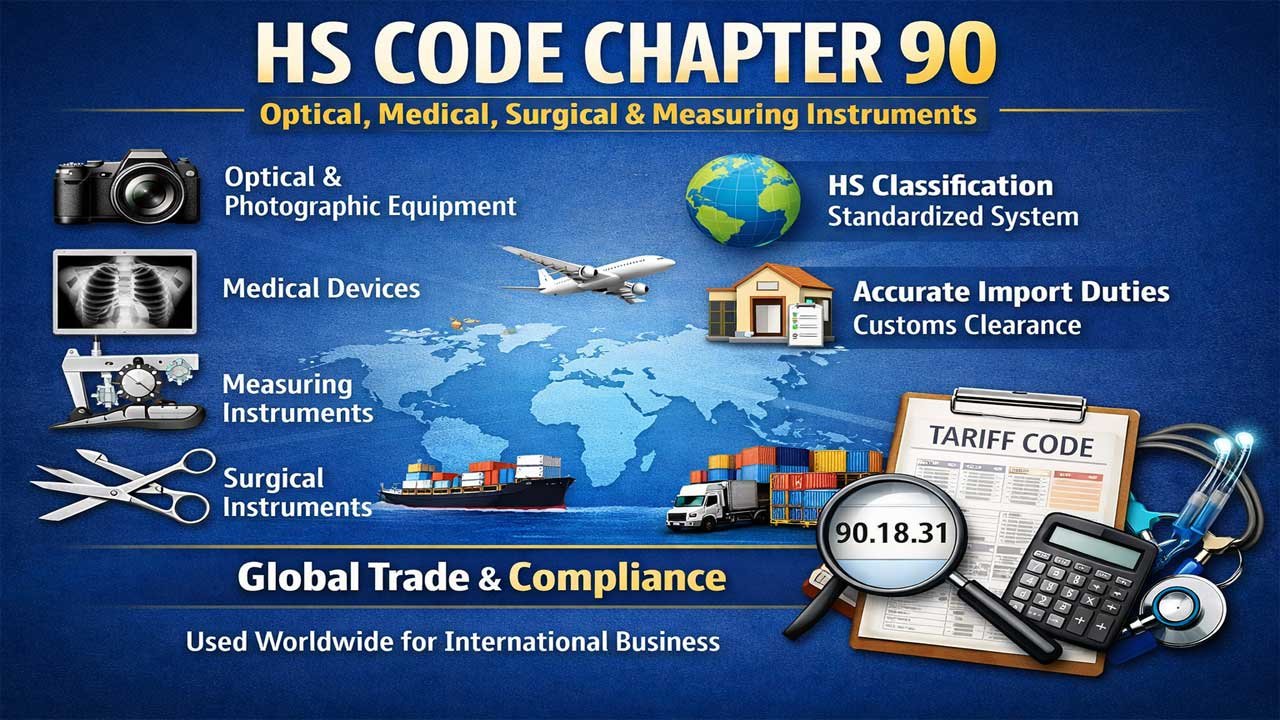
HS Code Chapter 90 is important for international trade. It covers optical instruments. It covers photographic equipment. It covers cinematographic devices. It covers measuring instruments. It covers medical apparatus. It covers surgical instruments.
This chapter is used worldwide. Customs agencies use it. Import-export traders use it. It ensures smooth customs clearance. It helps calculate import duties correctly.
The code system is standardized. The World Customs Organization created it. Over 200 countries follow it. This makes international business easier.
Understanding the Classification System
The HS code is a six-digit number. The first two digits identify the chapter. Chapter 90 is for optical and medical instruments. The next four digits provide details.
Your product may fall here. Your product may have sub-codes. Sub-codes are eight digits long. Some countries use ten digits. This adds more specifics.
Understanding the classification saves money. Wrong classification causes problems. You may pay extra customs duty. You may face penalty charges. Delays happen at customs checkpoints. This costs your business time and money.
Key Headings Under HS Code 90
Heading 9001: Optical Fibers and Lenses
HS Code 9001 covers unmounted optical elements. Optical fibers fall here. Lenses are included. Prisms are classified here. Mirrors are in this category.
This heading has many sub-codes. Some are for fiber optic cables. Others are for contact lenses. Glass spectacle lenses use code 9001.40. This heading generates significant export revenue.
Optical fiber imports are growing. Telecommunications use optical fibers. Data centers depend on them. This makes it a lucrative import category.
Heading 9002: Mounted Optical Elements
Heading 9002 covers mounted optical parts. These parts are fitted to instruments. Camera lenses use code 9002.11. Projector lenses are here too. Microscope objectives are included.
Mounted elements are more specific. They have assembly and precision. This adds value to the product. Tariff rates may differ from unmounted parts.
Heading 9018: Medical and Surgical Instruments
HS Code 9018 is the largest section. It covers medical appliances. Surgical instruments are here. Dental equipment falls under this heading.
This section has many sub-categories. Let me explain the important ones.
Syringes and Needles (9018.31-9018.32)
- Syringes with needles use code 9018.31
- Tubular metal needles use 9018.32
- Suture needles are included here
- Injection needles fall under this code
- These are high-volume import items
- India imports these in large quantities
Catheters and Cannulae (9018.39)
- Catheters are medical tubes
- They drain urine from patients
- Cardiac catheters are specialized devices
- Cannulae deliver medications
- These products have high medical value
- Import demand is consistently strong
Dental Equipment (9018.41-9018.49)
- Dental drill engines use code 9018.41
- These are precision instruments
- Dental chair parts are included
- Oral surgical tools fall here
- Importers need accurate classification
- Duty rates vary by product type
Ophthalmic Instruments (9018.50)
- Ophthalmoscopes view the eye interior
- Tonometers measure eye pressure
- Ophthalmic lasers do surgical procedures
- Vision testing equipment is included
- These are high-value imports
- Hospitals purchase these regularly
Diagnostic and Therapeutic Equipment (9018.90)
- Blood pressure measurement devices
- Stethoscopes for doctors
- Electro-diagnostic machines
- Hearing aid equipment
- Defibrillators for cardiac emergencies
- Heart-lung machines for surgery
Heading 9019: Mechano-Therapy Appliances
Heading 9019 covers therapy equipment. Massage machines are classified here. Oxygen therapy apparatus falls under this code. Aerosol therapy devices are included.
These products support patient recovery. They are used in hospitals. Rehabilitation centers buy them. Physiotherapy clinics need them.
Heading 9020: Breathing Appliances and Gas Masks
HS Code 9020 includes breathing equipment. Gas masks are classified here. Protective masks for industrial use are included. Oxygen delivery systems are covered.
This became important during COVID-19. Healthcare facilities imported heavily. Protective equipment demand surged. Classification matters for timely delivery.
Heading 9021: Orthopedic Appliances and Artificial Parts
HS Code 9021 covers orthopedic equipment. Crutches and surgical belts use this code. Fracture appliances are included. Artificial limbs are classified here.
Hearing aids fall under this heading. These are worn or carried devices. They compensate for body defects. This category has growing demand.
Heading 9022: X-Ray and Radiation Apparatus
HS Code 9022 includes X-ray equipment. CT scanners use this code. Radiotherapy apparatus is classified here. Nuclear radiation equipment is included.
These are specialized medical devices. They require special handling. Import procedures are strict. Regulatory compliance is mandatory.
Import Duties on Medical and Optical Instruments
Current Duty Structure in India
India imposes customs duties on imports. Basic Customs Duty (BCD) varies. Most optical instruments face 7.5% duty. Some medical devices face 0-7.5% duty.
Certain critical devices have nil duty. Coronary stents attract 0% duty. Assistive devices for disabled people have nil duty. This encourages healthcare accessibility.
GST applies after customs duty. Most medical devices pay 12% GST. Standard rate is 18% for other goods. Lower GST rate supports healthcare.
Key Duty Points:
- Basic Customs Duty: 0-7.5% for most items
- Social Welfare Surcharge: Applied on some items
- IGST: 12% on medical devices, 18% standard
- Special Additional Duty: May apply to certain products
Why Understanding Duties Matters
Incorrect classification costs money. You may overpay customs duty. You may face penalties. Regulatory agencies may detain shipments.
Proper classification saves costs. Lower duty rates apply. Faster customs clearance happens. Your business operates smoothly.
Import duty calculations are complex. Professional advice helps. Customs consultants have expertise. Tax advisors know current rates.
HS Code 90 Import Statistics
Global Medical Equipment Trade
The global medical equipment market is huge. United States exports $36.1 billion. Germany exports $18.6 billion. Mexico exports $17.9 billion.
India is growing in this sector. Indian manufacturers export surgical instruments. Optical goods are exported regularly. Pharmaceutical equipment is a growing export.
Major Import Categories and Values
Different categories have different values. Instruments for surgical use: $77.08 billion globally. Needles and catheters: $37.31 billion. Electro-diagnostic apparatus: $17.43 billion.
Syringes are high-volume imports. They cost $7.90 billion globally. Dental instruments cost $6.63 billion. Ophthalmic instruments cost $6.42 billion.
MRI machines cost $6.34 billion. Ultrasonic scanners cost $5.59 billion. These are specialized, expensive equipment.
How to Classify Your Product Correctly
Step-by-Step Process
Step 1: Identify the Principal Function
- Does it have optical components?
- Is it used in medical practice?
- Is it a measuring instrument?
- Is it photographic equipment?
Step 2: Determine the Main Purpose
- Medical purpose means HS 90 classification
- Measuring function points to specific codes
- Surgical use identifies sub-categories
- Optical properties narrow classification
Step 3: Check Specific Headings
- Search for your product type
- Find the matching heading number
- Note any special conditions
- Check for exclusions
Step 4: Verify Sub-Codes
- Four-digit codes add more detail
- Six-digit codes are standard
- Eight-digit codes provide specifics
- Use national customs tariff books
Step 5: Consult Professional Resources
- Check World Customs Organization documents
- Review national tariff schedules
- Consult with customs brokers
- Seek binding rulings if uncertain
Common Classification Mistakes
Many importers make errors. They misclassify optical components. They put surgical tools in wrong codes. They mistake measuring devices for other products.
These mistakes cause problems. Extra duties are assessed. Shipments face delays. Penalties are imposed. Businesses lose money and time.
Common Errors:
- Confusing 9001 with other optical codes
- Placing dental equipment in wrong sub-code
- Misclassifying measuring instruments
- Missing special provisions for components
- Ignoring country-specific tariff notes
Important Notes on HS Code 90 Classification
The World Customs Organization provides guidelines. These are explanatory notes. They clarify classification rules. They help resolve ambiguities.
Note 5 is important. It addresses measuring instruments. Optical measuring devices are specified. The rule determines proper classification.
Note 6 addresses orthopedic items. These support or prevent body deformities. They hold body parts after injury. This definition matters for classification.
Note 7 covers automatic control instruments. These devices regulate flow and temperature. They maintain desired conditions. This distinguishes them from other apparatus.
Components and parts are classified separately. Parts for specific instruments may classify differently. This matters for import duty calculation. Proper classification saves money.
Business Implications for Importers
Cost Reduction Through Proper Classification
Correct classification minimizes costs. Lower duty rates apply. GST calculations are accurate. Your import pricing is competitive.
Import duty optimization is legal. Using proper codes is required. Professional classification adds value. Cost savings support business growth.
Meeting Regulatory Requirements
Import regulations are strict. Customs agencies enforce rules. Documentation must be accurate. Proper HS codes are mandatory.
Regulatory compliance builds trust. Agencies process shipments faster. Business reputation improves. International trading becomes easier.
Finding Qualified Resources
Many professionals specialize in this field. Customs brokers know current rules. Tax consultants understand duty calculations. Trade advisors guide classification decisions.
Professional services save money. Experts prevent costly mistakes. They navigate complex regulations. They ensure timely customs clearance.
Frequently Asked Questions About HS Code 90
Q: What is the difference between 9001 and 9002?
A: 9001 covers unmounted optical elements. 9002 covers mounted optical parts. Mounted parts are fitted to instruments. This affects classification and duty rates.
Q: How do I know if my instrument falls under Chapter 90?
A: If it’s optical, medical, surgical, or measuring equipment, it likely falls here. Check the principal function. Refer to detailed product descriptions. Consult tariff schedules.
Q: What documents do I need for imports?
A: You need commercial invoices. You need packing lists. You need certificates of origin. Medical devices may need regulatory approval. Proper documentation ensures smooth customs clearance.
Q: Are there recent changes to HS Code 90?
A: Yes, regional updates occur regularly. USA requires full 10-digit codes since 2025. GCC countries use 12-digit codes from January 2025. EU has nomenclature updates. Check your specific region.
Q: What if I disagree with a classification?
A: You can request a binding ruling. Customs authorities review your case. Professional consultants help prepare documents. This ensures proper classification going forward.
Q: How do duty rates affect my business?
A: Lower duty rates reduce costs. Higher rates increase prices. Competitive pricing matters. Proper classification ensures fair rates. This impacts profitability directly.
Best Practices for HS Code 90 Compliance
Documentation and Record-Keeping
Keep detailed product specifications. Store certificates and approvals. Maintain import records. Track duty calculations. Document your classification reasoning.
Good records help if audited. They prove compliance. They support claims. They reduce penalties.
Working with Customs Professionals
Hire experienced customs brokers. Use tax consultants. Work with trade advisors. Share complete product information. Ask for written classifications.
Professional expertise prevents problems. Experts know current regulations. They navigate complex rules. They represent your interests.
Staying Updated on Changes
Regulations change regularly. New codes are added. Duty rates are adjusted. International agreements affect rates. Subscribe to customs updates.
Trade publications provide news. Professional associations share information. Government websites post changes. Stay informed to stay compliant.
Building Supplier Relationships
Work with reliable suppliers. Request accurate HS codes. Verify product specifications. Review product certifications. Maintain supplier documentation.
Good suppliers ensure quality. They provide correct information. They support compliance. They facilitate business growth.
Conclusion
HS Code Chapter 90 is complex but manageable. Understanding it saves money. Proper classification ensures compliance. Business operations run smoothly.
Medical and optical instruments are valuable imports. India has growing demand. International trade is increasing. This sector offers business opportunities.
Take classification seriously. Use professional help. Keep accurate records. Stay compliant with regulations. Your business will succeed.
The investment in proper classification pays dividends. Costs decrease. Risks reduce. Operations improve. Success grows.


