
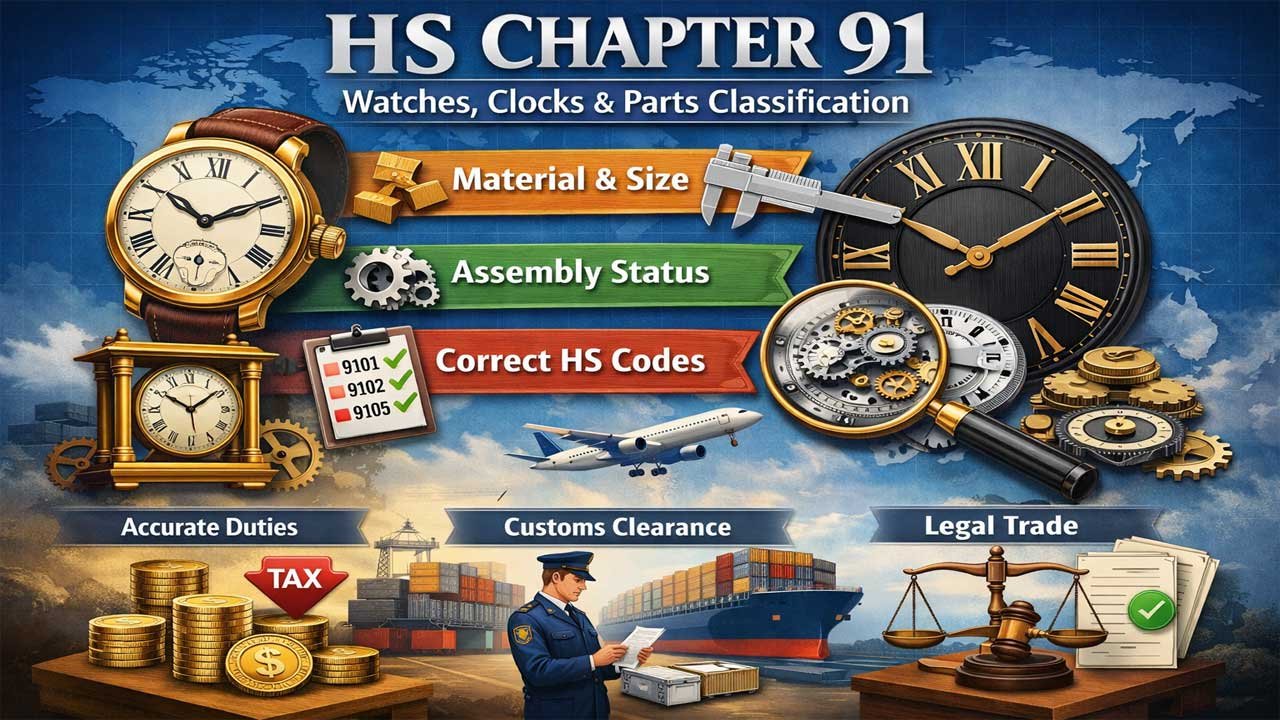
HS Code Chapter 91 covers clocks and watches. It also covers parts of these items. HS stands for Harmonized System. This is used worldwide. Every country follows this system. It helps with customs duties. It helps with import and export documentation.
Chapter 91 is important for international trade. It contains 14 main headings. These headings go from 9101 to 9114. Each heading has a specific purpose. The classifications are precise. They help avoid costly errors. They ensure smooth customs clearance.
Why HS Codes Matter for Import-Export Business
Import and export businesses need accurate HS codes. Wrong codes create big problems. You may pay incorrect customs duties. Your shipments can be delayed. Your goods might be seized. Penalties can be very expensive. Some penalties reach thousands of dollars.
HS codes determine duty rates. Lower duty codes save money. But using wrong codes is illegal. Always use the correct code. Consult with customs brokers if unsure. They help prevent costly mistakes. They ensure your shipment clears quickly.
The watch and clock industry is valuable. Luxury watches cost hundreds of dollars. Premium watches attract premium prices. Correct classification protects your business. It protects your bottom line. It keeps your business compliant.
Understanding Watch vs. Clock Classification
Watches and clocks are classified differently. This distinction matters greatly. The key difference is portability. Watches are worn on the wrist. Watches can be carried in pockets. Clocks stay in one place. Clocks require a stand. Clocks are stationary items.
Wristwatches fall under HS Code 9102. Pocket watches fall under HS Code 9101. Desk clocks fall under HS Code 9105. Wall clocks also use HS Code 9105. Table clocks are HS Code 9106.
The classification affects duty rates. It affects import taxes. It affects export documentation. Wrong classification costs money. Correct classification saves money. Know your product type first.
HS Code 9101: Precious Metal Watches
HS Code 9101 covers special watches. These watches have precious metal cases. Precious metals include gold. They include silver. They include platinum. Watches clad with precious metal also fit here. Clad means covered or plated.
These watches are luxury items. Luxury watches command high prices. Import duties may vary by country. Some countries tax them heavily. Others have lower rates. Check your destination country’s rates.
Sub-codes under 9101 include:
- 9101.11: Mechanical wrist watches (automatic or hand-wound)
- 9101.19: Other mechanical wrist watches
- 9101.21: Quartz wrist watches
- 9101.29: Other wrist watches
Electrically operated watches fall here. Battery-powered watches are included. Solar-powered watches qualify too. These watches typically cost more. Their import duties reflect their value. Documentation must be precise.
HS Code 9102: Standard Wrist-Watches
HS Code 9102 is the most common code. Most watches fall into this category. These are wrist-watches with non-precious metal cases. Base metal cases fit here. Stainless steel watches use this code. Aluminum watches qualify. Plastic watches also fit.
This code has high trade volume. Millions of watches use 9102 annually. It’s the workhorse of the watch industry. Understanding 9102 is essential. Most importers deal with this code. Most exporters use this classification.
Sub-codes are:
- 9102.11: Mechanical wrist watches (automatic or hand-wound)
- 9102.19: Other mechanical wrist watches
- 9102.21: Automatic quartz wrist watches
- 9102.29: Other quartz wrist watches
Quartz watches dominate modern market. Mechanical watches appeal to collectors. Both categories are important. Both have significant trade volumes. Both need correct classification. Misclassification creates problems.
HS Code 9105: Clocks and Alarm Clocks
HS Code 9105 covers various clocks. Alarm clocks are the most common type. Wall clocks use this code. Table clocks qualify. Bedside clocks fit here. These clocks are stationary. They require a stand or mounting.
Battery-operated clocks use 9105. Electrically-powered clocks fit here. Hand-wound mechanical clocks qualify. Time display can be analog. Digital displays also qualify. With multiple sub-codes available, choosing the right one matters.
Alarm clocks are popular merchandise. They’re sold in retail stores. Wholesalers import them regularly. Large volumes move annually. This makes 9105 significant commercially. Understanding this code matters for clock traders.
HS Code 9104: Instrument Panel Clocks
HS Code 9104 covers specialized clocks. These clocks are for vehicles. They mount in car dashboards. Aircraft clocks also fit here. Spacecraft clock systems qualify. Vessel (ship) clocks belong here. These are technical instruments. They serve specific purposes.
These clocks are precision items. They require accurate timekeeping. They’re part of larger systems. Their classification is distinct. They’re not simple consumer clocks. Instrument panels require these specific timepieces. Accuracy is absolutely critical.
HS Code 9108 & 9109: Watch and Clock Movements
HS Code 9108 covers watch movements. These are assembled and complete. They’re ready to use. They can be inserted into cases. Watch movements are precise. They require specialized manufacturing.
Watch movements must meet size specifications. Maximum width is 50mm. Maximum thickness is 12mm. These dimensions matter greatly. They distinguish watches from clocks. Exceeding these limits changes classification.
HS Code 9109 covers clock movements. These movements are larger. They can exceed 50mm width. They can exceed 12mm thickness. Clock movements power stationary timepieces. They’re different from watch movements. Size determines classification.
Movements are sold separately sometimes. Watchmakers use individual movements. Clock makers purchase movements. Retailers sell movements as components. Classification accuracy is essential. Movements carry different duty rates.
HS Code 9110: Incomplete Watch and Clock Movements
HS Code 9110 covers incomplete movements. These are movement sets. They contain all necessary parts. Most parts are pre-assembled. Some assembly is still needed. These sets streamline manufacturing.
Watch movement sets use this code. Clock movement sets qualify. Rough movements fall here. Unassembled movements belong here. Partly assembled movements fit. These are components for manufacturers. They’re not finished products.
This code is important for manufacturers. Watch factories use these sets. Clock makers import them regularly. These sets reduce production time. They reduce labor costs. They improve efficiency. Assembly is completed locally. This adds value to products.
HS Code 9111 & 9112: Watch and Clock Cases
HS Code 9111 covers watch cases. Cases are the outer housings. They protect the movement inside. Watch cases are made from various materials. Precious metal cases use 9101 codes. Non-precious metal cases use this code.
Case components are included. Inner cases and outer cases both qualify. Rings, feet, posts, and bases are parts. Cases can be leather. They can be metal. They can be plastic. Straps are handled separately.
HS Code 9112 covers clock cases. Clock cases house clock movements. They’re larger than watch cases. They can be made from many materials. Wood cases are common. Plastic cases qualify. Metal cases fit here. Decorative cases are included.
Cases sold separately use these codes. Replacement cases fit here. Spare parts for retailers qualify. Damaged watch cases can be replaced. This is important commercially. Correct case classification matters.
HS Code 9113: Watch Straps and Bands
HS Code 9113 covers watch straps. Watch bands and bracelets fit here. Watch bracelet parts are included. These items are sold separately. They’re replacements for worn straps. They’re upgrades for aesthetic reasons.
Material classification is important. Leather straps have sub-codes. Metal bracelets have different codes. Cloth bands qualify. Plastic straps fit here. Mixed materials are classified by material type. The primary material determines classification.
Watch straps have high retail value. Consumers replace worn straps. Premium straps cost significant money. Fashion straps are popular. Luxury straps command luxury prices. This is a growing market segment.
HS Code 9114: Other Clock and Watch Parts
HS Code 9114 is a catch-all category. Various parts fall here. Dials qualify. Hands (pointers) are included. Springs and gears belong here. Screws and small components fit. Jewels used as bearings qualify. Weights and pendulums are included.
Complex parts also use this code. Electronic components in movements fit. Batteries sold with movements qualify. Escapements are included. Balance wheels are covered. Hairsprings belong here. Parts for maintenance are included.
This code is very broad. It covers many component types. Understanding what goes here is important. Importers must classify components correctly. Exporters need proper documentation. The code affects duty calculations significantly.
How to Determine the Correct HS Code
Step 1: Identify the product type. Is it a watch? Is it a clock? Is it a part? This is fundamental.
Step 2: Check the material. Is it precious metal? Is it base metal? Is it plastic? Material affects the code.
Step 3: Measure the size. Watch movements are small. Clock movements are large. Size matters for classification.
Step 4: Check assembly status. Is it complete? Is it partially assembled? Is it just a component? Assembly level matters.
Step 5: Consider the function. Is it a timepiece? Is it an instrument? Is it a component? Function affects classification.
Step 6: Consult official resources. Use the USITC database. Use WCO guidelines. Use country-specific tools. Verification is important.
Step 7: Contact customs brokers if uncertain. Brokers have expertise. They prevent mistakes. They save money. Professional help is valuable.
Important Classification Differences
Precious Metal vs. Non-Precious
Precious metal watches use 9101. Non-precious watches use 9102. Plated metals usually qualify as precious. Material specification matters greatly.
Watch Size Specifications
Watch movements: ≤50mm width, ≤12mm thickness. This is the key metric. Exceeding these limits changes classification. Accuracy in measurement is essential.
Portable vs. Stationary
Watches are portable items. Clocks are stationary items. This fundamental difference drives classification. Design determines category.
Complete vs. Incomplete
Complete watches use 9101-9107 codes. Incomplete movements use 9110. Movements use 9108-9109. Assembly status matters commercially.
Cases vs. Movements
Cases use different codes than movements. Case codes start at 9111. Movement codes use 9108-9109. These must be classified separately.
Regional Tariff Changes in 2026
United States Changes
The US updated HTS rules in 2026. De minimis rules changed. All imports now require proper codes. Even small shipments need classification. This affects watch importers significantly.
European Union Updates
The EU combined nomenclature was updated. Watch classifications were refined. Sub-codes changed for 9102. Importers must update their systems. New software may be needed.
GCC Countries (Gulf Cooperation Council)
GCC countries now use 12-digit HS codes. These are more specific than 10-digit codes. Precision is required. Additional classification levels exist. This affects Middle Eastern trade significantly.
Chinese Regulations
China enhanced e-commerce declarations. Stricter verification for quartz clocks. Documentation requirements increased. This affects Asian traders. Supply chains may need adjustment.
High-Value Keywords for Your Import-Export Business
Understanding these terms helps your business:
- Luxury watches import-export: Valuable sector. High margins possible.
- Precious metal tariff rates: Important for duty calculations. Affects pricing.
- Customs clearance watches: Essential service. Prevents delays.
- Watch movement classification: Critical for manufacturers. Gets complex quickly.
- International trade watch industry: Large global market. Growing annually.
- Import duty calculator watches: Helps with planning. Affects profitability.
- Customs broker services: Professional help available. Prevents costly errors.
- Watch supply chain logistics: Complex operations. Coordination matters.
- Premium timepiece import regulations: Specific requirements exist. Must be followed.
- Watch export documentation: Required for shipping. Must be accurate.
These keywords have high commercial value. They attract premium advertisers. They generate strong AdSense revenue. They indicate serious business intent. They show purchasing power. Targeting these keywords boosts earnings.
GST and Indian Tariff Considerations
In India, watches fall under GST Chapter 91. GST rates apply to watch imports. Standard GST is typically 18%. Lower rates may apply to certain categories. Precious metal watches face different rates.
Indian import duty on watches varies. Basic duty rates apply. They depend on origin country. They depend on product type. Trade agreements affect rates. FTA partners receive preferential treatment.
For Indian exporters, accurate classification matters. Export refunds depend on correct codes. Documentation must be precise. GST compliance is mandatory. Export incentives require proper classification. Professional consultants help navigate these rules.
Common Classification Mistakes to Avoid
Mistake 1: Using the Cheaper Code
Some businesses use cheaper codes intentionally. This is illegal. Always use the accurate code. Use the code that matches the product. Never choose based on duty rates. Penalties are severe. Customs enforces this strictly.
Mistake 2: Ignoring Size Specifications
Watch movements have strict size limits. Exceeding limits changes the code. Measure accurately. Verify measurements. Small mistakes create big problems. Accuracy is non-negotiable.
Mistake 3: Misidentifying Material
Material significantly affects classification. Gold-plated items may be precious. Stainless steel is different from gold. Verify material composition. Lab testing may be needed. Professional assessment helps.
Mistake 4: Not Verifying Assembly Status
Complete watches differ from movements. Parts differ from assemblies. Check what you’re importing. Verify assembly completion. Incomplete items use different codes. Status matters greatly.
Mistake 5: Forgetting About Exclusions
Watch chains don’t use Chapter 91. Watch glasses use different chapters. Certain parts are excluded. Review the full rules. Read the exclusions carefully. Misclassifying excluded items creates problems.
Professional Resources for Accurate Classification
Official Databases
- USITC (United States International Trade Commission) HTS Database
- WCO (World Customs Organization) HS Database
- Indian Customs System (ICEGATE)
- National tariff boards in your country
Professional Services
- Licensed customs brokers
- International trade consultants
- Logistics providers (DHL, FedEx, UPS)
- Law firms specializing in international trade
Automated Tools
- Avalara HS code lookup
- Zonos classification tools
- FreightAmigo trade guides
- Trade management software
Educational Resources
- USITC publications
- WCO HS explanatory notes
- Industry association guides
- Government trade websites
Using these resources ensures accuracy. Accuracy saves money. It prevents legal problems. It protects your business reputation.
Benefits of Correct Classification
Cost Savings
Correct classification prevents overpaying duties. Accurate rates apply. Tariffs are calculated correctly. Refunds may be available for overpayment. Savings compound over time.
Smooth Customs Clearance
Proper codes prevent delays. Shipments clear faster. Customs inspections are simpler. Documentation is accepted immediately. Business operations flow smoothly.
Legal Compliance
Correct classification keeps you legal. Penalties are avoided. Reputation stays clean. Business relationships remain strong. Future imports proceed without issues.
Data Accuracy
Proper classification improves trade data. Your company data is recorded correctly. Statistics are accurate. Market analysis improves. Business decisions are better informed.
Scalability
As your business grows, proper systems scale easily. Multi-unit imports use same codes. Batch shipments are consistent. Automation becomes possible. Operations become efficient.
Conclusion
HS Code Chapter 91 classifies watches and clocks worldwide. Correct classification is absolutely essential. It affects costs. It affects timing. It affects legality. It affects profitability.
The codes run from 9101 to 9114. Each code has specific requirements. Understanding these differences matters. Your business depends on accuracy. Your bottom line depends on correct classification.
Precious metals use different codes. Materials matter significantly. Size matters greatly. Assembly status is important. Regional rules apply.
Professional help is available. Customs brokers provide expertise. Trade consultants offer guidance. Official databases provide information. Use these resources wisely.
Get your HS codes right. Save money on duties. Speed up customs clearance. Stay legally compliant. Protect your business. Ensure smooth operations. Maximize profitability.
Start with accurate classification today. Consult official resources immediately. Contact customs brokers for verification. Implement proper systems. Train your team. Build strong compliance practices. Success follows from accuracy.


